 listicle
5 Best Anthurium Hybrids for Collectors: 2026 Picks
Table of Contents
- What Makes an Anthurium Hybrid Worth Collecting
- Quick Comparison: 5 Best Anthurium Hybrids for Collectors
- 1. Anthurium Luxurians × Papillilaminum 'Messiah': Best for Texture
- 2. Anthurium Dorayaki × Silver Blush (Silver Pearl): Best for Velvet Foliage
- 3. Anthurium Red Crystal × Luxurians: Best for Colour Contrast
- 4. Anthurium #PhoenixGangbang: Best for Complex Genetics
- 5. Anthurium 'Twin Phoenix x Twin Phoenix': Best for Seed-Grown Surprises
- Corm-Grown vs Tissue Culture Aroids: What Collectors Should Know
- Frequently Asked Questions
Last Updated: September 30, 2026
What Makes an Anthurium Hybrid Worth Collecting
An anthurium hybrid is a plant produced by cross-pollinating two different Anthurium species or cultivars, combining traits from both parents into a single seed-grown offspring. For collectors, the appeal sits in what the cross might produce: velvet leaves, bullate texture, dramatic emergents, and venation patterns that shift as each new leaf hardens.
At Obsessed With Aroids, we sell corm-grown collector Anthurium, and the hybrids that move fastest are never the cheapest ones. They are the ones with parentage worth talking about.
The Traits Collectors Chase: Velvet Leaves, Emergents and Veining
Three traits drive most buying decisions. Velvet leaves come from the papillate surface of species like Anthurium papillilaminum, which scatters light and gives foliage that deep, matte finish. Emergents are the new leaves, often bronze, copper or red before they harden to green. Veining, particularly contrasting silver or white venation, is what separates a good hybrid from a great one.
Leaf morphology matters just as much. Sinuate margins, bullate texture and heart-shaped blades all trace back to specific parent species. A cross that carries Luxurians genetics will almost always show corrugated, quilted blades; a cross leaning on Crystallinum tends to produce larger, glossier leaves with sharper primary veins.
How Hybrid Vigour and Parent Species Shape the Outcome
Hybrid vigour is the tendency for a cross to grow more vigorously than either parent. It shows up as faster root development, larger leaf size and stronger acclimatisation to indoor conditions.
Parentage decides everything else. Cross Luxurians with Papillilaminum and you get texture plus velvet. Add Crystallinum or Dressleri into the mix and you introduce darker genetics and different leaf shape. Understanding those parent species before you buy is the difference between a plant you love in two years and one you resell in six months.
Stable vs Unstable Crosses: Why Two Seedlings Can Look Nothing Alike
This is the part most guides skip, and it is the single most useful thing to understand before you spend collector money.
A stable cross is one where the parents are closely related enough, or the line has been worked long enough, that most seedlings express similar traits. You can buy with reasonable confidence that the plant will look like the listing photo at maturity. Many primary hybrids between two well-known velvet species fall into this category.
An unstable cross is the opposite. When you combine three, four or more genetic lines, or when you self a complex hybrid, the offspring segregate. That means each seedling inherits a different shuffle of traits from its grandparents. Two plants from the same pod can mature into completely different-looking plants: one dark and bullate, the other lighter with narrower leaves.
This is not a defect. It is the whole appeal of seed-grown collector Anthurium. But it does mean you should read listings carefully. If a seller describes a plant as a specific cultivar name, ask whether it is a clone or a seed-grown individual. A named cultivar should be vegetatively propagated so every plant matches. A seed-grown cross is a one-off, and the listing photo shows one possible outcome, not a guarantee.
Reading a Pedigree Before You Buy
A well-written pedigree tells you what to expect. Look for the species in brackets, in order. A cross written as (Papillilaminum × Dressleri) × Crystallinum tells you the mother line already carried dark velvet, and the Crystallinum parent is adding leaf substance and venation. A cross written as Luxurians × Papillilaminum tells you texture is coming from one side and velvet from the other.
The more species in the bracket, the more variable the seedlings. That is not automatically bad, complex hybrids like #PhoenixGangbang are prized precisely because the phenotype range is wide, but it does mean you are buying potential rather than a fixed look.
What This Means for Your Collection
If you want predictability, buy stable crosses or vegetatively propagated cultivars. If you want the thrill of watching a plant become something no one else owns, buy unstable seed-grown crosses and accept that the mature form is a surprise. Both are legitimate collector paths, and most serious collections end up holding a mix of the two.
Quick Comparison: 5 Best Anthurium Hybrids for Collectors
Here are the five hybrids we would put in front of any collector right now, with the trait each one does best.
| Hybrid | Best For | Key Trait | Price |
|---|---|---|---|
| Luxurians × Papillilaminum 'Messiah' | Texture | Bronze emergents, bullate leaves | $89.00 |
| Dorayaki × Silver Blush (Silver Pearl) | Velvet foliage | Rounded leaves, silver genetics | $49.00 |
| Red Crystal × Luxurians | Colour contrast | Red emergents, deep green maturity | $139.00 |
| #PhoenixGangbang | Complex genetics | Dark velvet, Pap × Dress lineage | $89.00 |
| Twin Phoenix × Twin Phoenix | Seed-grown surprises | Variable leaf shapes per seedling | $69.00 |
1. Anthurium Luxurians × Papillilaminum 'Messiah': Best for Texture
If texture is what you chase, this is the cross to start with. Luxurians contributes the bullate, deeply corrugated leaf surface, while Papillilaminum layers in darker colouring and a velvety finish.

2. Anthurium Dorayaki × Silver Blush (Silver Pearl): Best for Velvet Foliage
Dorayaki brings rounded, almost circular foliage. Silver Blush brings the silver-toned genetics that collectors associate with strong venation. Together they produce a juvenile plant already showing velvety leaves with prominent veining.
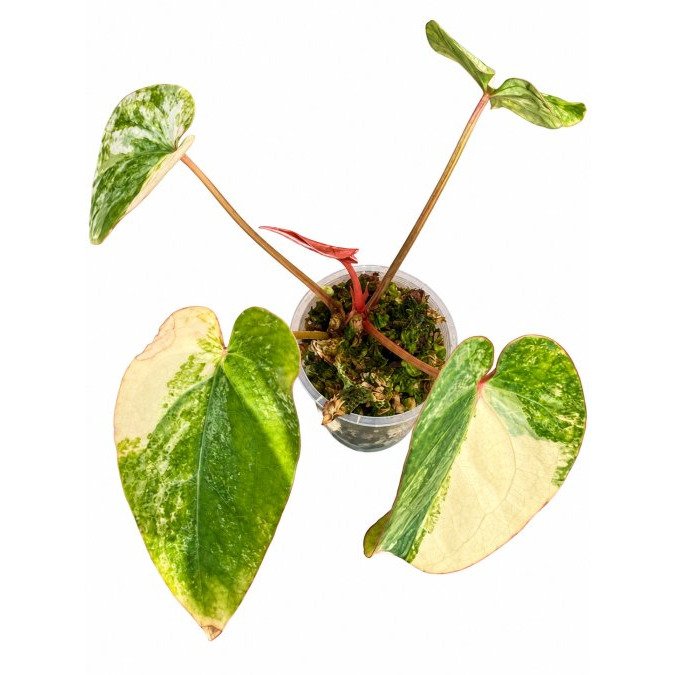
🌿 Anthurium ‘Twin Phoenix × Twin →
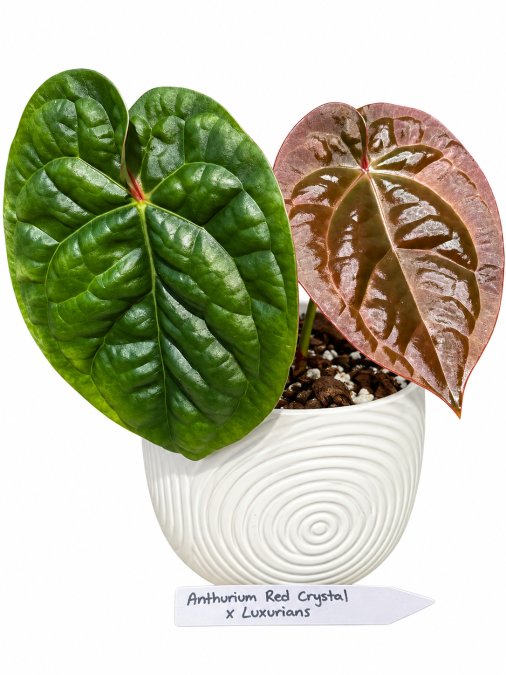
3. Anthurium Red Crystal × Luxurians: Best for Colour Contrast
Red Crystal × Luxurians delivers the sharpest colour shift of the five. Bronze and red emergents harden into deep green, heavily textured mature leaves.
4. Anthurium #PhoenixGangbang: Best for Complex Genetics
#PhoenixGangbang carries one of the more layered pedigrees in collector Anthurium: (Papillilaminum × Dressleri) × Crystallinum × (Papillilaminum × Dressleri) × (Forgetii × Magnificum) 'Black Cherry'.
5. Anthurium 'Twin Phoenix x Twin Phoenix': Best for Seed-Grown Surprises
A self-cross of Twin Phoenix produces something no two collectors will own in identical form. Each seedling develops its own leaf shape, colouring and emergent tone.
Corm-Grown vs Tissue Culture Aroids: What Collectors Should Know
Corm-grown aroids are plants raised from a corm or seed and grown on in a substrate, while tissue culture plants are propagated in sterile laboratory conditions from small amounts of plant tissue. The two are not the same thing.
Why the Distinction Affects What You Actually Receive
A tissue culture plant is a genetic copy. If you buy two, they will grow into the same plant. That is useful if you want a predictable specimen.
Verification and Provenance: How to Check What You Are Buying
Mislabeled plants are a frustration in the collector market. Here is how to reduce that risk.
Ask for the full pedigree, in order.
Check the emergent colour claim.
Common Look-Alikes and Why They Matter
If you want to start with something proven, our Anthurium Seraphyne combines Twin Phoenix, Papillilaminum, Dressleri and Crystallinum genetics at an easy entry point for newer collectors.

Frequently Asked Questions
What makes an Anthurium hybrid desirable for collectors?
Collectors look for hybrids that combine standout traits from both parents, such as velvet leaves, bullate texture, strong venation patterns or striking emergent colour. Genetic uniqueness matters too: seed-grown hybrids like Anthurium 'Twin Phoenix x Twin Phoenix' produce seedlings that each develop their own leaf shape and colouring, so no two plants are identical. Rarity, provenance and the potential for a mature specimen to develop dramatic foliage all add to a hybrid's appeal.
How do I care for rare Anthurium hybrids in local conditions?
Rare Anthurium hybrids thrive in bright indirect light, high humidity and a chunky, airy substrate that keeps roots moist but never soggy. In warmer months, water when the top layer of substrate begins to dry, and reduce watering in cooler weather. Indoors, a cabinet or humidifier helps maintain the tropical environment these plants prefer. Always acclimatise new arrivals slowly and check root health before repotting into fresh aroid mix.
What is the difference between a corm-grown Anthurium and tissue culture?
Corm-grown plants are propagated from the corm or seed of a parent plant, so each one carries its own genetic mix and can develop unique characteristics. Tissue culture, by contrast, produces clones from a small piece of plant tissue in a lab, meaning every plant is genetically identical. Collectors often prefer seed-grown or corm-grown specimens for their individuality, while tissue culture offers consistency and faster bulk production.
Where can I find authentic rare Anthurium hybrids in Australia?
Look for specialist sellers who clearly list parentage, show the exact plant photographed and explain how it was grown. Obsessed With Aroids offers a curated range of collector-grade Anthurium hybrids, including seed-grown and corm-grown plants, with detailed listings and careful shipping. Check that the seller provides provenance and is transparent about quarantine restrictions for your state before you buy.
How do I identify a high-quality Anthurium hybrid?
Start with the leaves: healthy hybrids show consistent colour, strong venation and no soft or yellowing patches. Check that the plant has active new growth, firm stems and a well-developed root system. Ask about parentage and whether the plant is seed-grown or tissue culture, as this affects genetic stability and phenotype variation. A reputable seller will show the exact plant and note any cosmetic marks honestly.
Finding hybrids with genuine parentage, honest listings and a growing method you can actually verify takes more digging than it should. Obsessed With Aroids is a collector-run store built around exactly that: corm-grown and seed-grown rare Anthurium, exact-plant photos, stated parentage, and shipping scheduled early in the week so plants spend less time in transit. Browse the Anthurium collection and start with a hybrid whose genetics you can trace.