 How-to
Why Alocasias Are So Hard to Keep Alive
Last Updated: November 21, 2026
Quick Summary
Alocasias are hard to keep alive because they come from warm, humid tropical rainforests and punish small mistakes. Overwatering, unstable warmth and dry air cause most problems, so steady conditions and careful alocasia care make them far easier to grow.
- Overwatering causes more losses than drought because wet, airless mix rots the roots.
- Check the mix two to three centimetres down and water only when the top layer feels dry.
- Yellow leaves and drooping are signals, so match the symptom to a cause before acting.
- Drooping despite wet soil usually means root rot, so lift the plant and inspect the roots.
- Firm, pale corms with no soft patches can recover, so check the corm before discarding a plant.
Table of Contents
- Why Alocasias Have a Reputation for Being Difficult
- Their Tropical Rainforest Origins Explain Most of Their Needs
- Alocasia Watering: Why Overwatering Kills More Plants Than Drought
- Alocasia Humidity and Warmth: Keeping Conditions Steady
- Alocasia Yellow Leaves and Drooping: Reading the Symptoms
- Light, Root Health and Dormancy: Separating Normal Rest From Decline
- Choosing Your Next Alocasia and Setting It Up for Success
- Frequently Asked Questions
Why Alocasias Have a Reputation for Being Difficult
If you have ever lost an Alocasia, you are in good company. These plants have a reputation among Australian collectors for being temperamental.
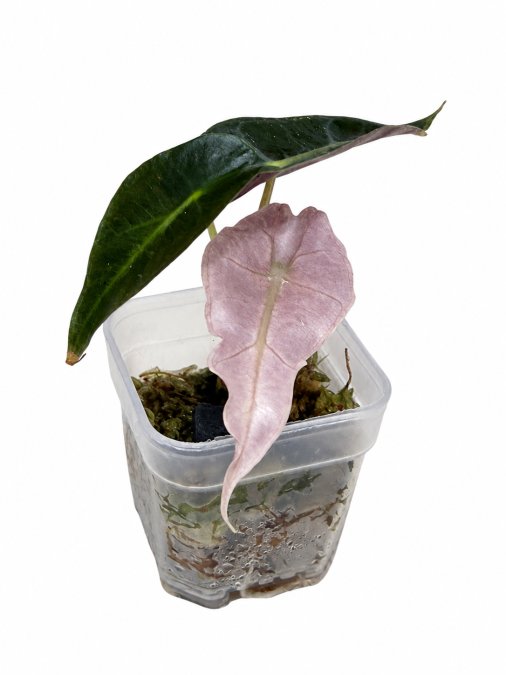
Most problems come from three things: too much water, unstable conditions, and misreading what the plant is telling you. Get those right and alocasia care becomes much easier.
A plant that looks fine one week can drop leaves the next, and it is rarely random.
Their Tropical Rainforest Origins Explain Most of Their Needs
Alocasias come from warm, humid tropical rainforests. Under the canopy they get filtered light, steady moisture, and warmth that rarely changes much from day to day.
That history explains most of their needs: recreate those conditions at home and the plant settles in; let something swing too far and it struggles.
Think about what that means in a typical Australian home:
- Light: bright indirect light, not harsh direct sun
- Warmth: stable temperatures, away from cold draughts
- Humidity: higher than most homes naturally provide
- Moisture: consistent, but never waterlogged
Alocasia Watering: Why Overwatering Kills More Plants Than Drought
Overwatering is the most common reason an Alocasia declines. Many new growers assume tropical plants want constant water, so they keep the pot soggy.
Roots need oxygen as much as moisture.
!Close-up of a hand checking the moisture of a potting mix around the base of a healthy Alocasia in a terracotta pot near a bright window
A simple routine helps:
- Push a finger two to three centimetres into the mix.
- Water only when the top layer feels dry.
- Let excess water drain fully from the pot.
- Never leave the pot sitting in a saucer of water.
Underwatering causes problems too, but the plant usually shows it clearly through crisping edges.
Alocasia Humidity and Warmth: Keeping Conditions Steady
Humidity is where many Australian growers run into trouble, especially in dry winters when heating runs.
You can raise humidity in a few practical ways:
- Group plants together so they share moisture
- Use a pebble tray filled with water beneath the pot, with the base sitting above the water line
- Place plants away from heaters, air conditioners and open doors
Misting only gives short-lived relief. If you do try a foliar spray, follow our step-by-step guide on safe foliar spraying for Alocasia so you do not damage the leaves.
Warmth matters just as much. Cold snaps slow growth and stress the plant, so keep alocasias away from cold windows overnight.
Alocasia Yellow Leaves and Drooping: Reading the Symptoms
Yellow leaves and drooping are the two symptoms growers ask about most, and they are signals rather than verdicts. The useful skill is matching the symptom to a cause before you act, because guessing from the leaves alone is how a thirsty plant gets watered into root rot, or a rotting plant gets watered again because it looks limp.
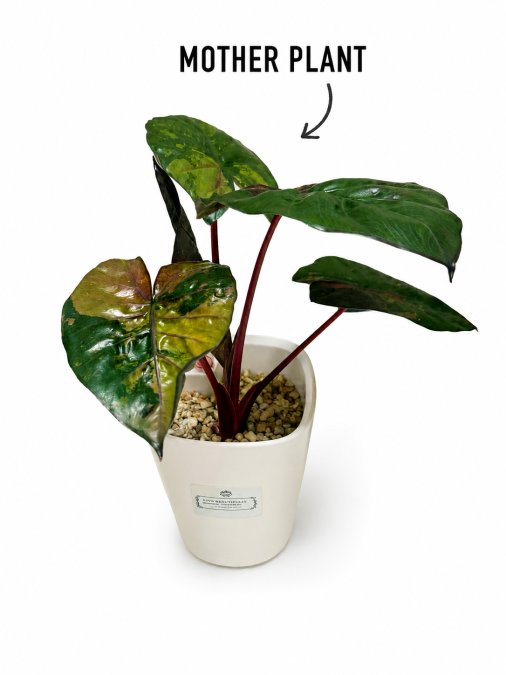
Work through the symptom first, then confirm with a physical check. The table below is the sequence I use when a customer sends me a photo.
| What you see | Most likely cause | Confirm it by | First move |
|---|---|---|---|
| One or two oldest lower leaves yellowing evenly, plant still pushing new growth | Normal ageing as energy moves to new leaves | New leaf emerging and firm stem | Leave it; remove the spent leaf once it pulls away easily |
| Several leaves yellowing at once, starting lower down, soil stays wet for days | Overwatering or early root rot | Finger test two to three centimetres down still damp after four to five days; pot heavy | Stop watering, improve drainage, check roots if it does not settle within a week |
| Yellowing between the veins while veins stay green | Often a nutrient or pH issue rather than water | Consistent watering history and a mix that has not been refreshed for a long time | Review feeding during active growth before changing anything else |
| Crisp brown edges and dry leaf tips, pot light | Underwatering or very dry air | Pot feels light and mix is dry well below the surface | Water thoroughly and let it drain; reassess humidity |
| Brown, papery edges with soft yellow halo, often on newer leaves | Humidity swings or water sitting on leaves in cool conditions | Recent heating use, draughts, or misting in a cool room | Stabilise warmth and humidity rather than increasing water |
| Whole plant limp despite wet mix | Roots unable to take up water, usually rot | Lift the plant and inspect roots | Treat as a root problem, not a thirst problem |
| Sudden collapse of the newest leaf with a soft, dark base | Rot at the growing point or corm | Gentle pressure at the base and a smell check | Act quickly; this is the most urgent pattern |
- The finger test: push two to three centimetres into the mix. If it is still damp after four to five days in warm weather, the mix is holding too much water for that pot and room.
- The weight test: lift the pot before and after watering. A pot that stays heavy is a pot that is not draining or drying.
- The stem test: a firm stem that bends and returns is usually a water or light issue. A stem that feels soft at the base is usually a rot issue.
- The pattern test: lower leaves failing in order is often normal; several leaves failing at once across the plant is usually environmental or root-related.
Drooping Leaves Are Often a Root Problem
When a plant droops despite wet soil, the roots are often the culprit. Rot stops roots moving water, so the leaves wilt even though the pot is full.
To check, gently lift the plant from its pot. Healthy roots are firm and pale. Rotten roots are soft, brown or black, and may smell sour.
Watch out: do not water a drooping plant on a schedule.
Light, Root Health and Dormancy: Separating Normal Rest From Decline
Light and roots work together. Bright indirect light supports strong growth, and a healthy root system lets the plant use that energy properly. Harsh direct sun can scorch leaves, while deep shade slows growth and weakens the plant over time.
Dormancy is where many growers make a permanent decision on a temporary situation. Some alocasias slow down or drop their leaves for a period and then regrow from the corm.
Assessing the Corm Before You Decide
The corm is the part that tells you the truth. Leaves can be misleading in both directions, so check the corm and roots before you conclude anything.
- Lift the plant gently from its pot and shake off loose mix.
- Look at the corm colour. A firm, pale to tan corm with intact skin is usually healthy. Dark, translucent or spreading black patches are not.
- Press lightly. A corm that gives under gentle pressure is rotting. A firm corm that resists is viable even if it has no leaves.
- Check the roots. Firm pale roots are working roots. Soft, brown or sour-smelling roots are dead tissue that should be trimmed.
- Look for a growing point. A small, firm bud or eye on the corm is a recovery sign, even when the plant currently has no foliage.
Dormancy Versus Decline: What Each Looks Like
| Signal | Dormancy or rest | Decline |
|---|---|---|
| Leaves | Drop gradually, often older first | Collapse suddenly or fail across the plant at once |
| Corm | Firm, pale, intact | Soft, dark, or giving under pressure |
| Roots | Firm and pale, even if fewer | Soft, brown, sour-smelling |
| Base of stem | Firm | Soft or mushy |
| Timing | Often follows cooler weather or a slow-down in growth | Can happen any time, often after prolonged wet mix |
| Outlook | Regrowth from the corm is likely | Needs root-zone intervention to have a chance |
A common pattern in cooler southern states is a plant slowing in late autumn and dropping leaves into winter, then pushing a new shoot when warmth returns. That is rest. The pattern that is not rest is a plant that collapses while the mix has been wet for days, especially if the base feels soft.
Root-Zone and Substrate Checks
Dormancy questions usually come back to the root zone, because a corm cannot recover if the mix around it stays wet and airless. Two approaches are common among collectors.
- A chunky, well-draining mix with bark, perlite and a small amount of coco or peat holds some moisture but lets air back in quickly. It suits growers who tend to water often.
- A semi-hydroponic setup with an inert medium and a reservoir keeps moisture consistent but demands that the reservoir level stays below the crown and that the roots are adapted to it. It suits growers who want a more measurable water line but who will check it regularly.
Neither is inherently better. The mix has to match your watering habits and your room, and a mix that stays wet for a week in a cool room is the wrong mix for that room regardless of what it is called.
Watch out: do not repot a resting corm into a larger pot to "help" it.
Recovery Signs to Look For
After you have corrected the root zone, recovery is slow and undramatic. Look for a firm corm that stays firm, no new soft patches, and eventually a small bud or shoot pushing from the corm.
If you are choosing a new plant and want to start from a stronger position, our 7 checks for choosing a healthy Alocasia corm covers what to look for before you buy, and our guide to the Alocasia growth timeline after repotting explains what is normal in the weeks after a transition.
Choosing Your Next Alocasia and Setting It Up for Success
Many of these problems start at the point of purchase. Choosing a healthy plant gives you a much better chance from day one.
Corm-grown Alocasias are grown from corms, which is a different process from tissue culture.
After you bring a new plant home, expect a settling period.
If you live in Victoria and plan to buy interstate, our plant concierge service can help with inspection, treatment, certification and forwarding, so you know what to expect before the plant arrives.
Alocasias are a commitment, but with steady water, warmth, humidity and light, they reward patience.
Frequently Asked Questions
Why do alocasias die so easily?
Most alocasias do not die because they are fragile. They usually decline because their roots sit in soggy media, the air is too dry, or temperatures drop sharply. These plants come from humid tropical rainforest floors, so they expect steady moisture, warmth and airflow.
How often should I water an alocasia?
There is no fixed schedule, because watering depends on pot size, media, light and temperature. Check the top few centimetres of the mix and water only when it feels barely moist, then let excess drain freely. Keeping the mix evenly moist without leaving the roots waterlogged matters far more than watering on a calendar. Overwatering is one of the most common causes of root problems in Alocasia and Anthurium, so err on the side of letting the mix dry slightly between waterings.
Why is my alocasia losing leaves or turning yellow?
Yellowing and leaf loss usually point to watering problems, root stress or a shock from a change in environment. Yellow leaves that feel soft often mean the roots are struggling in wet media. Crisp, brown edges can suggest dry air. Older leaves naturally yellow and drop as a plant grows, so one or two lower leaves is not always a crisis. Check the roots and media before changing anything else, and avoid repotting or fertilising a stressed plant until it stabilises.
Do alocasias need high humidity?
Yes, alocasias perform best in consistently high humidity, typically in the range of 60 to 80 per cent as recommended for many collector varieties. Standard indoor air, especially in heated or air-conditioned rooms, is often too dry. Grouping plants, using a humidity tray or placing them in a room with a humidifier can help. Good airflow is still important, so avoid sealing the plant in a closed container that encourages rot.