 How-to
Foliar Spray on Alocasia: A Safe Step-by-Step Guide
Last Updated: November 13, 2026
Quick Summary
To use foliar spray Alocasia safely, mist lightly in low light, ideally early morning, and cover both the tops and undersides of leaves without drenching the plant. Start at half the label's root-feeding rate, test one leaf first, and skip the crown, petiole joints and buds. Foliar feeding is a light top-up during active growth, never a replacement for root feeding.
- Spray when the room is roughly 18°C to 26°C, in low indirect light only.
- Test a single older leaf and wait 48 hours before treating the whole plant.
- In active growth, a light mist two to three times a week suits many ready-to-use feeds.
- Never spray under direct sun or a hot grow light, as droplets scorch tissue.
- Undersides have more stomata, so mist them as well as the leaf tops.
Table of Contents
- Why Foliar Spray Alocasia Leaves Works So Well
- Choosing a Foliar Fertiliser for Alocasia
- How to Use Foliar Spray on Alocasia: Step by Step
- How Often to Foliar Spray Alocasia Through the Year
- Alocasia Fertiliser and Feeding: Where Foliar Fits In
- Alocasia Leaf Burn from Spray: Spotting It and Fixing It
- Building a Spray Routine for Your Collector Plants
- Frequently Asked Questions
Why Foliar Spray Alocasia Leaves Works So Well
Foliar spray Alocasia leaves works because a fine mist of diluted nutrients lands directly on the leaf surface, where the plant can take up small amounts quickly. It is a top-up, not a meal replacement.
Alocasia leaves are large and often slightly glossy, giving you plenty of surface area to coat. That size is also the catch: big leaves collect dust, shed water unevenly and burn easily in strong light, so technique matters more than the bottle you buy.
Foliar Feeding Versus Root Fertilising
Root feeding delivers the bulk of nutrition through the potting mix, while foliar feeding supplies a light nutrient top-up through the leaves. Roots still do the heavy lifting. Think of foliar spray as a small, regular boost during active growth rather than a replacement for a proper feeding routine.
Here is the practical difference:
- Root feeding: slower, longer-lasting, feeds the whole plant
- Foliar feeding: faster uptake, short-lived, best for a quick lift
- Best combo: a steady root routine plus occasional light misting
Choosing a Foliar Fertiliser for Alocasia
The safest foliar fertiliser for Alocasia is a ready-to-use leaf feed or a well-diluted liquid fertiliser, applied lightly.
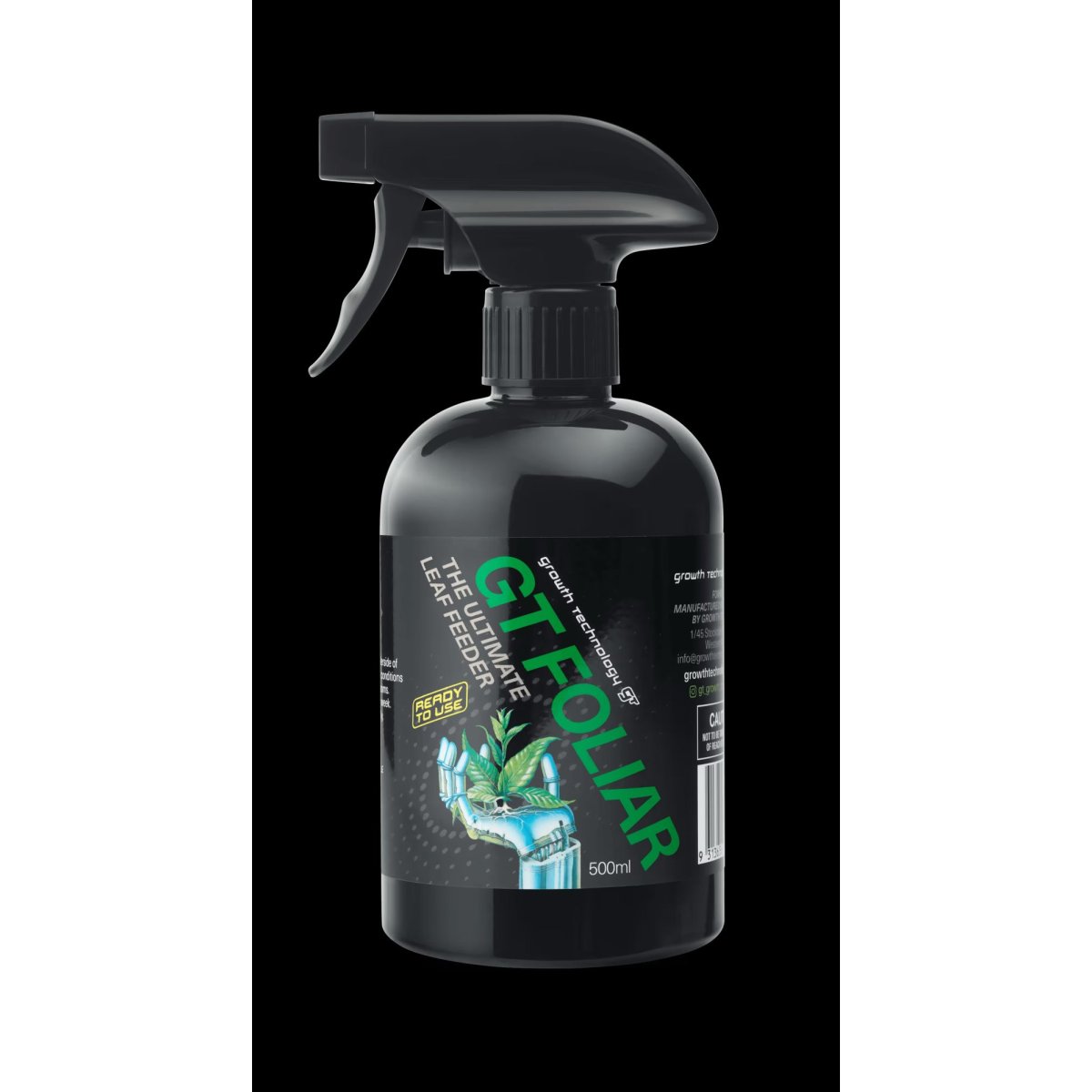
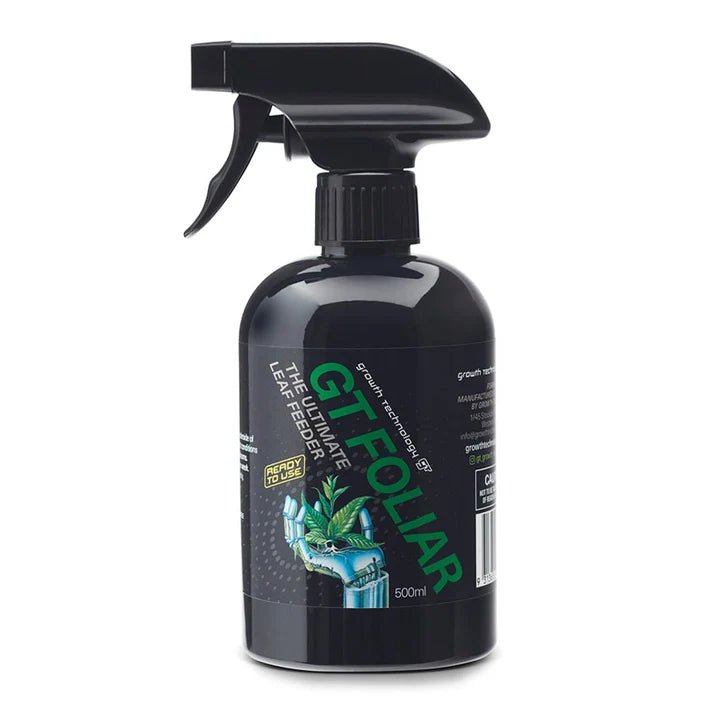
We sell GT Foliar Spray 500ml with Sprayer - Growth Technology Leaf Feed, a ready-to-use leaf feed supplied with a trigger sprayer.
If you prefer to mix your own, choose a liquid fertiliser or soluble concentrate and dilute it well below the root-feeding rate on the label.
How to Use Foliar Spray on Alocasia: Step by Step
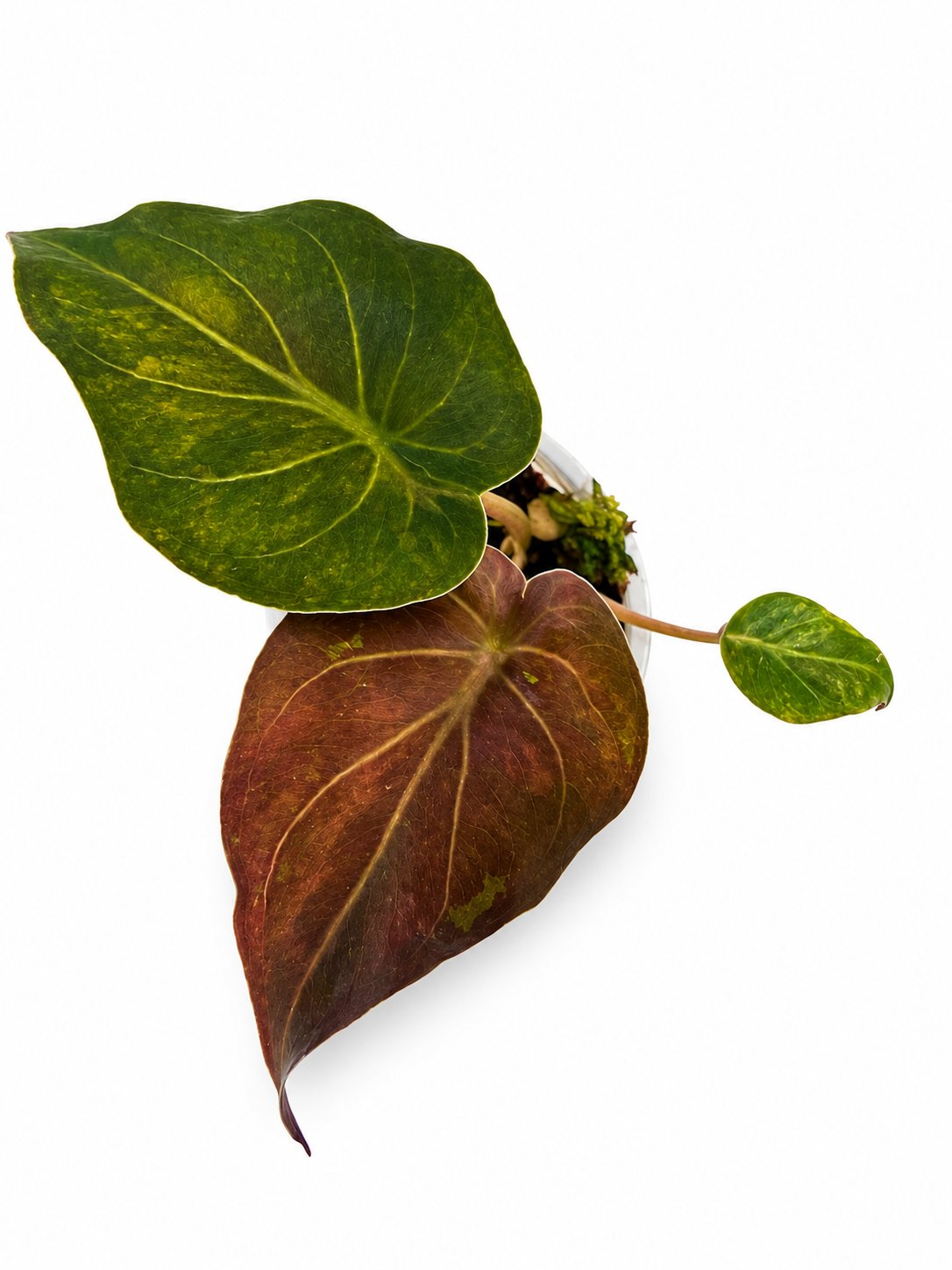
To use foliar spray on Alocasia safely, mist lightly in low light, cover both leaf surfaces and never drench the plant. The rest is timing, dilution logic and patience.
Follow this sequence:
- Check the label first. Read the dilution rate and any warnings on the product you actually own. Labels differ, and a rate that suits one brand can be too strong for another.
- Mix weaker than the label's root-feeding rate. If the label gives a rate for watering into the potting mix, halve it as a starting point for foliar use. Leaf tissue is thinner than root tissue and takes up nutrients faster, so the same concentration hits harder.
- Use room-temperature water. Cold water straight from the tap can shock leaf tissue, and hard water leaves mineral residue that blocks the next application.
- Fill a clean spray bottle with a fine-mist trigger. A jet spray soaks leaves and pools in the crown; a fine mist gives even coverage without runoff.
- Spray in low light, ideally early morning. Stomata are open and the leaf has hours to dry before the heat of the day. Evening works too if airflow is good.
- Mist the tops and undersides of leaves. Undersides have more stomata and take up nutrients more readily, so don't skip them.
- Skip the crown, petiole joints and any flowers or buds. Water sitting in the crown is the fastest route to rot, and buds are easily damaged.
- Let leaves dry in still, indirect air. No direct sun, no strong fan, no cold draught until the surface is dry.
- Wipe up drips on the pot rim, saucer and floor. Standing moisture invites fungus gnats and mould.
Dilution Rates and Spray Bottle Setup
We won't hand you a single number, because strength depends on the product in your hand. Instead, here's a framework you can apply to any bottle.
- Start at half the label's root-feeding rate. If the label says 5 ml per litre for watering in, start at 2.5 ml per litre for foliar use. If the label has a dedicated foliar rate, use that instead.
- Test on one leaf first. Spray a single older leaf, wait 48 hours and check for spotting, bleaching or curling before treating the whole plant.
- Never exceed the label rate. More is not better; over-strength foliar feeds cause more damage than under-strength ones.
A few setup habits make a real difference: a dedicated foliar bottle kept separate from pest sprays, a fine-mist trigger rather than a jet, and an extension wand if you're spraying a shelf of plants.
Preparing the Leaf Surface for Even Coverage
Dust and water spots block spray from reaching the leaf, so a quick clean first pays off. Our guide on how to clean Alocasia leaves safely covers water, cloths and gentle methods that protect delicate foliage.
Work in this order:
- Support the leaf from underneath with one hand so the petiole isn't bearing the weight
- Wipe dust with a soft, damp cloth, working from the base of the leaf outward
- Let the leaf dry completely before spraying
Watch out: never spray a plant that is sitting in direct sun or under a hot grow light. Droplets act like tiny lenses and scorch the tissue beneath them, and the damage often shows up within a day.
How Often to Foliar Spray Alocasia Through the Year
How often to foliar spray Alocasia depends on the season, the product label and your grow space, not a fixed calendar. In active growth, a light mist two to three times a week suits many ready-to-use feeds; in the cooler months, pull right back.
Our approach through the year:
- Spring: resume as new growth starts pushing, starting at once a week and building to two or three as leaves unfurl
- Summer: keep a steady, light routine, but spray early morning on hot days so leaves dry before the heat peaks
- Autumn: taper off as growth slows, dropping to once a week and then fortnightly
Watch the plant, not the calendar. If new leaves are unfurling, the plant can use a little support. If it has stalled, hold off.
Best Time and Conditions for Spraying
Timing matters as much as frequency. The ideal window is early morning, when stomata are open and the leaf has hours to dry before the heat of the day. Evening is next best, provided airflow is good enough that leaves aren't still wet at lights-out.
Conditions to aim for:
- Temperature: spray when the room is between roughly 18°C and 26°C. Below that, uptake slows and leaves stay wet longer; above it, droplets evaporate too fast and can leave concentrated residue.
- Light: low, indirect light only. Never spray under direct sun or a hot grow light.
- Airflow: gentle background air, not a fan pointed at the plant. Still air keeps leaves wet too long; strong air dries droplets before they're absorbed.
Foliar Feeding Versus Root Fertilising in Practice
Foliar feeding is a supplement, not a replacement. Roots still deliver the bulk of nutrition, and a plant that's only ever misted will slowly run short on the macronutrients it needs for new leaves and roots.
A practical split for most collectors:
- Root feed: the main event, on whatever schedule suits your mix and season
- Foliar feed: a light top-up during active growth, no more than two to three times a week
- When to skip foliar entirely: if the plant is stressed, recently repotted, recovering from shipping, or sitting in a cold room
If you want a dedicated feed for your collection, GT Foliage Focus 1 Litre is the product we stock for a broader Alocasia feeding routine. Pair it with sensible watering and you have the foundation sorted.
Recognising Spray Injury and Troubleshooting
Even careful spraying can go wrong. Signs to watch for in the 24 to 48 hours after application:
- Bleached or papery patches: usually sun or grow-light scorch from spraying in bright light
- Crisp brown edges: often a mix that's too strong, or repeated heavy coats
- Sticky residue: too much product, or a mix that wasn't rinsed from the bottle
If you see any of these, stop spraying that plant, move it to gentle indirect light, and flush the potting mix with plain water if you suspect over-strength. Wait at least two weeks before trying again, and dilute further next time. For a deeper look at leaf problems across the family, our Alocasia, Anthurium and rare aroid guides hub is the place to dig further.
Alocasia Fertiliser and Feeding: Where Foliar Fits In
Foliar spray is one part of a feeding plan, not the whole plan. A complete routine includes a balanced root feed, correct watering and enough light to use the nutrients you provide.
Our feeding framework looks like this:
- Base feed: a regular diluted liquid fertiliser at the roots
- Top-up: light foliar misting during active growth
- Water: consistent moisture, never soggy mix
If you want a dedicated feed for your collection, GT Foliage Focus 1 Litre is the product we stock for a broader Alocasia feeding routine. Pair it with sensible watering and you have the foundation sorted.
Alocasia Leaf Burn from Spray: Spotting It and Fixing It
Alocasia leaf burn from spray usually shows as bleached, papery patches or crisp brown edges on the leaf surface, often within a day of application. It is almost always caused by spraying in strong light, mixing too strong or drenching the leaf.
| Problem | Likely Cause | Fix |
|---|---|---|
| Bleached patches | Sprayed in direct sun | Move to low light, stop spraying that leaf |
| Crisp brown edges | Mix too strong | Flush with water, dilute further next time |
| Sticky residue | Heavy, repeated coats | Rinse gently, space out applications |
| Spots on underside | Water sat in leaf folds | Improve airflow, mist more lightly |
If a leaf is badly damaged, leave it while it still photosynthesises and remove it only once it browns fully.
Building a Spray Routine for Your Collector Plants
A routine beats a rescue mission every time. If you are still deciding which variegated varieties to grow, our guide to the best variegated Alocasia for collectors is a good starting point.
Here is the routine we would build:
- Set a fixed misting day and stick to it
- Check the label rate before every mix
- Clean the spray bottle after each session
Best for: collectors running a small, closely watched collection. Skip if: your plants are already stressed, repotting or recovering from shipping.
Foliar feeding only works when the plant underneath is healthy, and that starts with good stock.
Frequently Asked Questions
Can you use foliar spray on Alocasia?
Yes. Alocasia leaves take up nutrients through their surface, so a gentle foliar spray Alocasia routine can support plant nutrition alongside your normal watering and feeding. The key is to use a ready-to-use or properly diluted foliar fertiliser, mist lightly in low light, and avoid drenching the leaf. A ready-to-use option such as GT Foliar Spray 500ml with Sprayer from Growth Technology needs no measuring or dilution.
How often should you foliar spray Alocasia?
During active growth in spring and summer, misting two to three times a week is a sensible rhythm for most indoor Alocasia. Ease off to once a week or less in the cooler months when growth slows. Watch new growth and leaf colour rather than sticking rigidly to a calendar, and stop if you notice any spotting or leaf burn from spray.
Should you spray Alocasia leaves in direct sunlight?
No. Spray in low-light conditions, either early morning or evening, and keep the plant out of direct sun while leaves are wet. Water droplets can act like tiny lenses and scorch the leaf surface, and rapid evaporation in hot conditions reduces how much nutrient the foliage actually absorbs. Avoid spraying in excessively hot weather.
Is foliar feeding a substitute for watering Alocasia?
No. Foliar feeding is a supplement, not a replacement for watering or root feeding. Alocasia still need a regular watering routine and an appropriate fertiliser programme through the soil. Think of the spray as a top-up that supports leaf health and new growth, used alongside your normal care rather than instead of it.