 How-to
How to Clean Alocasia Leaves Safely Without Damage
Last Updated: November 3, 2026
Quick Summary
To clean alocasia leaves safely, support the leaf with one hand and wipe gently with a soft damp microfiber cloth, working the underside first and then the top. Dry the surface afterwards with a dry cloth and let the plant air dry in good airflow, away from direct sun.
- Plain lukewarm water is all you need for routine dust and grime on leaves.
- Patch-test any solution on one inconspicuous leaf and wait a day before treating the plant.
- Velvety leaves like Alocasia Frydek need a soft dry brush, not rubbing or soaking.
- Most indoor Alocasia leaves benefit from a light clean every two to four weeks.
- Never let water pool in the crown or leaf axils, as trapped moisture causes rot.
Table of Contents
- Why Cleaning Alocasia Leaves Matters More Than You Think
- What You'll Need Before You Start
- Step-by-Step: How to Clean Alocasia Leaves Safely
- How to Clean Velvet Alocasia Leaves Without Damaging Them
- How Often to Clean Plant Leaves (and the Signs You've Left It Too Long)
- Leaf Shine for Alocasia: What's Safe and What to Avoid
- Telling Mineral Deposits Apart from Pests and Disease
- Shop Collector-Grade Alocasia and Aroid Care Essentials
- Frequently Asked Questions
Why Cleaning Alocasia Leaves Matters More Than You Think
A dusty Alocasia leaf is a leaf that can't breathe properly. That's the short version, and it's the reason we treat leaf cleaning as part of routine care at Obsessed With Aroids rather than an occasional tidy-up. Alocasia leaves collect dust fast, and every speck that settles on the surface blocks light from reaching the cells that make the plant's food.
How Dust and Mineral Deposits Affect Foliage
Dust is more than a cosmetic problem.
Mineral deposits are a different beast. If you water with hard water, the calcium and other minerals left behind when droplets dry form pale, chalky spots.
Cleaning is also a good chance to inspect for pests. Spider mites often gather on the undersides of leaves, and fine webbing or stippling is easiest to spot when you're up close.
What You'll Need Before You Start
Gather your supplies first so you're not leaving the plant half-cleaned while you hunt for a cloth. You need:
- A soft microfiber cloth or a soft cloth you don't mind dedicating to plants
- A second dry cloth for drying
- A spray bottle of clean water
Skip anything abrasive. Paper towel is too rough for delicate leaves, and kitchen sponges with a scouring side are a fast route to scratches.
Step-by-Step: How to Clean Alocasia Leaves Safely
The safest method is simple: support the leaf, wipe gently with a soft damp cloth, and dry the surface afterwards. Work from the underside first, then the top, and never pull a leaf against its natural angle.
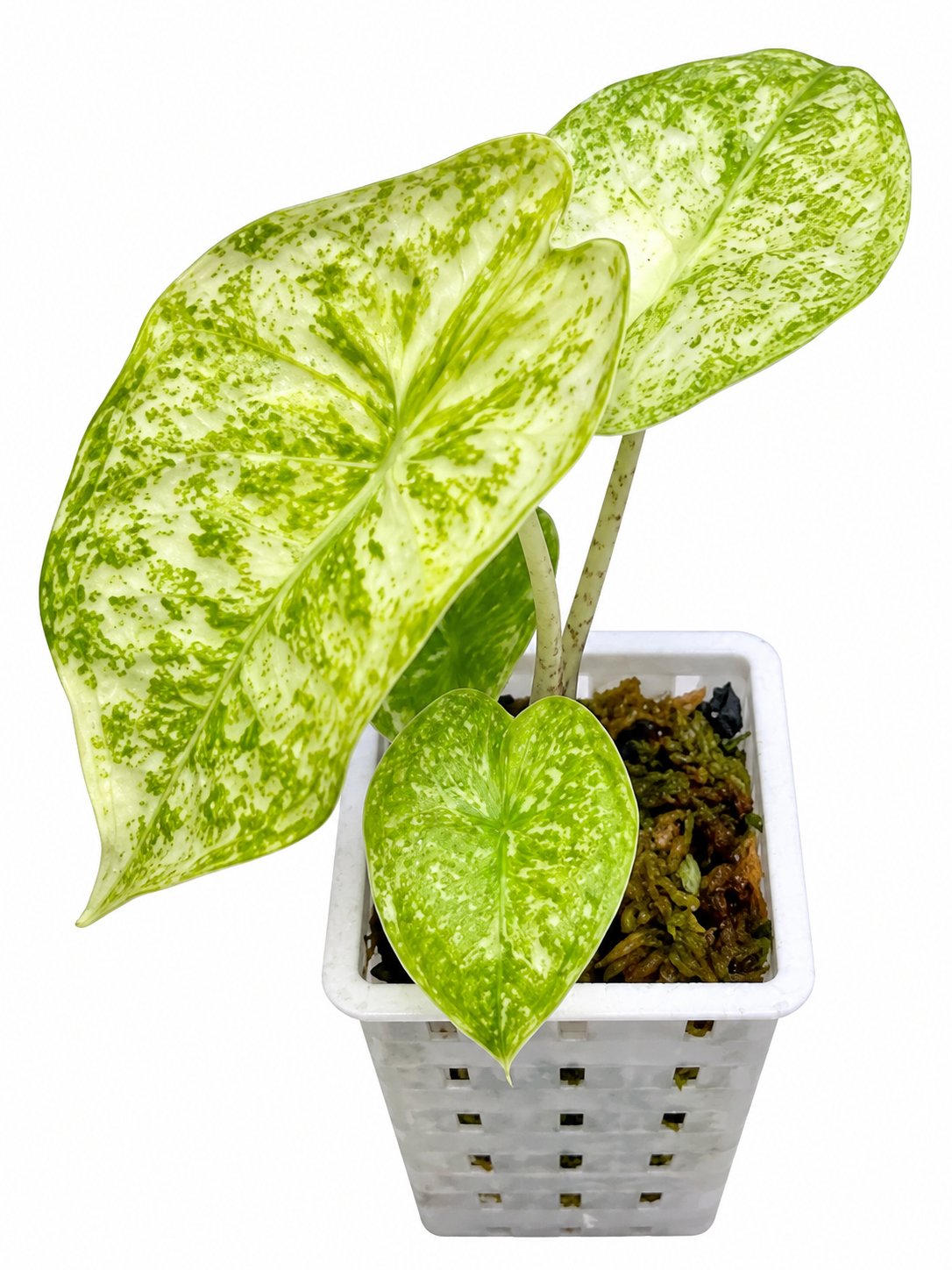
- Support the leaf. Slide one hand underneath to hold the stem and leaf steady. Alocasia leaves are heavy, and the petiole can snap if you press down on an unsupported leaf.
- Start with the underside. This is where pests hide and where dust collects. Wipe from the stem outward with slow, light strokes.
- Wipe the top surface. Use a fresh section of cloth. Don't scrub at stubborn spots; soften them first with a damp cloth and let them sit for a moment.
- Rinse if needed. A gentle shower removes loosened dust and mineral residue. Keep the water lukewarm, not cold and not hot.
- Dry the leaf. Pat or wipe with a dry cloth, then let the plant air dry in a spot with good airflow and no direct sun.
- Check the pot and soil. While you're there, look at soil moisture. Waterlogged soil and stressed plants go hand in hand, and cleaning time is a good moment to check.
Plain Water Versus a Cleaning Solution
Most of the time, plain water is all you need. Dust lifts off a damp cloth, and routine wiping with clean water keeps the leaf surface clear. Reach for a solution only when plain water has failed on a specific problem:
- Dust and general grime: plain lukewarm water. No additives.
- Hard-water mineral deposits: plain water first, then a final wipe with filtered, distilled or reverse-osmosis water. If the chalky rings persist, a very weak acid helps dissolve calcium, but this is where most damage happens, so read the dilution note below.
- Pests (spider mites, thrips): plain water for the clean, then a separate, targeted treatment. Don't combine cleaning and pest treatment into one heavy application.
Dilution and Patch Testing
If you do use anything beyond water, keep it weak and test it first. Oils and commercial solutions vary enormously, so follow the label rather than a social-media ratio.
Watch out: always patch-test on a single inconspicuous leaf first. Apply the mix to a small area, let it dry out of direct sun for a day, and check for spotting, bleaching or curling before treating the whole plant.
Matching the Method to the Leaf Surface
Alocasia leaves are not all the same, and the surface should guide how hard you clean:
- Glossy, smooth leaves tolerate a damp microfiber wipe on both sides and a gentle rinse.
- Matte and textured leaves trap dust in the grain. Use a soft brush to lift it, then a barely damp cloth, and dry thoroughly so moisture doesn't sit in the texture.
- Velvety leaves (like Alocasia Frydek) resent rubbing. Use a dry soft brush and only dab stubborn spots with a damp corner, then dry immediately.
Whatever the surface, never let water pool in the crown or the leaf axils. That trapped moisture is the most common cause of rot after cleaning, and it's entirely avoidable with a dry cloth and good airflow.
Here's the cleaning sequence at a glance, from supporting the leaf to the final dry.
| Step | What to do | Note |
|---|---|---|
| 1 | Support the leaf with one hand | Petiole can snap if unsupported |
| 2 | Wipe the underside first | Where pests hide and dust collects |
| 3 | Wipe the top with a fresh cloth section | Soften stubborn spots, don't scrub |
| 4 | Rinse if needed | Use lukewarm water, not cold or hot |
| 5 | Dry the leaf | Pat dry, then air dry with good airflow |
| 6 | Check the pot and soil | Waterlogged soil and stressed plants go together |
How to Clean Velvet Alocasia Leaves Without Damaging Them
Velvet Alocasia leaves need a drier approach. Varieties with a velvety, textured surface, like Alocasia Frydek, have fine hairs that trap dust but also resent heavy rubbing.
Work gently and let the brush lift the dust rather than pressing it into the surface.
If you're growing a velvet type and want the full picture on light, watering and winter dormancy, our Alocasia Frydek care guide covers the green velvet and variegated forms in detail.
GT Foliar Spray 500ml with Sprayer – Growth Technology Leaf Feed →
How Often to Clean Plant Leaves (and the Signs You've Left It Too Long)
Most indoor Alocasia leaves benefit from a light clean every two to four weeks. In a dusty home, near a road, or during heating season, you'll want to clean more often. The plant will tell you when it's overdue.
Watch for these signs:
- A dull, greyish film across the leaf surface
- Pale chalky rings where water droplets dried
- Visible dust when you brush a finger across a leaf
Cleaning frequency ties into feeding, too. If you're wondering whether a liquid feed belongs in your routine, our article on whether liquid fertiliser is good for Alocasia answers that directly.
Post-Cleaning Troubleshooting
Sometimes a leaf reacts after cleaning, and knowing what you're looking at saves a lot of worry. Here's how to read the common problems:
- White or chalky residue left behind: usually minerals from hard water drying in place. Wipe again with filtered or distilled water and dry thoroughly. If it keeps returning, switch your final wipe water rather than scrubbing harder.
- Brown or bleached spots after cleaning: often a sign the solution was too strong, or the leaf was wet in direct sun. Rinse with plain water, dry, and move out of strong light. Patch-test before using that mix again.
- Curling or drooping leaves: usually stress from handling or a sudden change in conditions, not the cleaning itself. Support the leaf, keep conditions stable, and give it a few days.
Drying Conditions Matter
How the leaf dries is as important as how you clean it. Aim for good airflow, indirect light and room temperature. Avoid direct afternoon sun on a wet leaf, and avoid cold draughts, which slow drying and leave moisture sitting longer. A dry cloth pass followed by air drying in a well-ventilated spot is the safest combination, and it's the step most likely to prevent post-cleaning problems before they start.
Leaf Shine for Alocasia: What's Safe and What to Avoid
Skip commercial leaf-shine products on Alocasia. Many contain oils or waxes that clog leaf pores and leave a sticky film that attracts dust.
For a safe boost, use a ready-to-use foliar feed rather than a cosmetic shine. Our GT Foliar Spray 500ml with sprayer is a ready-to-use leaf feed supplied with a trigger sprayer, with no measuring or dilution required.

Avoid these on Alocasia leaves:
- Vinegar or lemon juice solutions, which can burn delicate tissue if the dilution is wrong
- Neem oil and soap solutions applied in strong sun, which risk leaf burn
- Peppermint oil and other essential oils, which are not made for leaf surfaces
Telling Mineral Deposits Apart from Pests and Disease
Mineral deposits are flat, chalky and usually sit where water dried. Pest damage looks different: spider mites leave fine webbing and pale stippling, and the leaf may yellow or distort.
Test a spot gently. A calcium deposit usually softens with a damp cloth and a little patience. Pest damage doesn't wipe away, and you'll often find the culprits on the underside.
If you spot marks while cleaning and aren't sure what they are, our guide to identifying pests on variegated Alocasia leaves helps you tell pests from mineral stains before you treat anything.
Shop Collector-Grade Alocasia and Aroid Care Essentials
Healthy leaves start with a healthy plant. At Obsessed With Aroids, we sell corm-grown Alocasia and Anthurium, not tissue culture, and we ship to street addresses across Australia. Every listing is honest about what you're getting, and we're happy to talk you through care before you buy.
Browse our current rare Alocasia and Anthurium collection and pick up the care essentials while you're there.
Frequently Asked Questions
Can you wipe Alocasia leaves with water?
Yes, plain water is the safest starting point for most Alocasia leaves. Use lukewarm water and a soft microfiber cloth or damp washcloth, wiping gently along the leaf surface rather than scrubbing. If you have hard water at home, mineral deposits can build up over time, so filtered, distilled or reverse-osmosis water is a better choice for routine cleaning. Always dry the leaf afterwards to avoid water sitting in the leaf axils or on velvety surfaces.
How often should you clean Alocasia leaves?
Most Alocasia leaves benefit from a light clean every two to four weeks, depending on how dusty your home gets and whether you run air conditioning or heating. You'll know it's time when you can see a dull film on the foliage, when water beads oddly on the surface, or when white mineral deposits appear near the leaf edges. Velvet-leaved varieties need less frequent handling, so stick to dry brushing or a gentle rinse where possible.
Can you use leaf shine on Alocasia leaves?
Be cautious with commercial leaf shine products on Alocasia. Many contain oils or silicones that can clog leaf pores, attract dust and damage the matte or velvety finish on varieties like Alocasia frydek. If you want a glossy look, a clean damp cloth and a foliar feed such as GT Foliar Spray 500ml with Sprayer from Obsessed With Aroids is a safer way to support leaf health. Always test any product on a single leaf first.
What should you do if water leaves marks on Alocasia leaves?
White marks usually come from calcium and other minerals in hard water. Switch to distilled, reverse-osmosis or filtered water for cleaning, and wipe the leaf dry with a soft cloth after each wash. For existing deposits, a heavily diluted vinegar solution (one part white vinegar to at least ten parts water) on a cloth can help, but test on a small area first and rinse thoroughly. Avoid vinegar on velvet leaves entirely.
Cleaning your Alocasia leaves safely comes down to a soft cloth, clean water and a gentle hand, and it pays off in healthier foliage and earlier pest detection. If you'd rather start with strong, well-grown stock, Obsessed With Aroids offers carefully selected corm-grown Alocasia and Anthurium, packed with care and shipped on a schedule that protects delicate plants. Get started with Obsessed With Aroids and give your collection the healthy foundation it deserves.