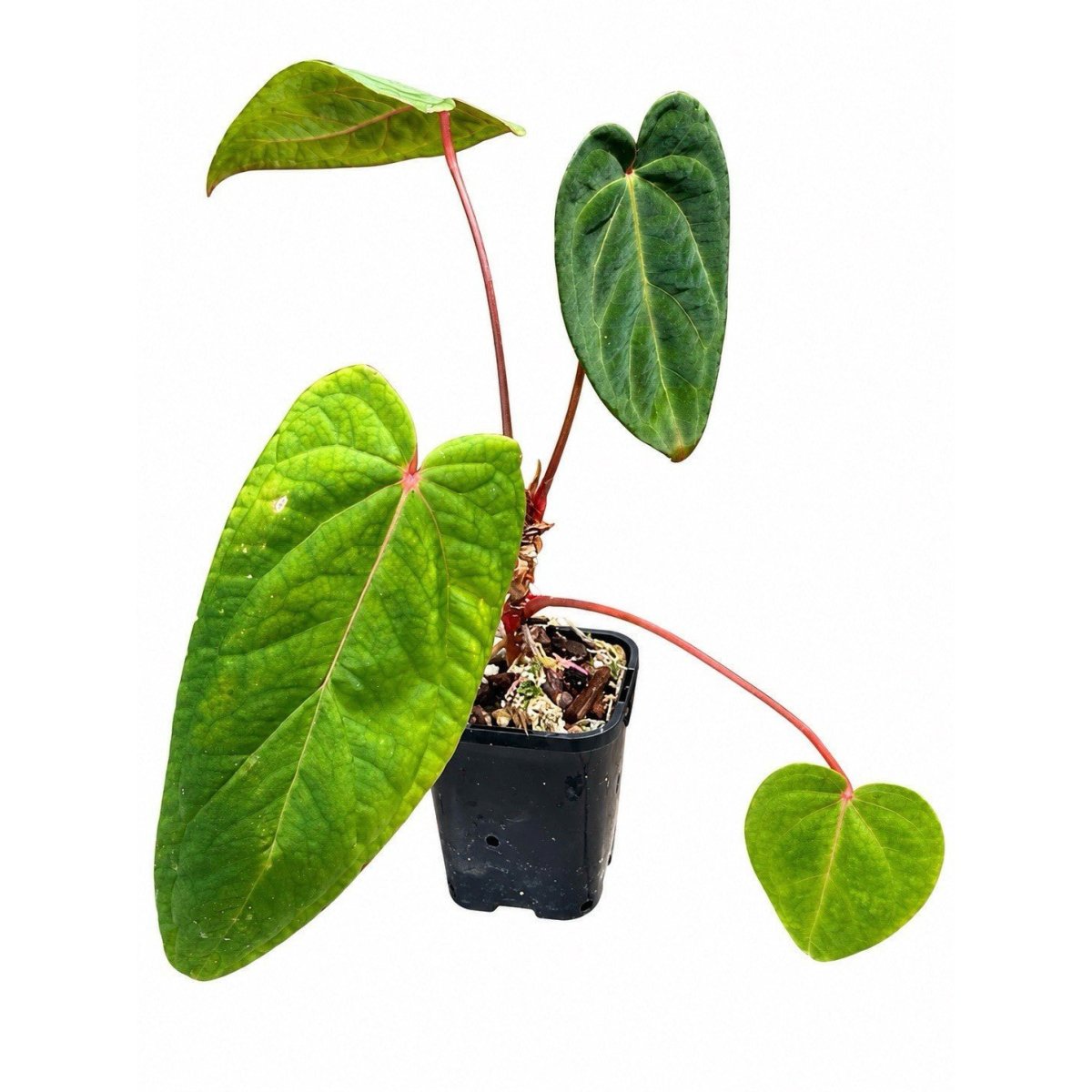
 How-to
How to Collect Seed Grown Anthurium Hybrids in Australia
Quick Summary
A seed grown anthurium is a plant raised from seed after two named parents are crossed, so each seedling is genetically unique and can look different from its siblings. In Australia, collectors should check for stated seed and pollen parents, fresh seed, and a fine airy mix kept evenly moist and warm. Buy based on the plant's current appearance, since its mature foliage cannot be guaranteed.
- Seed grown plants come from a deliberate cross, while tissue culture plants are lab clones of one mother plant.
- Check that the listing names both the seed parent and the pollen parent.
- Sow fresh seed on the surface of a fine, moist mix and keep it under a lid out of direct sun.
- Open the container daily to prevent mould and fungus gnats.
- Germination can take weeks to months, and some seed never germinates.
Table of Contents
- What Seed Grown Anthurium Hybrids Are and Why Collectors Chase Them
- Seed-Grown Anthurium vs Tissue Culture: How to Tell the Difference
- How to Germinate Anthurium Seeds at Home
- Checking Hybrid Provenance and Parentage Before You Buy
- Buying Rare Anthurium Hybrids for Sale in Australia
- Anthurium Hybrid Care and Seasonal Growing in Australia
- Your Next Step: Choosing Your First Seed Grown Hybrid
- Frequently Asked Questions
How to Collect Seed Grown Anthurium Hybrids in Australia
Last Updated: November 7, 2026
What Seed Grown Anthurium Hybrids Are and Why Collectors Chase Them
Seed grown anthurium hybrids are plants raised from seed after two named parent plants have been crossed. Collectors pursue them because every seedling is genetically individual. Two seedlings from the same cross can look quite different as they mature.
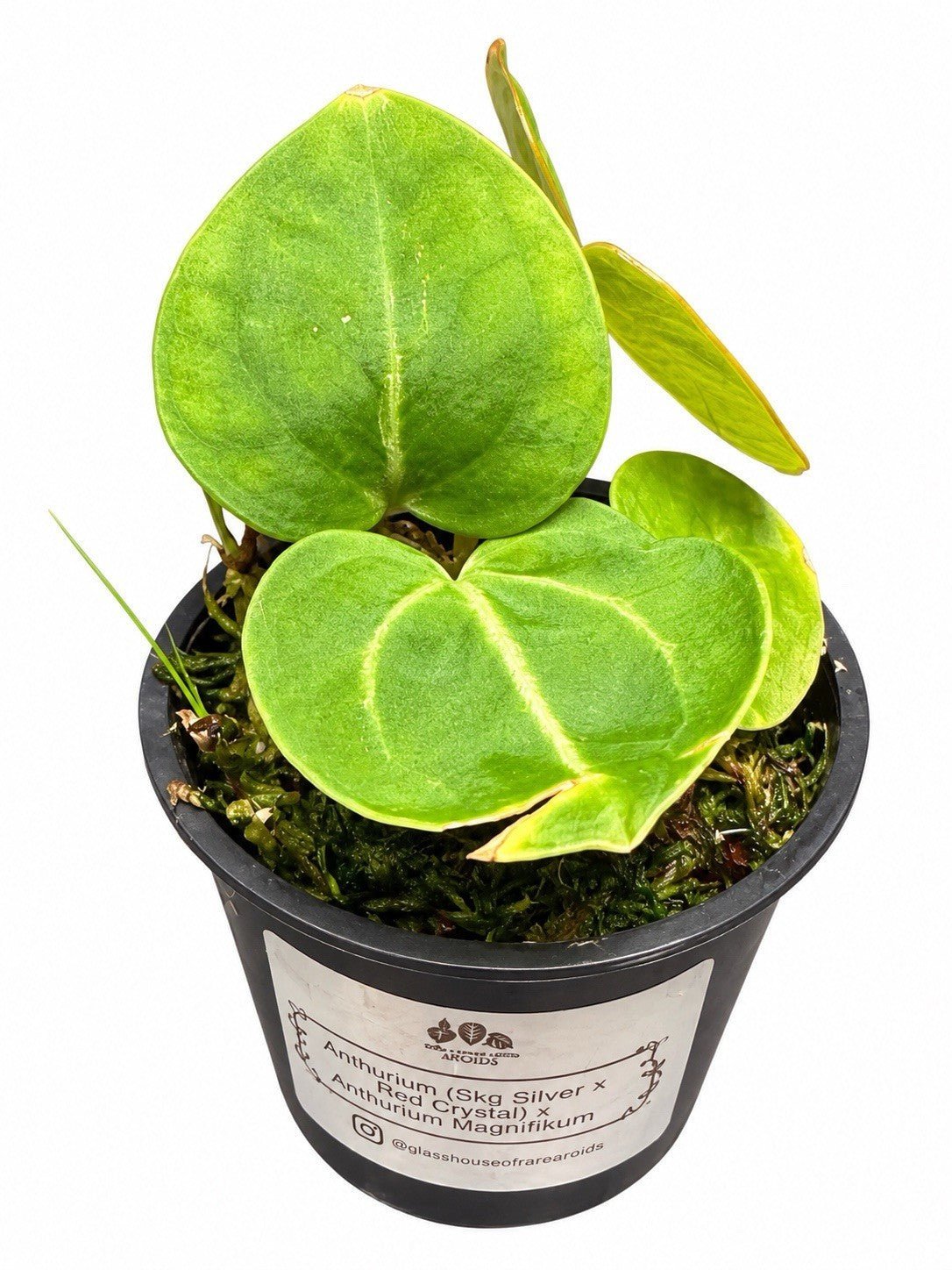
That variation is the appeal. You are not buying a clone of a plant you have already seen. You are buying one unique plant from a known family.
Collectors often value:
- Recorded parentage: a cross with a traceable seed parent and pollen parent
- Individual character: leaf shape, colour and texture that differ from sibling seedlings
- Rarity: limited seed releases that do not last long on the market
- The growing story: following a seedling from its first true leaves onward
Here is the catch. A seedling's future appearance cannot be promised. Variegated parentage does not guarantee variegated offspring, so buy based on what the plant looks like now.
Seed-Grown Anthurium vs Tissue Culture: How to Tell the Difference
Seed-grown plants start as seeds from a deliberate cross. Tissue culture plants are cloned in a lab from a small piece of tissue, so each one is a genetic copy of the mother plant.
Seed-grown is not the same as corm-grown, though. Where the listing says seed grown, that is what you receive.
When you check a listing, look for:
- A stated seed parent and pollen parent
- Wording such as "seed grown" or "grown from seed"
- Photos of the exact plant you will receive, not just the parents
If a listing does not explain how a plant was propagated, ask the seller before you buy.
How to Germinate Anthurium Seeds at Home
Germinating Anthurium seed is less about a secret trick and more about getting three things right at once: fresh seed, a fine airy mix, and steady warmth without stagnation. Freshness matters for germination.
Start with a fine, airy seed-starting mix rather than a chunky aroid mix. Seed needs surface contact with moisture, and large bark pieces leave air pockets a tiny radicle cannot bridge.
- Sow fresh seed on the surface of the moist mix in a clear container with a lid. Do not bury it; light and airflow at the surface help.
- Keep the mix evenly moist, not soggy. Mist the surface rather than watering through.
- Hold warmth and humidity with the lid on, out of direct sun. A steady warm spot is better than a hot one that swings cold overnight.
- Open the lid briefly each day to let air circulate and prevent mould and fungus gnats.
- Watch for the first true leaves and move seedlings up when they are large enough to handle.
| Stage | What to look for | Typical care |
|---|---|---|
| Sowing | Seed on moist mix | Lid on, warm spot |
| Germination | Early shoots | Daily airing |
| Seedling | First true leaves | Lift and pot on |
Timelines are where many collectors get anxious. Germination times vary with seed age, temperature and the mix you use. Fresh seed can show signs within a few weeks; older or shipped seed can take considerably longer, and some never comes up.
Watch out: if the container smells sour or you see grey fuzz on the surface, the mix is too wet and airflow is too low, open the lid more often and back off the misting before the seed rots.
Australian conditions change the practicalities. In warmer months a shaded spot indoors or on a covered verandah usually holds enough warmth without a heat mat.
Checking Hybrid Provenance and Parentage Before You Buy
Provenance tells you where a plant came from. Parentage tells you what it was crossed from. Both matter if you want a plant you can identify later.
Before you buy, check:
- Named parents: Does the listing name both the seed parent and the pollen parent?
- Cross notation: Does the name follow a clear format, such as A × B?
- Seed source: Is the seed from a known release or a recorded cross?
- Current appearance: Do the listing photos show the plant as it looks today?
Be wary of listings that only show parent photos. Parent plants are a reference, but the seedling is its own plant. Its mature colour and texture cannot be guaranteed.
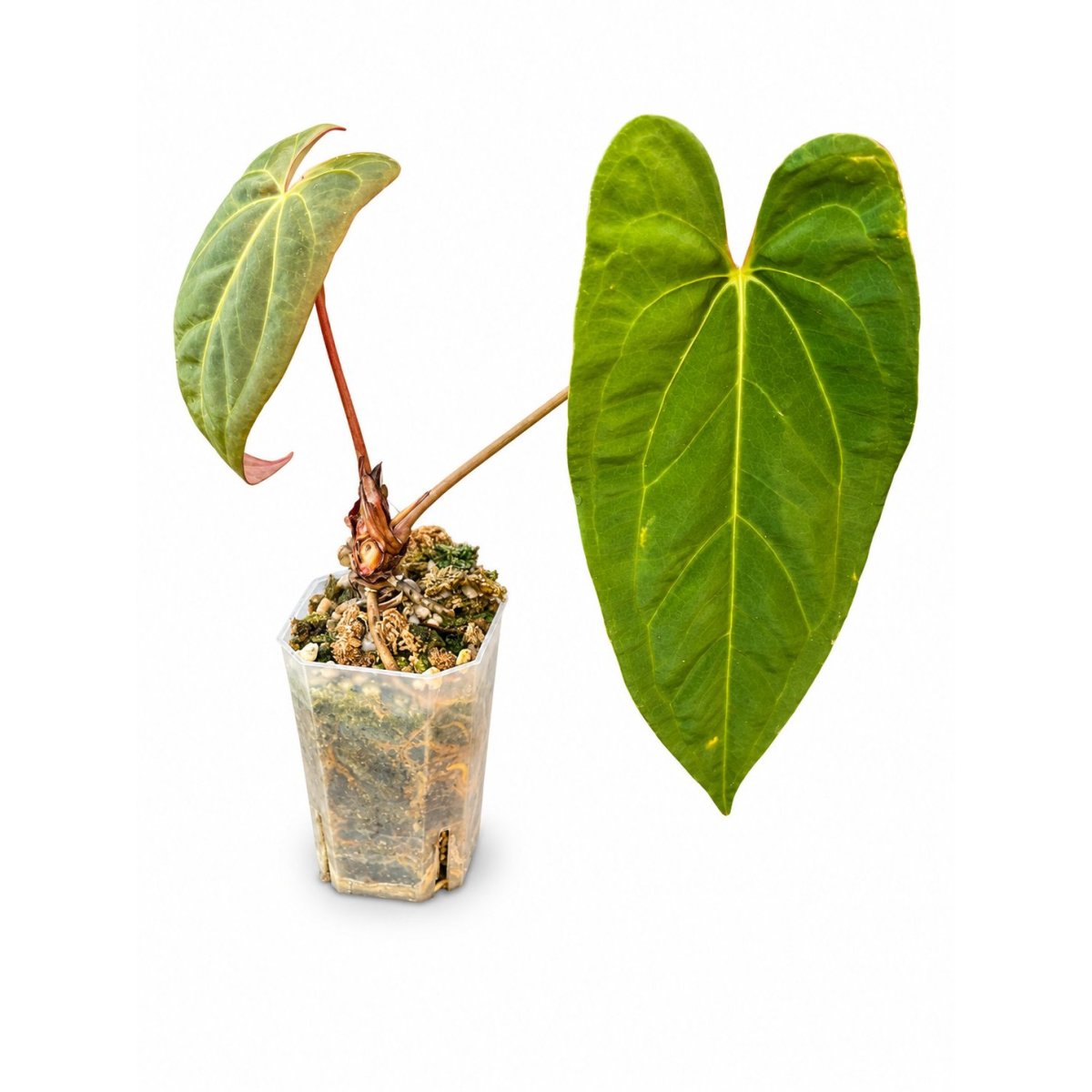
Here is a real example from our range. The Anthurium Papillilaminum 'MDB' × 'RA8' is offered as a seed-grown cross of 'MDB' ('Marshellini' × 'Dadbod') with 'RA8', and each seedling can develop differently. You can read the full listing for its details before you decide. Anthurium classification and hybrid naming conventions
Buying Rare Anthurium Hybrids for Sale in Australia
Buying a rare hybrid online means trusting the listing, the seller and the shipping. Look for clear photos, honest descriptions and a plant you can see as it is now.
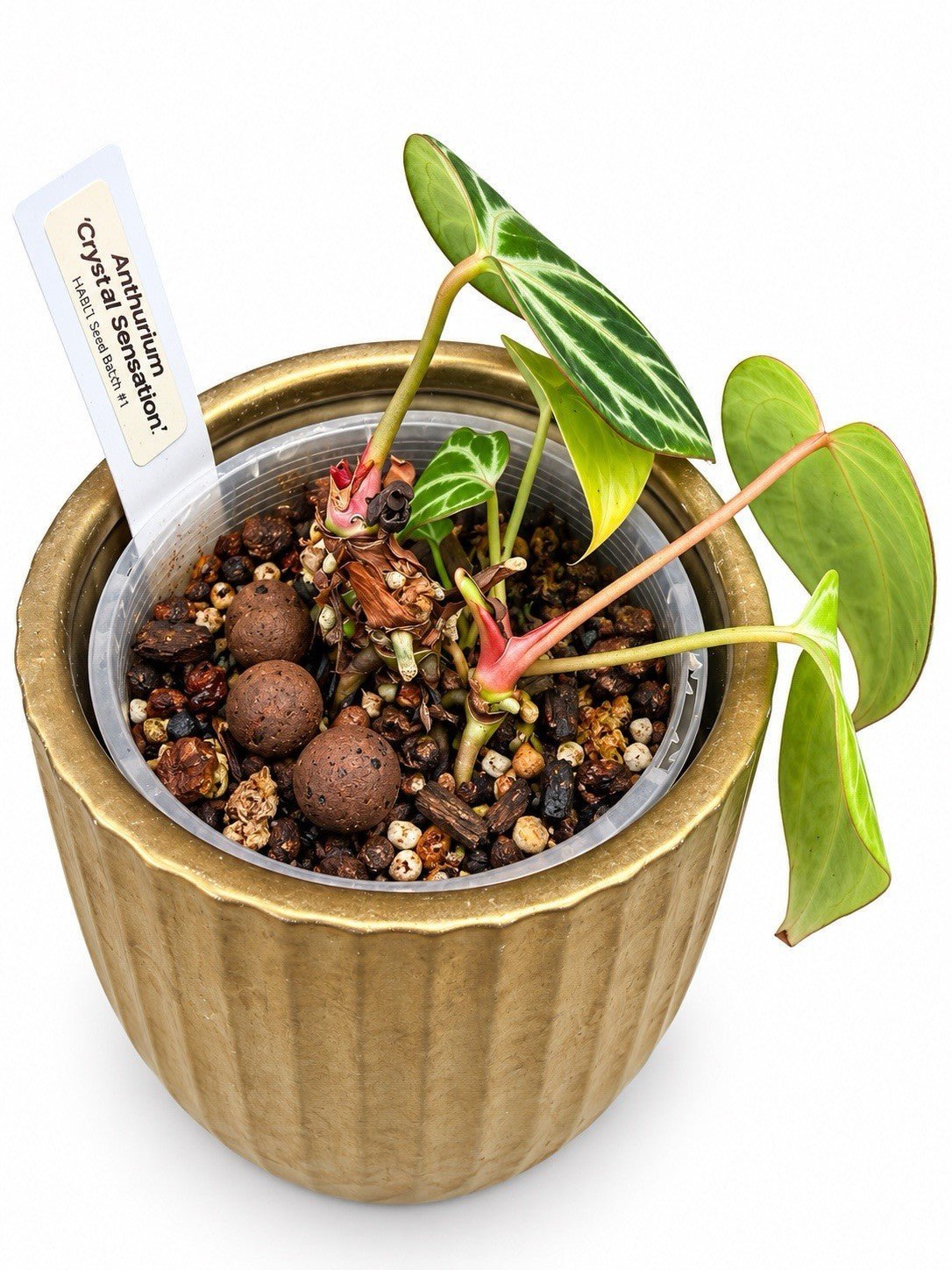
When you are ready to browse, the browse our rare Anthurium collection gives you a sense of the cross names and seedling sizes we currently carry. An established example from our range is the Anthurium 'Augustus × Frilly Knickers' listing, which shows its velvet foliage and contrasting venation in the photos.

Shipping matters too. We are ICA accredited, so we can prepare and certify eligible plants for interstate movement under biosecurity requirements. Before you order, read our live plant shipping and arrival policy so you know what to expect.
Some states need extra biosecurity steps. WA and TAS orders need additional treatment and certification, and a $15 treatment charge applies per order. We do not ship to NT.
One customer told us their plant arrived perfectly packaged and as described, and that the seller sent photos of it in the box before shipping.
Anthurium Hybrid Care and Seasonal Growing in Australia
Once your plant arrives, give it time to settle. Acclimation is normal, and a short adjustment period is expected.
Provide:
- Bright indirect light with no harsh midday sun
- Warmth and good airflow
- Moderate to high humidity
- A chunky, well-draining aroid mix that does not stay wet
Australian seasons change how you water and feed, and the differences between climates matter more than most general guides admit. In the humid tropics and subtropics, warmth and humidity are rarely the problem; airflow and avoiding a permanently wet mix are. In temperate and cooler southern climates, indoor humidity in winter can drop sharply with heating, and overnight temperature swings near windows slow growth.
Water less often in winter and check the mix before you add more. Warm summers can dry pots quickly, so check more often rather than watering on a fixed schedule. If you use a feed, follow the product instructions and go gently with young seedlings.
Watch for these common issues:
- Yellowing from overwatering
- Slow growth in cold, dim spots
- Crispy edges from dry air
Every plant responds differently, so adjust care to what you see. Our plant care guidance covers more on keeping seedlings healthy through the seasons.
Realistic timelines from seed to identifiable foliage
Set your expectations early. A seed-grown hybrid is a long game. Germination itself can take weeks to months depending on freshness and conditions. After that, a juvenile plant typically spends its first year or more building roots and small leaves before it shows the leaf shape, texture and venation that made the cross interesting. Most collectors find that meaningful trait development, the velvet finish, the deep lobes, the contrasting veins, takes a few years, and some traits only settle as the plant matures and produces larger leaves.
Factors that speed progress: steady warmth, consistent humidity, good airflow, a mix that dries slightly between waterings, and repotting only when roots fill the pot. Factors that slow it: cold draughts, soggy mix, low light, and frequent repotting or moving.
Evaluating a seed-grown plant before and after you buy
Rather than focusing only on listings or germination, judge the plant itself. Before purchase, ask for current photos of the exact plant, not just the parents, and check:
- Seedling size and leaf count: a plant with several healthy leaves and a visible growing point is further along than a single-leaf seedling.
- Root health: ask whether roots are visible at the drainage holes or whether the plant has been recently repotted.
- Leaf condition: some older leaf damage is normal, but yellowing, soft spots or pest signs are worth questioning.
- Acclimation history: was it grown indoors, in a greenhouse or under lights? Matching its previous conditions reduces shock.
- Questions to ask the seller: how was it propagated, what are the named parents, how long have you had it, and what conditions has it been grown in?
After arrival, give the plant a stable spot and resist the urge to repot immediately. Let it settle, then assess new growth over the following weeks as your best indicator of health.
Hybrid variation, naming and outcomes
Siblings from one cross can differ noticeably, and a seedling may not closely resemble either parent. That is the nature of seed-grown hybrids, not a fault. Recorded crosses use a clear notation such as A × B, with the seed parent usually listed first, but the notation describes parentage, not a guarantee of appearance. Variegated parentage does not guarantee variegated offspring. Buy based on what the plant looks like now and on documented parentage, and treat the mature result as something to observe rather than promise.
Your Next Step: Choosing Your First Seed Grown Hybrid
Start with one plant you can learn from. Choose a seedling with clear parentage, a listing you trust and a size that suits your space.
Set a short checklist before you buy:
- Named seed parent and pollen parent
- Seed grown, not tissue culture
- Current photos of the exact plant
- Shipping and biosecurity suited to your state
- Care routine you can keep through the seasons
Looking for a starting point? The Obsessed With Aroids Gift Card is a simple way to let a fellow collector choose their first seed-grown hybrid. Read the gift card terms before you buy.

Start your collection with a seed-grown hybrid from a small, collector-run business that packs and ships with care. Browse our current range and find a plant you will want to watch grow for years.
Frequently Asked Questions
What does seed-grown mean for an Anthurium hybrid?
A seed-grown Anthurium is raised from a seed produced by a recorded cross between two parent plants. Each seedling carries genetics from both parents but is genetically individual, so it can differ from siblings and from the parents in leaf colour, texture and growth habit. This is why a seed-grown plant can be exciting to collectors: no two seedlings from the same cross are guaranteed to look identical. Always judge a listing on the plant's current appearance and its stated parentage.
How long does it take to grow an Anthurium from seed?
Germination can take several weeks, and a seedling typically needs many months before it develops the mature, identifiable foliage collectors look for. Growth is slower in cooler Australian months, so timelines vary by region and season. Expect patience. A young seedling is a long-term project, and its mature appearance is not known for some time after sowing.
Will a seed-grown Anthurium look like its parent plant?
It may share features with its parents, but it will not necessarily match them. Hybrid seedlings from the same cross can vary considerably. Parent plant photos are useful as a reference for the cross, but they do not guarantee how a seedling will look as it matures. Variegated parentage, for example, does not guarantee visible variegation in the offspring.
Can Anthurium hybrids be grown from seed at home?
Yes, many collectors sow seed at home using a light, airy medium, steady warmth and humidity, and good drainage. Success depends on having viable seed to start with and on keeping conditions consistent. Home germination takes patience, and results vary, so many collectors also buy established seedlings to skip the early stages.