 listicle
Rare Indoor Plants Australia: Where to Shop in 2026
Table of Contents
- What Makes a Rare Indoor Plant Worth Buying
- Rare Alocasia Australia: Finding Genuine Collector Specimens
- Rare Anthurium Australia: Species, Hybrids and Velvet Foliage
- Buying Rare Plants Online: What to Check Before You Purchase
- 1. Verify the seller's identity and provenance claims
- 2. Read the listing for what's missing, not what's shown
- 3. Check the shipping window against the Australian climate
- 4. Confirm the seller's interstate shipping credentials
- 5. Understand what you're actually protected by
- 6. Match the plant to your conditions before you commit
- 7. Watch for the red flags that recur
- How Specialist Retailers Differ from Mass-Market Nurseries
- Plant Care After Arrival: Setting Up Your New Collector Aroid
- Frequently Asked Questions
Last Updated: October 5, 2026
What Makes a Rare Indoor Plant Worth Buying
Finding genuine rare indoor plants Australia means knowing what separates a true collector specimen from mass-produced stock.
A rare plant isn't just uncommon, it's a specimen with traits collectors actively seek: variegation patterns, unusual foliage shapes or pure genetic lines.
What matters most is knowing your source. A plant described as "rare" by a mass-market nursery might be widely available tissue culture stock.
Rare Alocasia Australia: Finding Genuine Collector Specimens
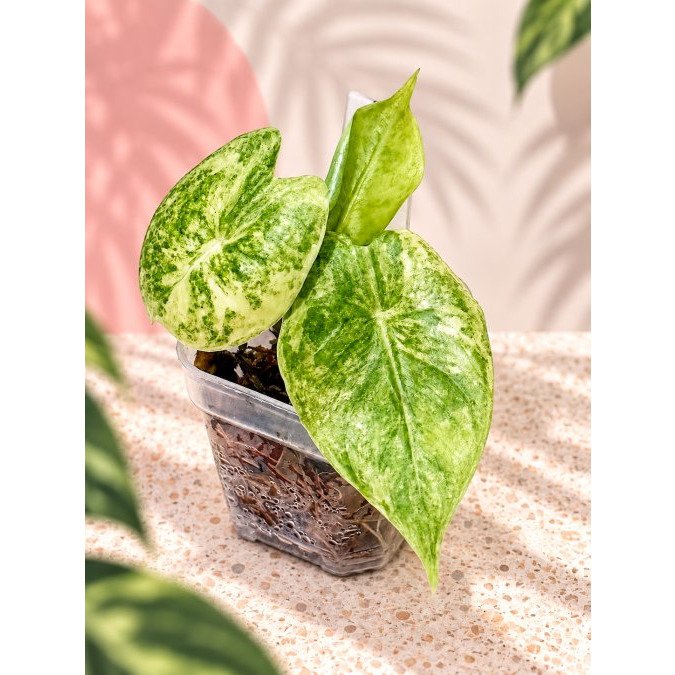
Alocasia collectors in Australia have more options than ever, but quality varies wildly. Rare Alocasia Australia specimens worth your investment share a few traits: stable variegation, strong roots and traceable genetics.
The most sought-after varieties include Alocasia Stingray, Alocasia Melo and variegated forms like Alocasia Flemingiana Aurea.
When shopping for rare Alocasia Australia plants, look for multiple established leaves, active growth points and good root development.
Variegated Alocasia and Corm-Grown Genetics
Variegated Alocasia is the pinnacle of collector interest, but variegation stability is where most buyers get disappointed, so understanding the difference between corm-grown and tissue culture matters.
When you buy a variegated Alocasia from us, we're clear about what you're getting. Our Alocasia Melo Albo Variegated is corm-grown, not tissue culture.

The Alocasia Ninja Tricolour Variegated we stock is an established, rooted plant with multiple leaves and active growth.
Rare Anthurium Australia: Species, Hybrids and Velvet Foliage
Rare Anthurium Australia enthusiasts often chase velvet-leaf varieties, with that distinctive soft, dark foliage that catches light beautifully.
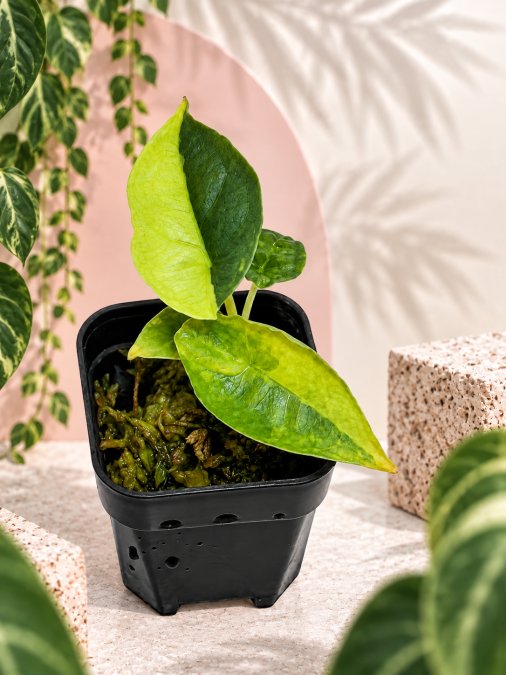
But hybrids deserve equal attention. The Anthurium (Crystallinum × Luxurians × Papillilaminum) × (Warocqueanum × Forgetii) hybrid we currently stock shows this perfectly: pink-bronze emergent growth, developing velvet foliage and genetics from five highly desirable species.

Rare Anthurium Australia plants often arrive as established specimens with multiple leaves and visible growth points.
The Anthurium dolichostachyum offers a different collector appeal with unusual elongated foliage rather than the classic velvet look, developing increasingly impressive form as it matures and rewarding patient collectors.
Buying Rare Plants Online: What to Check Before You Purchase
Online shopping for rare plants carries real risks: you can't inspect the plant in person, and shipping stress affects even the toughest specimens. Most guides stop at "check the photos and read reviews", which isn't enough at collector prices. Here's the framework I'd run through before paying any seller, and the same checks we apply before a plant leaves our bench.
1. Verify the seller's identity and provenance claims
Ask three questions in writing before you buy:
- Is this the exact plant pictured, or a representative? A serious collector seller will confirm the individual. If the answer is vague, assume it's representative and price accordingly.
- What is the propagation method? Corm-grown, seed-grown, division, or tissue culture. Each has different implications for genetics and stability, covered in the next section.
- Can they name the parentage? For hybrids, a seller who can't tell you the cross is either guessing or reselling. Named parentage is a reasonable expectation at collector prices.
If a seller won't answer these in writing, that's your answer.
2. Read the listing for what's missing, not what's shown
A single flattering top-down photo hides a lot. Look for:
- Multiple angles, including the underside of leaves and the base where new growth emerges.
- Whether roots are visible or described. No visible root development is a gamble.
- Leaf count and whether the newest leaf is hardened off or still soft.
A beautiful hero shot with no supporting detail isn't dishonesty by default, but it shifts all the risk onto you.
3. Check the shipping window against the Australian climate
This is where most guides go quiet, and it matters more here than almost anywhere else. Live plants don't travel well through a hot Australian summer or a cold southern winter.
- Summer (roughly December to February): Heat stress in transit is the biggest killer. Ask how the plant is packed for heat, and whether they'll hold a shipment during a heatwave.
- Winter (roughly June to August): Cold-sensitive tropicals like Anthurium and Alocasia can suffer chilling damage in unheated transit, particularly on southern routes. Ask whether they use insulation or a heat pack, and whether they'll delay if a cold snap is forecast.
- Shoulder seasons (autumn and spring): Generally the safest windows for interstate shipping of tropical aroids.
A seller who posts only early in the week is doing it for a reason: it reduces the chance your plant sits in a depot over a weekend.
4. Confirm the seller's interstate shipping credentials
If the plant is crossing a state border, the seller needs to be set up to do it legally. Ask directly whether they're accredited under the relevant state biosecurity arrangements for the plants they're selling. If they can't answer, don't buy for interstate delivery. More on this below.
5. Understand what you're actually protected by
Australian Consumer Law gives you statutory guarantees on goods bought from a business, including acceptable quality and fitness for purpose (Consumer rights and guarantees). That protection applies to live plants, but it's not unlimited: plants are perishable, and how you care for them after arrival matters. In practice:
- Buy from a business, not a random social-media seller, if you want recourse.
- Keep timestamped unboxing photos. If a plant arrives dead or severely damaged, they're the difference between a replacement and an argument.
- Report problems quickly. Most sellers have a short window, often 24 to 48 hours, for transit-damage claims, because after that they can't tell transit damage from care issues.
6. Match the plant to your conditions before you commit
A rare plant that dies in your lounge room is not a bargain at any price. Before buying, be honest about:
- Humidity. Velvet-leaf Anthurium species want high humidity to look their best. If your home sits around 40% in winter, plan for a cabinet, tent or humidifier.
- Light. Bright indirect light is the baseline for most collector aroids. A dark corner will stall growth and stress the plant.
- Temperature stability. Tropical aroids dislike cold draughts and sudden swings more than a slightly cool average.
Before you buy, screenshot the listing, save the seller's replies, and note the date. If something goes wrong, a dated record of what was promised makes any resolution conversation straightforward.
7. Watch for the red flags that recur
A few patterns come up again and again with rare plant purchases:
- Prices dramatically below the market for a named, variegated cultivar.
- Stock photos used for a "rare" listing.
- No business details, no returns policy, no physical presence.
None of these proves a scam on its own, but two or more together should stop you.
🌿 Anthurium NOID Hybrid – Established Plant 🌿 →
At Obsessed With Aroids, we photograph every plant individually, list the propagation method, and confirm parentage where we know it. If you're weighing up a purchase elsewhere, run the checklist above first. It takes ten minutes and it's the cheapest insurance in this hobby.
How Specialist Retailers Differ from Mass-Market Nurseries
Walking into a mass-market garden centre, you'll find dozens of houseplants: healthy, affordable and widely available.
Specialist retailers like Obsessed With Aroids operate differently.
That personal knowledge changes everything.
Pricing reflects this difference. Rare plants cost more because they take longer to produce, need specific conditions and have limited availability.
We also provide ongoing support. If your plant arrives stressed or you have care questions, we're here to help.
Plant Care After Arrival: Setting Up Your New Collector Aroid
Your rare plant has arrived. The first month is where most collector purchases are won or lost, and it's the part most buying guides skip. Here's the acclimatisation routine I'd use for a newly shipped Alocasia or Anthurium.
Day 1: Unpack, inspect, and resist the urge to repot
Unpack carefully and inspect for transit damage. Minor cosmetic marks on older leaves are normal. What you're actually checking for:
- Root condition. Roots should be firm and moist, not mushy or black. If the plant shipped in sphagnum, the moss should be damp but not dripping.
- Stem and crown. Soft, dark patches at the base are rot and need addressing immediately.
- Newest leaf. If it's still soft and unfurling, expect it to stall or abort. That's normal after shipping.
Do not repot on day one. The plant has just been through a significant environmental change, and adding root disturbance on top is what kills plants in the first fortnight.
Days 1 to 7: Acclimatise in a controlled spot
Place the plant in bright indirect light, out of direct sun, and away from air-conditioning vents, heaters and draughty doorways. If you have a humidity cabinet or tent, use it now; otherwise a clear plastic dome or partly open zip bag works as a temporary humidity chamber.
Aim for:
- Light: bright but filtered. An east-facing window or a spot a metre back from a bright north window is usually right.
- Humidity: higher than your room, ideally 70% or above for velvet-leaf Anthurium and most Alocasia. A cheap hygrometer takes the guesswork out.
- Temperature: stable, roughly 18 to 26°C.
Don't fertilise during this window. The plant isn't growing yet, and fertiliser in a stalled root zone does more harm than good.
Days 7 to 14: Pot into a proper aroid mix
Once the plant has settled and you see the first sign of new growth, or the existing leaves have perked up, it's time to pot on.
A reliable chunky aroid mix is roughly:
- 40% orchid bark (medium grade) for structure and drainage
- 25% perlite or pumice for aeration
- 20% sphagnum moss or coco coir for moisture retention
Exact ratios vary by genus and your home conditions.
Choose a pot only slightly larger than the root ball. Oversized pots hold excess moisture around the roots and commonly cause rot in newly potted collector plants.
Weeks 2 to 4: Establish a watering rhythm
Water when the top two to three centimetres of substrate feel dry, or when the pot feels noticeably lighter. For most indoor aroid setups in Australia that's roughly every five to ten days, but your conditions dictate the real interval.
- Underwatering is easier to fix than overwatering. A slightly dry aroid recovers; a rotted one usually doesn't.
- Water quality matters for some species. Anthurium can be sensitive to very hard water, so if your tap water leaves crusty deposits, filtered or rainwater is worth the effort.
- Don't water on a schedule. Check the substrate, not the calendar.
What "successful establishment" actually looks like
New growth within two to four weeks is the clearest signal that the plant has settled. Slower species, particularly some velvet-leaf Anthurium, can take longer, and that's normal. Over the first month, look for:
- Existing leaves holding their colour and firmness
- No yellowing from the base upward (that usually points to root issues)
- A new leaf or growth point pushing, even if small
If a plant sits completely static for six weeks with no new growth and no decline, it's usually a light or humidity issue rather than disease. Adjust one variable at a time and give it another few weeks.
Common first-month failure modes
Most first-month problems trace back to one of these:
- Overwatering in a fresh pot. The most common cause of loss. Let it dry more than you think you should.
- Repotting too soon. Disturbing roots in week one is a frequent own goal.
- Cold draughts. A single cold night near a window can set a tropical aroid back weeks.
Acclimatisation is mostly about doing less, more carefully. Stable light, stable warmth, higher humidity, and a chunky mix will get almost any healthy shipped aroid through its first month. Patience here pays off for years.
If you're unsure about a specific plant you've bought from us, get in touch. We'd rather answer a question in week one than hear about a lost plant in week four. Our plant care information covers genus-specific guidance for the Alocasia and Anthurium we stock.
Frequently Asked Questions
What's the difference between corm-grown and tissue-cultured rare plants?
Corm-grown plants are propagated from underground storage structures, producing genetically identical offspring that develop naturally over time. Tissue culture (TC) uses laboratory techniques to multiply plants rapidly from small tissue samples. For rare Alocasia and Anthurium, both methods have their place.
How can I tell if a rare plant listing is accurate before buying online?
Look for exact plant photos (not stock images), clear plant size references, honest descriptions of any cosmetic marks or yellowing, and transparent information about variegation stability. Specialist retailers should disclose whether variegation can revert with new growth. Check their biosecurity accreditation status, ICA accreditation in Australia indicates they follow proper interstate shipping protocols. Read customer feedback and ask questions about the plant's current condition and growth stage before purchasing.
Where can I buy rare Alocasia and Anthurium in Australia?
Specialist online retailers focused on collector aroids offer the widest range of rare Alocasia and Anthurium varieties, including corm-grown and variegated specimens. Look for businesses with ICA accreditation for interstate shipping, transparent plant descriptions with exact photos, and honest information about variegation and plant maturity.
What biosecurity requirements apply to buying rare plants online across Australia?
Interstate plant movements are regulated by state and territory biosecurity authorities. Reputable online retailers hold ICA accreditation and prepare plants according to the specific requirements of your destination state. Some states (like WA and TAS) require additional treatment before dispatch. Always check your state's biosecurity rules before purchasing, and purchase from retailers who clearly state their accreditation and shipping protocols. This ensures your plant arrives legally and safely.