 How-to
What Are the Signs of Unstable Variegation in Anthurium?
Last Updated: October 26, 2026
Quick Summary
Signs of unstable variegation in anthurium include variegation fading or disappearing on newer leaves, inconsistent patterns across successive leaves that don't follow a recognisable pattern, and blotchy or random white and cream markings with no clear distribution. Stable variegation remains predictable across new growth, while unstable variegation is unpredictable and shifts unpredictably as the plant grows.
- Stable variegation follows a recognisable pattern across successive leaves, while unstable variegation is inconsistent and unpredictable.
- New leaves losing markings seen on older growth is the most obvious sign of unstable variegation.
- Variegated plants need more light than solid-green varieties to express their patterns fully.
- Inconsistent watering and nutrient deficiency can suppress variegation expression.
- Monitor each new leaf by photographing it as it emerges to track whether variegation is genuinely stable or inconsistent.
Table of Contents
- Understanding Variegation in Anthurium Plants
- Stable vs Unstable Variegation: What's the Difference?
- Key Signs Your Anthurium Is Showing Unstable Variegation
- Anthurium Reverting Variegation: Why It Happens
- Anthurium Leaf Damage Versus Variegation: How to Tell the Difference
- How to Care for Variegated Anthurium and Maintain Stability
- Monitoring New Growth: A Diagnostic Approach
- Finding Your Next Variegated Anthurium
- Frequently Asked Questions
Understanding Variegation in Anthurium Plants
Variegated Anthurium plants are prized for their white, cream and yellow leaf markings, but recognising signs of unstable variegation in anthurium is essential since not all variegation is stable. Some plants hold consistent patterns across new leaves; others shift, fade or disappear entirely as the plant grows. Learning to spot the signs of unstable variegation in anthurium early helps you decide which plants are worth your investment.
Stable variegation holds its character across successive leaves, while unstable variegation is unpredictable.
The challenge isn't just visual, unstable variegation can mimic other leaf changes. This guide covers identifying signs of unstable variegation and distinguishing them from other leaf changes.
Stable vs Unstable Variegation: What's the Difference?
Genetic variegation you can count on
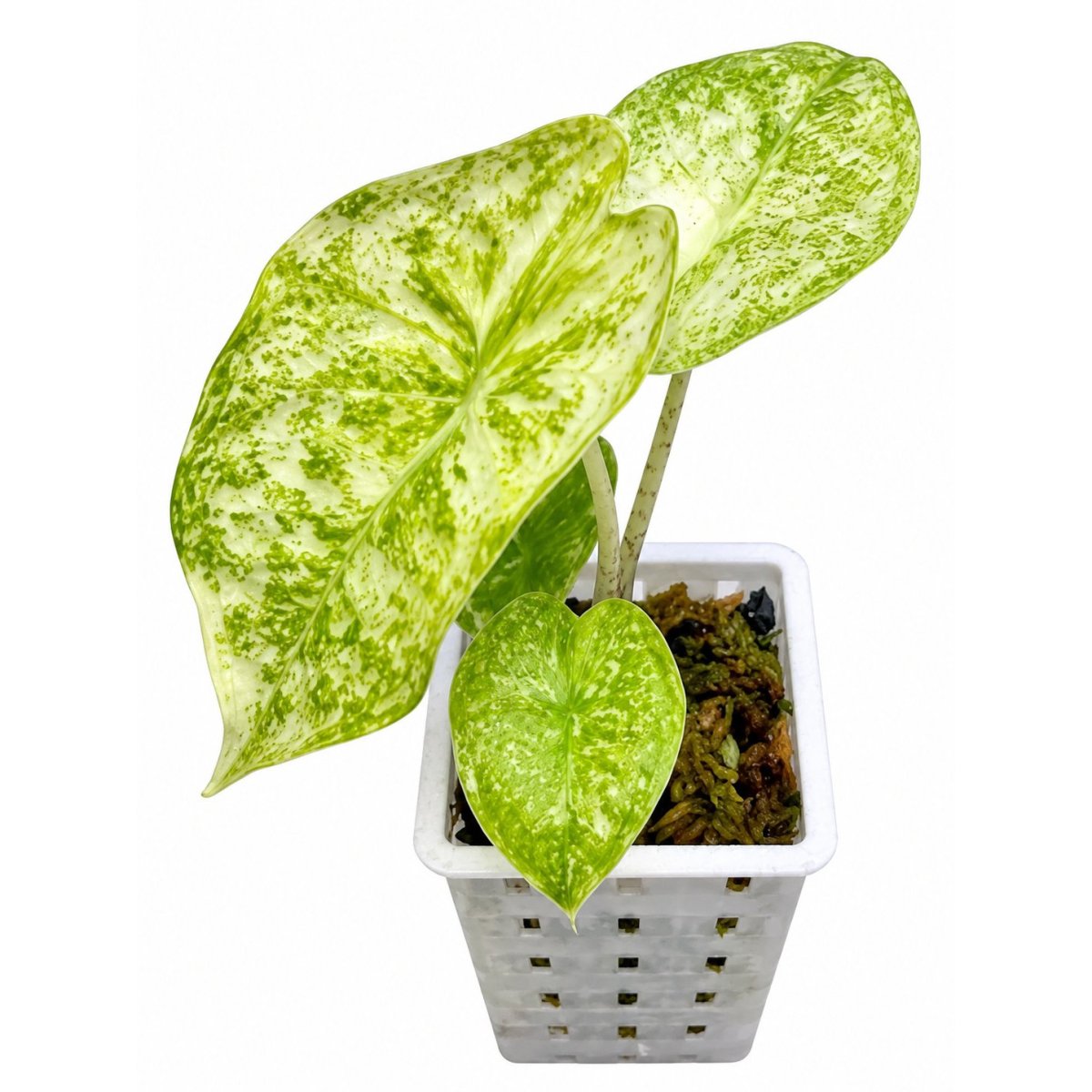
Stable variegation is consistent across new leaves, following a recognisable pattern: white patches in similar locations, repeating cream edges, or consistent mottling.
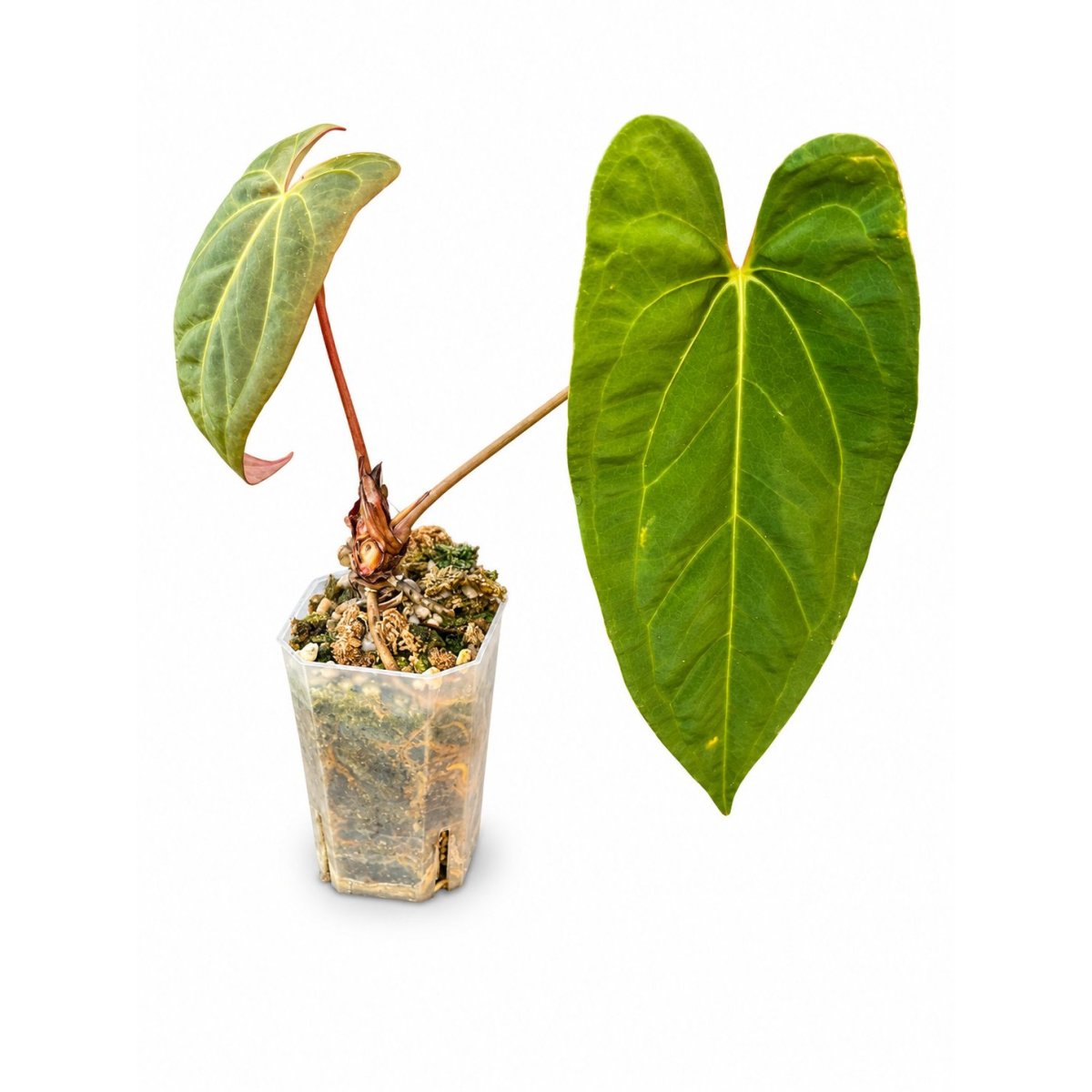
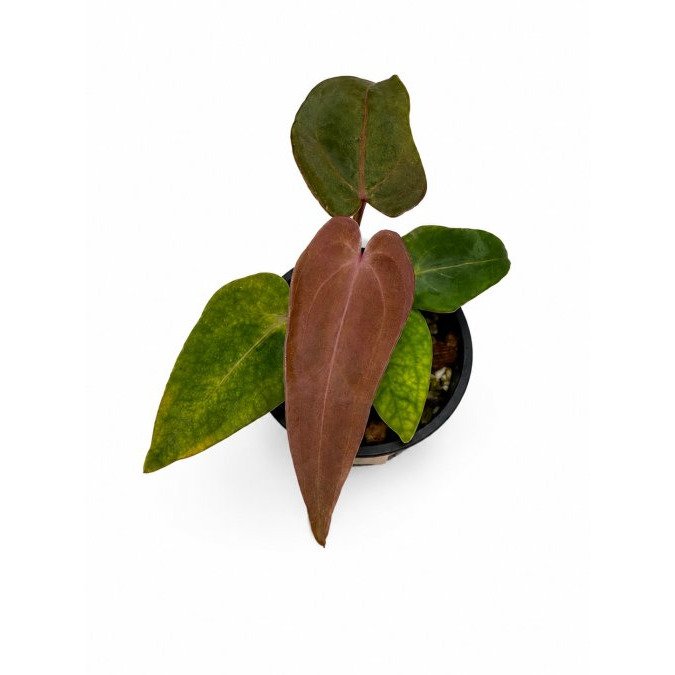
That stability is why seed-grown hybrids with variegated parentage, like our Rare Anthurium (SKG Silver × Red Crystallinum) × Variegated Magnificum, may interest collectors.

Stable variegation doesn't mean perfect uniformity. Leaf size, shape, and intensity of markings can vary slightly between leaves, but the pattern itself remains recognisable.
Unstable variegation that shifts with new growth
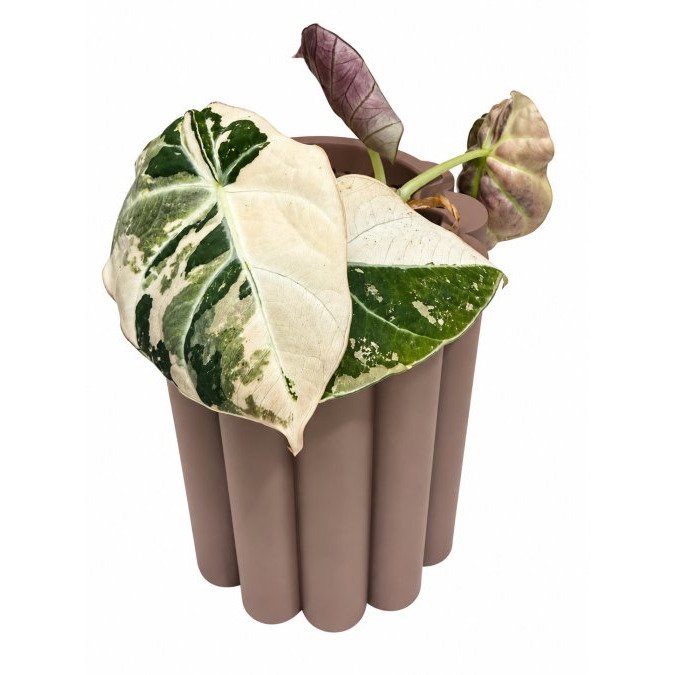
Unstable variegation is inconsistent and unpredictable. A plant might show striking white markings on one leaf, then produce an almost entirely green one, or variegation might appear only on juvenile growth before fading.
It's not inherently "bad", some collectors seek it for its uniqueness, but if you're buying expecting variegation to persist, unstable patterns are a significant risk.
The critical difference: stable variegation is predictable across successive leaves. Unstable variegation is not.
Key Signs Your Anthurium Is Showing Unstable Variegation
Variegation fading or disappearing on newer leaves
The most obvious sign is when new leaves lose the markings seen on older growth. A plant arrives with beautiful white patches, but the next leaf unfurls solid green, and the one after shows only faint cream spots.
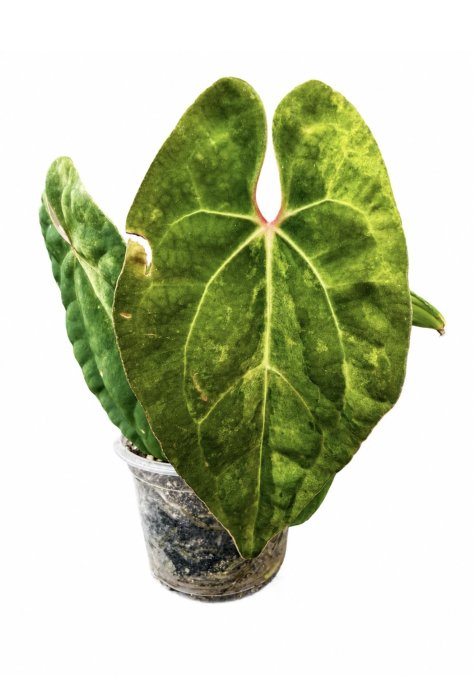
This fading pattern can be a sign of unstable variegation.
Watch the newest unfurled leaf closely. Compare it directly to the leaf that emerged before it. If the variegation is noticeably less pronounced, or absent entirely, you're likely dealing with unstable variegation.
Inconsistent patterns across successive leaves
Stable variegation follows a pattern. Unstable variegation doesn't. You might see:
- One leaf with white edges and a solid green centre, the next with scattered cream patches
- A leaf with strong variegation on one half, the next leaf nearly uniform in colour
- Variegation that appears only on the leaf tip, then vanishes entirely on the next emerging leaf
- Random blotches that don't repeat in any recognisable way
If you can't predict what the next leaf will look like based on previous leaves, the variegation is inconsistent.
Blotchy or random white and cream markings
Unstable variegation often appears chaotic: rather than neat edges or symmetrical patterns, markings are scattered and irregular, with one area heavily variegated and another solid green, and no clear logic to the distribution.
Blotchy, haphazard markings can be a sign of inconsistent variegation.
Brown spots or yellow discolouration appearing
Sometimes discolouration appears alongside changes in variegation.
Brown spots alone do not establish that a plant has an infection.
Unstable variegation shows itself through several recognisable patterns as new leaves emerge.
| Sign | What to look for | Indicates |
|---|---|---|
| Fading variegation | New leaves lose markings seen on older growth | Variegation becoming less pronounced or absent |
| Inconsistent patterns | Markings differ unpredictably between successive leaves | No recognisable pattern across new growth |
| Blotchy markings | Scattered, irregular white and cream patches with no clear distribution | Chaotic rather than organised variegation |
| Random placement | Variegation appears only on leaf tip, then vanishes on next leaf | Unstable expression across the plant |
Anthurium Reverting Variegation: Why It Happens
Light consistency and leaf colour loss
Variegation can change as a plant grows.
Rare Anthurium (SKG Silver × Red Crystallinum) × Variegated Magnificum →
A plant may produce new growth that differs from its earlier leaves.
Watering stress and root problems
Check your watering routine. If you're watering on a rigid schedule rather than checking soil moisture, or if your pot lacks drainage holes, that's likely contributing to variegation loss. A SUSTEE Plant Moisture Indicator removes the guesswork, blue means the soil is moist, white means it's time to water, preventing both overwatering and underwatering stress.
Nutrient deficiency masking variegation
Regular feeding during the growing season (spring and summer) supports stable variegation. A specialist plant food like GT Foliar Spray 500ml with Sprayer, applied according to label directions, delivers nutrients directly to the leaves and supports the plant's ability to produce and maintain variegation.
Anthurium Leaf Damage Versus Variegation: How to Tell the Difference
Bacterial or fungal infection signs
Leaf damage and changes in variegation can look similar at first glance, brown spots, yellow halos and discoloured patches. But there are key differences.
Sun scorch and waterlogging effects
Unstable variegation is about colour expression, the presence or absence of white, cream, or yellow pigmentation. Damage is about tissue breakdown, browning, softening, or decay.
Pest damage versus natural markings
If you're unsure, inspect the undersides of leaves closely. Pests often hide there. Variegation is visible on both sides of the leaf.
How to Care for Variegated Anthurium and Maintain Stability
Bright indirect light for consistent patterns
Variegated plants often need more light than solid-green varieties to express their patterns fully. If your plant is losing variegation, the first step is usually to increase light availability.
Watering practices that protect leaf health
Inconsistent watering stresses the plant and suppresses variegation. Establish a routine and stick to it. Check soil moisture before watering rather than watering on a fixed schedule.
Nutrient support for variegated growth
Variegated plants are "heavier feeders" than solid-green varieties. They're working harder to produce those colour patterns, so they need consistent nutrition.
Monitoring New Growth: A Diagnostic Approach
You can monitor each new leaf to observe changes in variegation. Here's a simple process:
Track each emerging leaf. Note the date it begins to unfurl and photograph it as it emerges, halfway open and fully mature.
Compare patterns. Once fully open, compare its variegation to the previous leaf: similar patterns, more or less pronounced, same locations?
Note any changes. If variegation is fading, becoming more random, or disappearing entirely, record that. If it's stable and consistent, note that too.
Document the plant's pattern. Over time you'll build a clear picture of whether its variegation is genuinely stable or simply inconsistent, invaluable if you're deciding whether to keep it or pass it on.
Finding Your Next Variegated Anthurium
Our Rare Anthurium (SKG Silver × Red Crystallinum) × Variegated Magnificum is a seed-grown Anthurium hybrid with Variegated Magnificum in its parentage. Variegated parentage does not guarantee visible variegation in this plant, and future variegation cannot be guaranteed.
Learn how to prevent variegation reversion in Alocasia, many of the principles apply to Anthurium as well.
Variegation collecting is rewarding. Understanding signs of changing variegation can help inform your choices.
Frequently Asked Questions
What's the difference between stable and unstable variegation in Anthurium?
Stable variegation follows a consistent pattern across new leaves. Unstable variegation is sporadic; new growth may show fewer white or cream markings, different patterns, or revert to solid green entirely.
Can variegation come back if my Anthurium reverting variegation?
Variegation may change across new leaves. Our seed-grown Anthurium hybrid, (SKG Silver × Red Crystallinum) × Variegated Magnificum, has Variegated Magnificum in its parentage. Variegated parentage does not guarantee visible variegation, and future variegation cannot be guaranteed.
How can I tell if brown spots are variegation or leaf damage?
Changes in leaf colour can have different appearances. Brown spots or soft leaves alone do not establish that a plant has an infection.
Does low light affect variegation in Anthuriums?
The effect of light on variegation can vary. The product listing notes that visible variegation and future variegation are not guaranteed for its seed-grown Anthurium hybrid.