 how-to
How to Fix Drooping Alocasia Leaves: 7 Steps That Work
Table of Contents
- Start Here: A Symptom-Led Check for Drooping Alocasia Leaves
- Alocasia Overwatering Symptoms: When Wet Soil Makes Leaves Limp
- Alocasia Underwatering Symptoms: Dry Soil and Drooping Petioles
- Temperature, Humidity and Light: Stress Factors Behind Limp Leaves
- Should I Cut Off Drooping Alocasia Leaves? Pruning and Root Inspection
- How Long Does It Take for Drooping Alocasia Leaves to Recover?
- Species, Growth Stage and Seasonal Dormancy Differences
- Aftercare: Feeding, Watering Rhythm and Buying Healthy Alocasia
- Frequently Asked Questions
Last Updated: October 17, 2026
Start Here: A Symptom-Led Check for Drooping Alocasia Leaves
Drooping alocasia leaves usually mean the roots are too wet, too dry or too cold, and the fix starts with one check: push a finger into the topsoil before you do anything else. At Obsessed With Aroids, we grow collector Alocasia and Anthurium, and we see the same pattern over and over: a leaf that hangs low is rarely a leaf problem, it's a root-zone signal.
So before you water, repot, or cut anything, work through this order:
- Check soil moisture at the top 3-5 cm
- Look at which leaves are drooping (old or new)
- Check the pot for drainage holes
- Feel whether the spot is warm and draught-free
- Note any recent move, repot, or cold snap
That five-minute check tells you which of the sections below applies to your plant. Most people skip it and guess. Guessing is how a fixable plant becomes a lost one.
Alocasia Overwatering Symptoms: When Wet Soil Makes Leaves Limp
Alocasia overwatering symptoms are limp leaves, yellowing lower leaves, and soil that still feels wet days after you last watered. The petioles lose firmness first, then the oldest leaves yellow from the base.
Wet soil starves roots of oxygen, so they can't take up water and the plant wilts even though the pot is soaked (Waterlogging and Flooding Solutions). The cruel part: a waterlogged alocasia looks thirsty, so people water it again and make it worse.
Watch for these signs:
- Topsoil damp more than a few days after watering
- A heavy pot that doesn't lighten between waterings
- Yellowing lower leaves with soft, mushy stems
- A sour or musty smell from the growing medium
If you spot these, stop watering and let the medium dry back. Then check drainage before anything else.
Drainage Holes, Pot Size and Growing Medium Checks
Drainage is the first thing to fix: a pot without holes holds water at the base no matter how careful you are. Tip the pot up and confirm water can escape; if it can't, repot into something with holes.
Pot size matters too: a pot far too big for the root ball holds wet medium the roots can't reach. We see this often with plants potted "up" too early.
For the growing medium, a chunky, airy mix beats a dense one every time. Aim for a blend that drains freely but still holds some moisture. If your mix compacts into a solid block, roots suffocate.
Alocasia Underwatering Symptoms: Dry Soil and Drooping Petioles
Alocasia underwatering symptoms are dry, pulling-away soil and petioles that droop along their whole length, with leaves that feel crisp at the edges rather than soft.
This one is easier to spot. Lift the pot: it feels light. Push a finger in: the topsoil is bone dry. The fix is a slow, thorough water rather than a quick splash.
Water until it runs out the drainage holes, then let the pot drain fully. Don't leave it sitting in a saucer of water, or you'll swing straight into the overwatering problem above.
A plant that dries out once will bounce back, but one left dry for weeks loses leaves it can't replace quickly. Check the topsoil every few days during warm weather.
Temperature, Humidity and Light: Stress Factors Behind Limp Leaves
Temperature, humidity and light cause limp leaves just as often as watering problems, and they're the factors most growers overlook. Alocasia come from warm, humid understoreys, so a cold draught or a dry room pushes them into stress, and the fixes pull in different directions.
Here's the order I check them in, because it matches how the plant responds:
- Cold first. Cold roots stop taking up water, so the plant droops even when the medium is damp. If the pot sits near a window, a door, an air conditioner or a tiled floor in winter, that's your prime suspect.
- Dry air second. Low humidity pulls moisture from the leaf edges. You'll see crisp tips and a soft droop at the same time, which is the giveaway that it isn't a watering problem.
- Light third. A sudden move to harsher light or into a dim corner can trigger a slump while the plant adjusts. This one is slow and rarely dramatic on its own.
Cold: The Quiet Killer of Alocasia Roots
Cold matters more than most people think. Alocasia grow actively somewhere roughly between 18°C and 27°C, and below about 15°C the roots slow to a crawl. A spot near a window or air conditioner can chill the root zone well below the room's air temperature, especially in a ceramic or terracotta pot on a cold surface.
A plant left near a door or air vent can droop within days. If the medium stays wet in that cold spot, root rot follows fast, because cold roots use almost no water and the medium just sits there. In southern states this is the classic winter droop; in the north it's more often an over-enthusiastic air conditioner in summer.
The fix is simple: move the pot to a warm, draught-free spot and let the medium dry back a little more than usual while it recovers. Don't water on autopilot just because the calendar says it's watering day.
Humidity: Why Dry Air Droops Leaves Without Wetting the Soil
Dry air pulls moisture from the leaves faster than the roots can replace it, so the petioles lose turgor and the leaf hangs. You'll typically see crisp tips and drooping together, and the soil will feel normal or even dry. That combination is the tell.
A humidifier, a pebble tray, or grouping plants together all help raise the local humidity around the leaf. Misting gives only a brief lift and can leave water sitting in the crown, so I treat it as a stopgap rather than a fix. In a heated or air-conditioned room, keep the air consistently humid rather than spiking it once a week.
Light: Bright, Indirect and Steady Beats Sudden Change
Alocasia want bright, indirect light year-round. A sudden move to harsher light can scorch and stress the plant, while a dim corner slows growth and leaves it with less energy to hold its shape. If you've just moved a plant to a brighter windowsill, expect a week or two of adjustment.
Once you've ruled out cold, dry air and light shock, move on to the watering and root checks knowing you're fixing the right thing.
Should I Cut Off Drooping Alocasia Leaves? Pruning and Root Inspection
Should I cut off drooping Alocasia leaves? Only if the leaf is yellow, mushy, or dead. A drooping leaf that is still green is working for the plant and may recover, so leave it.
Pruning is a last resort, not a first response. Green leaves feed the rhizome through photosynthesis, so cutting them too early slows the recovery you're trying to speed up.
When a leaf is clearly spent, cut it at the base of the petiole with clean snips so it doesn't rot against the stem.
Then check the roots. Slide the plant out of its pot and look at the root ball:
GT Foliage Focus 250ml – Indoor Plant & Aroid Fertiliser →
- Firm, pale roots mean the plant is healthy
- Dark, mushy roots mean rot
- A firm rhizome is a good sign
- A soft, brown rhizome is a serious problem
Repotting Decision Criteria After a Root Check
Repot after a root check if you find rot, if the medium is breaking down, or if the pot has no drainage. Otherwise, leave the plant alone and fix the watering rhythm first.
If you do repot, trim the mushy roots with clean snips and use fresh, airy medium in a pot with holes, sized to the root ball rather than much bigger.
Don't repot a stressed plant "just in case." Repotting is itself a shock. Save it for when the root check gives you a real reason.
How Long Does It Take for Drooping Alocasia Leaves to Recover?
How long does it take for drooping Alocasia leaves to recover? Mild cases often perk up within a few days to a couple of weeks once you fix the cause. Heavy root damage can take a month or more, and some leaves won't come back at all.
The timeline depends on what went wrong:
| Problem | First Sign of Recovery | Typical Full Recovery |
|---|---|---|
| Underwatering | 1-3 days | 1-2 weeks |
| Overwatering (mild) | 1-2 weeks | 3-4 weeks |
| Cold stress | 3-7 days | 2-3 weeks |
| Root rot (treated) | 2-4 weeks | 1-2 months |
| Repot shock | 1-2 weeks | 3-6 weeks |
Judge recovery by new growth, not by the old leaves. A new leaf unfurling is the clearest sign the plant is back on track. Old drooping leaves may stay drooped for good.
Species, Growth Stage and Seasonal Dormancy Differences
Not every Alocasia droops for the same reason, and the plant's species and growth stage change the answer. This is the part most care guides skip: a drooping leaf on a mature plant in July is a different situation from one on a freshly imported jewel Alocasia in January.
Species Differences: Jewels, Giants and Everything Between
Jewel Alocasia, the smaller types with velvety leaves, tend to sulk faster and recover slower, thinner leaves and less stored reserve mean a cold night or a missed watering shows up quickly. Bigger, thicker-leaved types hold their shape longer but crash harder when they do.
A few broad patterns worth knowing:
- Jewel types (velvety, compact) are the most sensitive to humidity drops and cold. They're often the first to droop in a dry room.
- Large-leaved types hold turgor well but demand more from the roots. When they droop, it's usually a root-zone problem rather than an air problem.
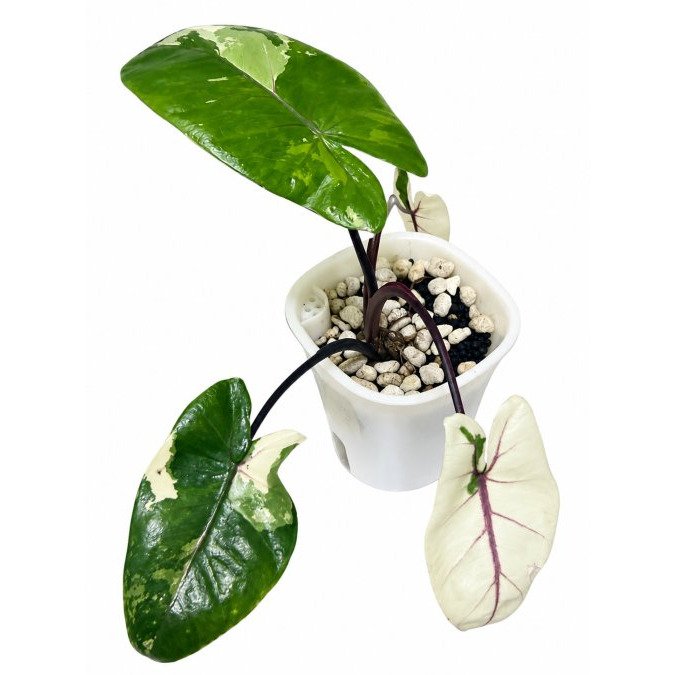
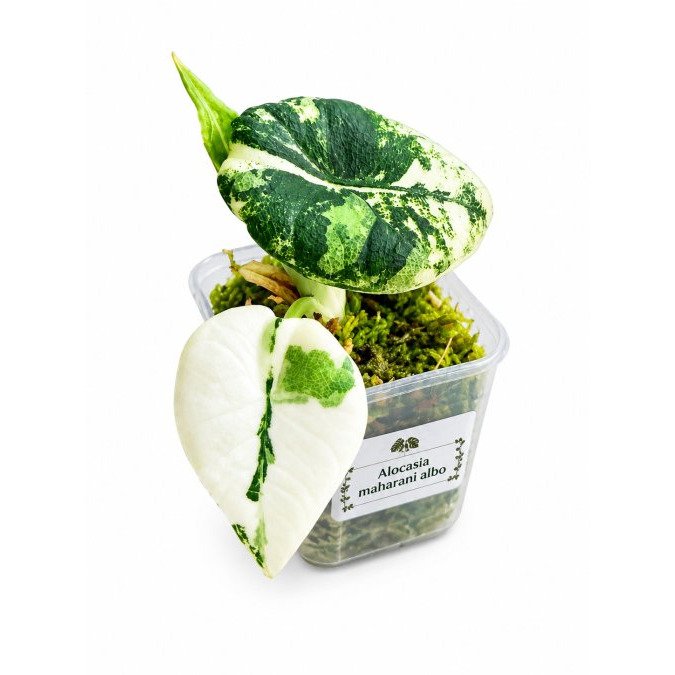
- Variegated plants carry less chlorophyll in the white sections, so they grow more slowly and have less energy to spare. A variegated Alocasia that droops needs a gentler fix and more patience than a plain green one.
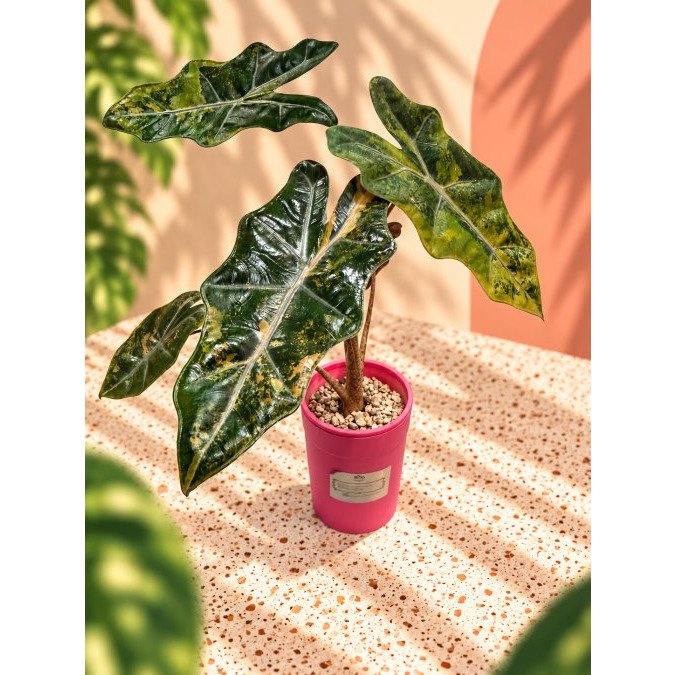
If you're not sure which type you have, look at the leaf texture. Velvety leaves usually mean a jewel type; glossy, leathery leaves usually mean a larger species or hybrid.
Growth Stage: Why Young Plants Have Less Margin
A young plant with few leaves has less reserve to draw on: drop two of its four leaves and half its photosynthetic capacity is gone, so recovery is slow. A mature plant with a fat rhizome can shrug off a bad week and push new growth regardless.
This matters for how you respond. A young plant that droops needs the cause fixed quickly and then left alone to recover. A mature plant can tolerate a slower, more measured approach. Either way, judge recovery by new growth rather than by whether the old leaves perk back up.
Seasonal Dormancy: When Dropping Leaves Is Normal
In cooler months, many Alocasia slow down or drop leaves entirely. That's normal, not a crisis, if your plant drops leaves in winter while the rhizome stays firm, it may simply be resting.
Here's how to tell dormancy from a care emergency:
- Dormancy: leaves yellow and drop gradually, the rhizome stays firm, the medium dries slowly, and there's no new growth for weeks. Ease off the water and wait for warmer weather.
- Emergency: leaves collapse suddenly, the rhizome feels soft or smells sour, the medium stays wet, or the plant was fine until a cold snap or a repot. That's a root-zone problem, not dormancy.
The timing varies by climate: in cooler southern regions dormancy often starts in late autumn and lifts in early spring, while in warmer northern regions many Alocasia keep growing year-round. Watch your plant, not the calendar.
Once you know whether you're looking at species sensitivity, growth-stage reserve, or seasonal dormancy, you can match your response to the plant in front of you rather than a generic care schedule.
Aftercare: Feeding, Watering Rhythm and Buying Healthy Alocasia
Aftercare is where plants either thrive or slide back into trouble, so build a steady rhythm rather than reacting to every droop. Water when the topsoil is starting to dry, not on a fixed calendar. Check the pot, not the clock.
Feeding supports recovery once the plant is actively growing again. We sell Growth Technology's Foliage Focus range, including the 250 ml bottle at $13.00 and the 1 litre at $26.00, a liquid concentrate with 12 essential mineral nutrients including calcium. Follow the bottle's directions for dilution and frequency.

For root support, Rootzone is a 250 ml biostimulant at $27.95, mixed at 1 ml per litre for mature plants. It's an additive, not a complete fertiliser, so use it alongside your usual nutrients. If you're cleaning up after a root issue, Oxy-Plus 3% at $17.50 helps increase oxygen around the roots and reduce organic build-up.
A few habits keep Alocasia steady:
- Water when the topsoil starts to dry, not on a schedule
- Keep the spot warm and out of draughts
- Give bright, indirect light year-round
- Feed only during active growth
- Clean up dead leaves promptly
When you're buying, start with a healthy plant. We grow corm-grown Alocasia and Anthurium rather than tissue culture, which means each plant comes from a corm and grows on its own roots. If you've been burnt by plants that arrived half-dead, buying from a grower who packs carefully and ships on a sensible schedule makes a real difference. One of our customers put it simply: "Plant arrived perfectly packaged as described and super quickly."
If you want to add to your collection, browse our rare and variegated Alocasia and Anthurium, and reach out if you're unsure which variety suits your conditions. We're happy to talk through it.
Frequently Asked Questions
Why do my Alocasia leaves droop even though the soil feels moist?
Wet soil plus drooping leaves usually points to root trouble. When the growing medium stays soggy, roots lose access to oxygen and stop taking up water, so the petioles go limp even though moisture is everywhere. Check the drainage holes are clear, feel how heavy the pot is, and slide the root ball out to look for soft, brown or smelly roots. Trim anything mushy, repot into a fresh airy mix and hold off watering until the top layer dries. A drooping alocasia in constantly wet soil will not recover until the root zone does.
Should I cut off drooping Alocasia leaves or leave them on?
Leave a drooping leaf attached while it is still green, because it keeps feeding the plant through photosynthesis. Cut it off only once it has yellowed, gone crisp or turned mushy, using clean snips. If several leaves collapse at once, the cause is almost always in the roots or the watering routine rather than the leaves themselves, so fix that first. Removing healthy leaves too early just slows the alocasia down and delays new growth.
How long does it take for drooping Alocasia leaves to recover?
A plant that was simply dry can lift within hours to two days of a proper drink. Cold shock or a recent move often takes one to three weeks, with new growth signalling real recovery. Root rot is slower: expect four to eight weeks before the plant looks settled, and some older leaves may be lost along the way. Judge progress by firmness in the petioles and fresh leaves unfurling, not by the oldest leaves bouncing back.
Can low light or cold drafts make Alocasia leaves droop?
Yes. Alocasia grows best in bright, indirect light, and in dim corners the petioles stretch and weaken until the leaf hangs. Cold drafts from air conditioning, open windows or a chilly floor do similar damage by shocking the tissue. Move the plant somewhere with filtered light and stable warmth, away from doorways and vents, then give it a couple of weeks to adjust. Pair that with a sensible watering rhythm and new leaves should come through upright.
Drooping leaves are stressful, but they're usually a signal you can read and correct. Start with the soil check, fix the cause, and give the plant time to push new growth. At Obsessed With Aroids, we grow every plant with that same care, from corm-grown rare Alocasia to the nutrients that keep them thriving. Browse our collection and find your next plant, shipped safely to your door.