 how-to
Preventing Variegation Reversion in Alocasia
Table of Contents
- Understanding Variegation and Reversion in Alocasia
- Why Is My Variegated Alocasia Turning Green
- Best Light for Variegated Alocasia
- Stable Watering, Humidity and Temperature
- Pruning and Propagation: A Decision Guide
- Can Reverted Alocasia Variegation Come Back
- Frequently Asked Questions
Last Updated: October 14, 2026
Understanding Variegation and Reversion in Alocasia
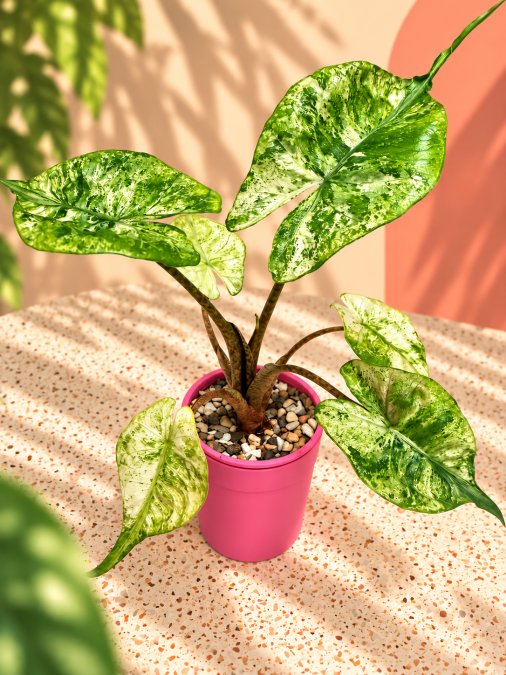
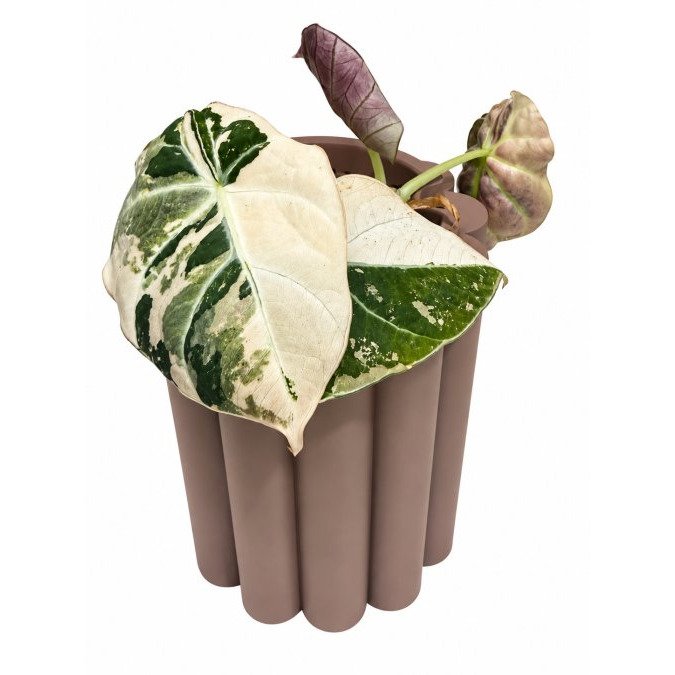
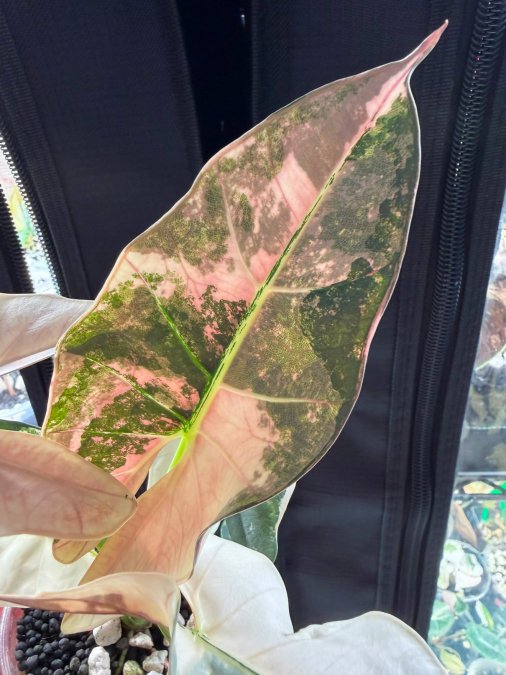
Variegation is contrasting colour on Alocasia leaves, typically cream, white, yellow or pink sections alongside green tissue. Reversion is when a variegated plant produces new growth that's entirely or mostly green.
Variegated Alocasia are prized for their striking foliage, so reversion can cost a plant its appeal and value. Understanding why it happens, and preventing variegation reversion in alocasia, saves frustration and money.
What variegation and reversion mean
Variegated cells contain less chlorophyll than green cells, which is why the contrast appears.
Not every leaf needs to be perfectly variegated. Many collector Alocasia, like the Alocasia Ninja Tricolour Variegated, naturally show variation between leaves. Reversion is different: all new growth comes through green and the plant stops producing variegated tissue altogether.
Genetic versus environmental causes
Reversion can be genetic or environmental, and the fix depends on which.
Genetic reversion happens because the variegation is unstable at a cellular level.
Environmental reversion occurs when the plant isn't receiving enough light to maintain variegated growth.
The challenge is telling them apart. A plant in poor light will revert; a genetically unstable plant will revert even in good light.
Why Is My Variegated Alocasia Turning Green
If your variegated Alocasia is producing mostly or entirely green new growth, light is the first culprit, variegated plants need brighter, more consistent light than green ones to hold their pattern.
The second is genetic instability. A corm-grown Alocasia Pseudosanderiana Aurea Variegated, for example, may hold its variegation more reliably than tissue-cultured plants propagated many times over.

The third is stress. Overwatering, temperature fluctuations or inconsistent humidity can trigger reversion as a survival mechanism.
How to distinguish genetic reversion from temporary colour changes
Temporary colour changes differ from true reversion.
True reversion looks like multiple consecutive leaves emerging completely or almost entirely green, with the pattern disappearing over weeks or months.
The key is time. A single green leaf doesn't mean reversion, watch the next three to five new leaves. If you've recently moved or stressed the plant, wait 4-6 weeks before deciding it's genetic.
Best Light for Variegated Alocasia
Variegated Alocasia need bright, indirect light to maintain their pattern. Here's the practical version I use for my own collection.
What "bright indirect" actually means
Variegated Alocasia generally do best at roughly 10,000 to 20,000 lux during the brightest part of the day, or a DLI (daily light integral) of around 6 to 12 mol/m²/day.
A few reference points for Australian homes:
- A north-facing window with sheer curtains, plant set back 1 to 2 metres: typically 8,000 to 15,000 lux at midday
- An east-facing window, plant 50 cm back from the glass: 10,000 to 20,000 lux in the morning, dropping sharply by early afternoon
- A west-facing window with afternoon sun filtered: 15,000 to 30,000 lux in summer, often too intense without a sheer curtain
If you can comfortably read a book in the spot without straining, you're probably in the 3,000 to 8,000 lux range, enough for a green Alocasia, often not enough for a heavily variegated one.
Why variegated tissue needs more light than green tissue
The white, cream or yellow sections of a variegated leaf contain little to no chlorophyll, so the green sections carry the whole plant.
The catch is that variegated Alocasia are also more prone to leaf burn, because the pale sections lack the protective pigments green tissue has. You need bright but filtered light, built up gradually.
Acclimating a variegated Alocasia to stronger light
If you're moving a plant from a dim spot into brighter conditions, bringing it out for the warmer months, say, or shifting it to a better window, do it gradually over 10 to 14 days:
- Start with 1 to 2 hours of the new, brighter position per day, ideally in the morning when light is gentler
- Add an hour every second day
- Watch the newest leaf and the leaf closest to the light source for silvering, crispy edges or bleached patches on the pale sections
- If you see stress, back off by two steps and hold for a week before progressing again
A plant that's been in a north-facing window for months won't tolerate a sudden move to a west-facing window in January. Acclimation separates a plant that thrives in brighter light from one that scorches and stalls.
Seasonal shifts in Australian homes
Light intensity changes dramatically across the year. A north-facing window in Melbourne in June delivers a fraction of what it does in December. Many collectors find their variegated Alocasia hold pattern through summer and start reverting in late autumn, not because anything is wrong, but because light has dropped below the threshold variegated tissue needs.
Options for the cooler months:
- Move the plant to the brightest window in the house, even if it's not the usual spot
- Add a full-spectrum LED grow light positioned 30 to 50 cm above the canopy, running 10 to 12 hours a day
- Rotate the plant a quarter turn weekly so all sides get exposure to the strongest light
A cheap timer keeps the daily light integral consistent, which matters more than peak intensity for holding variegation.
Signs your light is wrong
Too little light: new leaves emerge smaller than the last, petioles stretch long and thin, new growth is entirely green, existing variegated leaves fade toward solid green.
Too much light: pale sections develop brown crispy edges, silvering or bleaching appears on the newest leaf, leaves curl away from the light source, growth stalls despite good moisture.
Stable Watering, Humidity and Temperature
Variegated Alocasia are sensitive to environmental stress.
Watering: Let the top 2-3 centimetres of potting mix dry between waterings.
Humidity: Alocasia appreciate humidity, ideally 50-70 per cent.
Temperature: Keep the plant between 18 and 28 degrees Celsius.
Alocasia Flemingiana Aurea Variegated – Established Plant | Exact Plant 🌿💛 →
Potting mix: Use a breathable, well-draining blend of orchid bark, perlite and quality potting soil.
Stable conditions don't guarantee variegation will return, but they remove stress as a contributing factor.
Pruning and Propagation: A Decision Guide
Pruning is the most misunderstood part of managing reversion. Done well, it can redirect a plant's energy and sometimes encourage variegated shoots from lower nodes. Done badly, it sets the plant back months and can push a borderline plant into full reversion. Here's the sequence I'd walk through before making a single cut.
Step 1: Confirm it's actually reversion
Before you prune anything, rule out the temporary causes. A single green leaf is not reversion. A leaf that emerged pale and filled in with variegation over two weeks is not reversion.
The threshold I use: three consecutive new leaves that are entirely or almost entirely green, produced while the plant is in otherwise good conditions (bright light, stable moisture, no recent stress).
Step 2: Identify which kind of reversion you're dealing with
This determines whether pruning will help at all.
Environmental reversion, triggered by low light, unstable moisture or temperature stress.
Genetic reversion, the variegation has destabilised at the meristem level, so the growing point itself is now producing green-only tissue.
Sectoral reversion, part of the plant is producing variegated growth and part has gone green. This is common in Alocasia because they grow from a central corm with multiple growth points.
Step 3: Decide whether to prune
Prune only if all of the following are true:
- The plant is healthy and actively growing (pushing new leaves)
- It's spring or early summer in your climate, the Australian growing season, roughly September through February in most regions
- You've confirmed reversion across three or more consecutive leaves
Do not prune if:
- The plant is recovering from repotting, shipping or pest damage
- It's mid-winter and growth has slowed
- It's a single-stem plant with only three or four leaves, removing one is a significant loss of photosynthetic capacity
Step 4: How to cut, if you're cutting
Alocasia grow from a corm, and leaves emerge from petioles that attach to a growing point.
Removing a single reverted leaf: cut the petiole at the base, close to where it meets the corm or main stem.
Removing a reverted stem (multi-stem plants): cut the stem back to 2 to 3 cm above the corm.
Never cut into the corm itself unless you're deliberately dividing it.
Step 5: Propagation, and why green tissue stays green
If you take a cutting or divide a corm from a reverted section, you will get a green plant.
So the rule is simple: propagate only from actively variegated growth. If you're dividing a corm, separate the sections that have been pushing variegated leaves.
Corms are a different story. A corm produced by a variegated Alocasia may or may not carry variegated tissue in its growth points, and there's no way to tell from the outside.
Step 6: Monitor the trade-offs
Every intervention has a cost. Pruning removes photosynthetic capacity, which slows growth and can stress a borderline plant. Pushing light intensity risks scorching the pale sections.
The balance I aim for: keep the plant healthy first, variegated second. A slightly less variegated plant that's growing strongly will often stabilise on its own once conditions are right.
Signs to watch after pruning:
- New growth within 3 to 4 weeks: good sign, the plant is responding
- New growth variegated: best-case outcome
- New growth green: the reversion is likely genetic at that growth point; consider whether to keep it as a green specimen or replace it
A note on sourcing
If you're buying a variegated Alocasia specifically to hold variegation long-term, ask the seller how the plant was propagated. Corm-grown plants from a stable variegated line tend to hold pattern more reliably than mass-produced tissue-cultured plants, though neither is a guarantee. At Obsessed With Aroids, we grow and select our variegated Alocasia with this in mind, and we're happy to talk through a plant's propagation history before you commit.
Can Reverted Alocasia Variegation Come Back
This is the question every collector asks. The honest answer: sometimes, but rarely completely.
If the reversion is environmental (caused by low light), improving light can sometimes trigger variegated growth to return.
If the reversion is genetic, variegation will not come back.
The best approach is prevention. Start with a healthy, stable variegated plant from a reputable source.
Provide consistent bright light, stable watering, and moderate humidity. Monitor new growth closely.
Frequently Asked Questions
What causes variegated Alocasia to revert to solid green?
Reversion happens when green tissue outcompetes variegated cells. This occurs due to genetic instability in some variegation types, or when environmental conditions (particularly insufficient light, inconsistent watering, or overfeeding) stress the plant and favour green growth. Some variegation patterns are inherently more stable than others depending on the cultivar and how the plant was grown.
Can reverted Alocasia variegation come back?
Once a leaf has reverted to solid green due to genetic reversion, that leaf will not regain variegation. However, if reversion was triggered by poor care conditions, new growth may show variegation again if you improve light, watering consistency, and humidity. If reversion is genetic, new leaves will also be green. The key is identifying the cause early and adjusting care accordingly.
How much light does a variegated Alocasia actually need?
Variegated Alocasia needs bright, indirect light to maintain colour vibrancy and slow reversion. Position your plant near a window with filtered light, or use a sheer curtain to diffuse direct sun. The exact intensity depends on your cultivar, but most variegated varieties benefit from consistent, steady light rather than fluctuating conditions. Low light is one of the fastest triggers for green overgrowth.
Should I prune off reverted leaves on my Alocasia?
If a leaf has fully reverted to green and you want to maintain the variegated appearance of your plant, removing it encourages new growth that may be variegated (especially if reversion was environmental, not genetic). However, only remove leaves if the plant is healthy and actively growing. Removing too many leaves at once stresses the plant and can trigger more reversion. Remove one or two at a time, and prioritise plant health over aesthetics.