 how-to
Signs of Overwatering in Variegated Alocasia
Table of Contents
- Why Variegated Alocasia Are Prone to Overwatering Damage
- Recognising Overwatering Symptoms in Variegated Alocasia
- Alocasia Root Rot Signs and How to Inspect Roots
- Overwatering Versus Underwatering: The Critical Difference
- How Often to Water Alocasia and Moisture Checks
- How to Save an Overwatered Alocasia: Step-by-Step Recovery
- Alocasia Underwatering Signs and Prevention
- Substrate, Drainage, and Environmental Adjustments
- Frequently Asked Questions
Last Updated: October 12, 2026
Why Variegated Alocasia Are Prone to Overwatering Damage
Variegated Alocasia are stunning, but their striking foliage makes them vulnerable to one of the most common plant mistakes: overwatering. At Obsessed With Aroids, we've watched countless collectors struggle because variegated varieties have thinner, more delicate leaves than their solid-green cousins, so they show stress faster when roots sit in wet soil.
The problem isn't just that they dislike excess moisture, it's that variegation masks early warning signs. A yellowing leaf on a solid-green plant is obvious, but on a variegated specimen with cream, gold or white patches, that yellow blends in or gets mistaken for part of the pattern.
Variegated Alocasia need the same watering restraint as their green counterparts, but understanding the signs of overwatering in variegated alocasia means you demand better drainage and more frequent soil checks. Their roots are no different, but their leaves are less forgiving of moisture stress, which is why understanding the signs of overwatering in variegated alocasia matters so much.
Recognising Overwatering Symptoms in Variegated Alocasia
The first sign of trouble usually appears on the leaves. Overwatering starts with moisture stress and quickly moves to root damage, so knowing what to look for means you can catch it early.
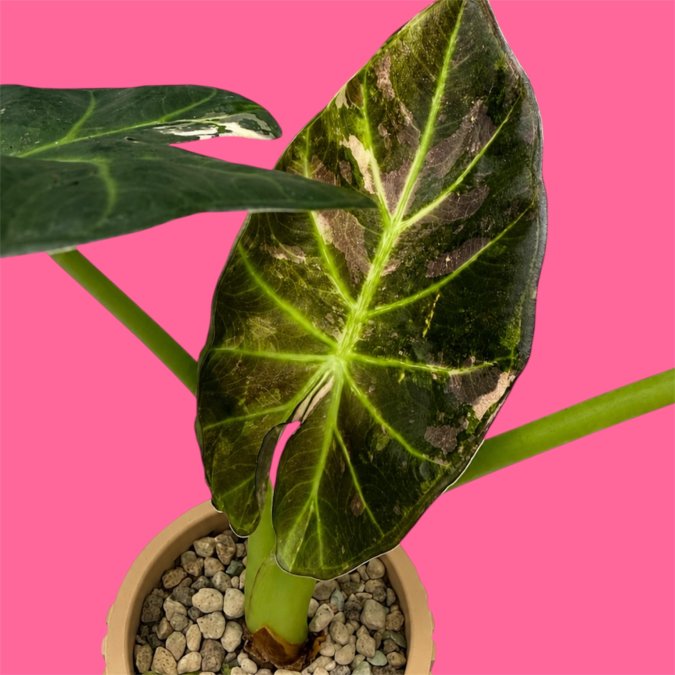
Yellow leaves and wilting foliage
Yellow leaves are the classic sign of overwatering, but on variegated plants they're trickier to spot. The yellow often starts at the leaf base or edges and spreads inward, looking like an extension of the cream or gold patches rather than damage.
Wilting is equally deceptive. You'd think a plant with too much water would look plump, but waterlogged roots can't absorb oxygen or deliver nutrients properly, so the plant wilts even though the soil is wet. Drooping foliage alongside yellow leaves and damp soil almost certainly means overwatering.
Check the pattern: overwatering yellowing typically starts at the oldest lower leaves and moves upward. If your variegated Alocasia is yellowing from the bottom up and the soil feels wet, you've likely been watering too much.
Brown spots, crispy edges, and leaf curling
Brown spots on variegated Alocasia can signal overwatering, though they're sometimes confused with other issues. They often start as dark, water-soaked patches on the leaf surface or undersides, sometimes with a yellow halo. On variegated leaves these dark spots blend into the green sections, making them hard to notice until damage is severe.
Crispy leaf edges are another telltale sign. When roots are waterlogged, the plant can't transport water and minerals to the leaf tips efficiently, so the edges dry out and turn brown or papery even though the soil is wet. The plant is stressed from poor root function, not lack of water.
Leaf curling often follows, with margins curling inward as the plant tries to reduce water loss. Combined with browning edges and yellow patches, curling leaves indicate distress from excess moisture.
Guttation and leaf dripping
Guttation is the plant's way of releasing excess moisture through tiny pores on the leaf edges. You'll see small water droplets forming on the leaf tips or margins, usually at night or early morning, looking like the plant is "sweating."
While guttation itself isn't harmful, it's a red flag for overwatering: the soil is so wet the roots absorb more water than the plant can use, so it pushes the excess out through the leaves. If you're seeing regular guttation, your watering schedule needs adjustment.
Leaf dripping is similar but more pronounced, with droplets actually dripping from the leaf tips, signalling moisture levels are too high.
Alocasia Root Rot Signs and How to Inspect Roots
Root rot is the end stage of overwatering, and it's the most serious threat to your variegated Alocasia. By the time you see obvious leaf symptoms, root damage may already be advanced.
Healthy Alocasia roots are firm, light-coloured (white, cream or pale tan) and smell earthy or neutral. Rotted roots are soft, dark brown or black, and smell foul, like wet soil mixed with decay.
To inspect roots, remove the plant carefully from its pot and gently loosen the soil around the root ball. Check the roots closest to the soil surface first, as these usually rot first. Soft, dark roots mean root rot is present.
Check the stem base too. If it feels soft or mushy where it enters the soil, the rot has reached the corm, which is more serious and needs immediate intervention.
If roots are mostly healthy but some are soft and dark, trim the rotted sections with clean scissors and repot in fresh, dry soil mix with good drainage.
Overwatering Versus Underwatering: The Critical Difference
This is where most plant owners get confused. Both overwatering and underwatering cause yellowing leaves and wilting, but the fixes are opposite, so misdiagnosing makes things worse.
Overwatering signs:
- Yellow leaves starting from the bottom
- Wilting foliage despite wet soil
- Brown spots with yellow halos
- Soft, dark roots
- Mushy stem base
- Soil stays wet for days after watering
- Foul smell from soil or roots
Underwatering signs:
- Yellow leaves starting from the top or edges
- Wilting foliage with dry, crispy soil
- Crispy, papery leaf edges (no yellow halo)
- Light-coloured, thin roots
- Soil pulls away from pot edges
- Plant dries out quickly after watering
- No smell or earthy smell only
The soil is your best clue. Stick your finger into the top inch: if it's wet or soggy you're likely overwatering, if it's bone dry you're underwatering. For variegated Alocasia, soil should feel slightly moist but never waterlogged.
How Often to Water Alocasia and Moisture Checks
The question "how often should I water?" has no fixed answer because it depends on pot size, soil mix, light, humidity and season. A better approach is to check the soil before every watering.
For variegated Alocasia, we recommend the top-inch rule: water only when the top inch of soil feels dry to the touch. In warmer months (October to March in Australia), this might mean watering every 7-10 days.
Always water thoroughly until it drains from the drainage holes, which flushes salts and ensures even moisture. Never let the pot sit in standing water, and empty the saucer after 30 minutes.
The key difference with variegated Alocasia: they're slightly less tolerant of drying out completely than some solid-green varieties, but far more sensitive to staying wet. Aim for "moist but not wet".
A table to guide your watering:
Alocasia Flemingiana Aurea Variegated – Established Plant | Exact Plant 🌿💛 →
| Season | Frequency | Soil Feel | Check Interval |
|---|---|---|---|
| Spring/Summer | Every 7-10 days | Top inch dry | Weekly |
| Autumn | Every 10-14 days | Top inch dry | Every 10 days |
| Winter | Every 14-21 days | Top inch dry | Every 2 weeks |
During winter, growth nearly stops. Your variegated Alocasia needs far less water. Many overwatering problems happen because people keep their summer watering schedule through the cooler months.
How to Save an Overwatered Alocasia: Step-by-Step Recovery
If you've caught overwatering early, your variegated Alocasia can recover. Here's how:
Step 1: Stop watering immediately. Don't water again until the soil dries out, giving the roots a chance to breathe.
Step 2: Check drainage. Make sure your pot has drainage holes; if not, repot into one that does. Poor drainage is often the root cause of overwatering damage.
Step 4: Repot in fresh soil. Use a well-draining aroid mix (roughly 50% orchid bark, 30% peat or coco coir, 20% perlite). Never reuse the old, wet soil.
Step 5: Reduce humidity temporarily. High humidity slows evaporation and keeps soil wet longer, so keep it moderate (40-50%) for a few weeks after repotting.
Step 6: Wait before feeding. Don't fertilise for at least 4-6 weeks. Damaged roots can't process nutrients. Wait until you see new growth before resuming feeding.
Step 7: Adjust your watering routine. Once new growth appears, resume watering only when the top inch of soil is dry.
Recovery takes time. Your variegated Alocasia may drop a few leaves as it heals. This is normal. New growth is the sign that recovery is working.
Alocasia Underwatering Signs and Prevention
While overwatering is the more common problem with variegated Alocasia, underwatering does happen, especially in heated homes during winter or if you're away for extended periods.
Underwatered plants show crispy, papery leaf edges without the yellow halo overwatering produces. The entire leaf may become thin and brittle, wilting occurs but the soil is visibly dry, and the plant may drop leaves rapidly.
Prevention is simple: check soil moisture regularly, especially in warmer months. If you're going away, ask someone to check weekly, move the plant to a shadier spot to slow water loss, or use a self-watering stake as backup.
If you do underwater, recovery is faster than from overwatering. Water thoroughly and resume your regular schedule. The plant should perk up within days.
Substrate, Drainage, and Environmental Adjustments
Your soil mix is everything. Poor drainage is the #1 cause of overwatering damage in variegated Alocasia, even when you're watering correctly.
Standard potting soil holds too much moisture.
Your pot matters too. Terracotta dries faster than plastic, which helps if you tend to overwater, while plastic retains moisture longer, which suits very dry homes.
Drainage holes are non-negotiable. A beautiful pot without drainage is a death trap for variegated Alocasia.
Humidity and air circulation also affect watering needs. High humidity slows evaporation, so soil stays wet longer. If your home is very humid, water less frequently.
Light affects growth rate and water needs. Variegated Alocasia in bright, indirect light grow faster and use more water.
Temperature matters too. Alocasia in warmer homes (above 24°C) grow actively and need more frequent watering. In cooler homes, growth slows and watering needs drop.
Overwatering is the quickest way to lose a variegated Alocasia, but it's also the easiest problem to prevent.
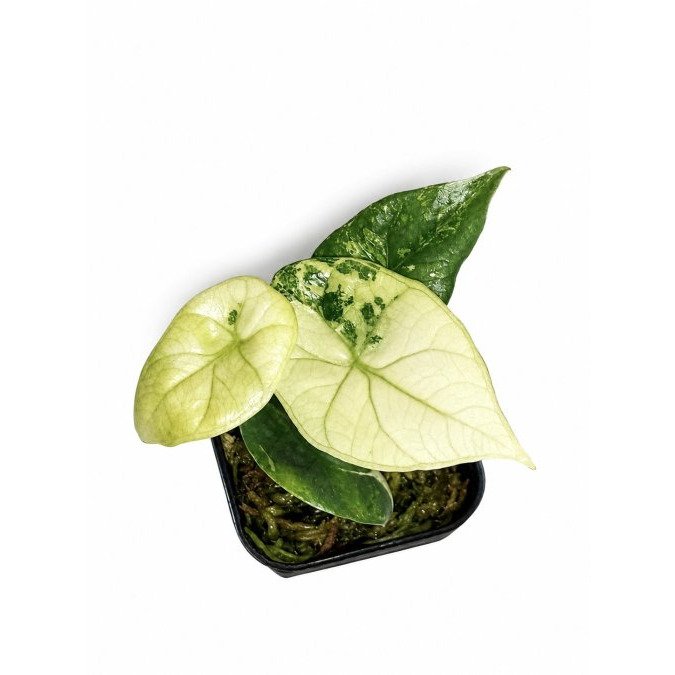
If you're building your collection of rare, variegated Alocasia, start with healthy specimens from growers who understand these plants' needs. Our Alocasia Pseudosanderiana Aurea Variegated and Alocasia Ninja Tricolour Variegated are both rooted in well-draining substrate and ready to integrate into your care routine.

Frequently Asked Questions
How can I tell if my Alocasia is overwatered or underwatered?
Overwatered Alocasia show yellow, drooping leaves with soft, mushy stems and wet soil that smells sour. Underwatered plants have crispy, brown leaf edges, curled foliage, and bone-dry soil that pulls away from the pot. Check the soil first: if it's soggy and the leaves are drooping, overwatering is the culprit. If soil is hard and compacted, you're underwatering. Underwatering also causes more severe leaf curling than overwatering.
Can an overwatered variegated Alocasia recover?
Yes, if caught early. Remove the plant from its pot, inspect the roots for rot, and trim away any mushy or black roots with clean scissors. Repot into fresh, well-draining substrate and hold off watering for 7-10 days. Reduce humidity slightly and ensure good air circulation. Recovery takes 2-4 weeks; new growth signals success. However, if root rot is severe (most roots are mushy), recovery is unlikely.
What's the best way to check if my Alocasia needs watering?
Feel the top inch of soil with your finger. If it's dry, water thoroughly until it drains from the base. If it's still moist, wait another few days. For variegated Alocasia, this usually means watering every 7-10 days in growing season, less in cooler months. Never water on a fixed schedule; soil moisture varies with pot size, substrate type, humidity, and season. Overwatering happens when growers ignore the soil and water by calendar.
Why does my variegated Alocasia have guttation and what does it mean?
Guttation is water droplets forming on leaf tips and edges, it's a sign of excess soil moisture and high humidity. While not immediately harmful, persistent guttation suggests the soil is too wet. Reduce watering frequency and improve air circulation to prevent fungal issues. If guttation is accompanied by yellowing leaves or soft stems, overwatering is the problem and you need to act quickly.