 how-to
How to Choose the Best Anthurium for Your Indoor Collection
Table of Contents
- Understanding Anthurium Varieties for Indoor Growing
- What Makes the Best Anthurium for Indoors
- Anthurium Care Indoors: Light, Water and Humidity
- Choosing the Right Anthurium Potting Mix
- Matching Anthurium Types to Your Experience Level
- Evaluating Plant Health and Quality Before Purchase
- Frequently Asked Questions
Last Updated: October 21, 2026
Understanding Anthurium Varieties for Indoor Growing
Understanding how to choose the best anthurium for your indoor collection means knowing what you're actually getting. We at Obsessed With Aroids work with collectors every day who want plants that fit their homes, experience level and long-term vision. The variety is staggering, from compact foliage species to collector hybrids with velvet leaves and striking venation.
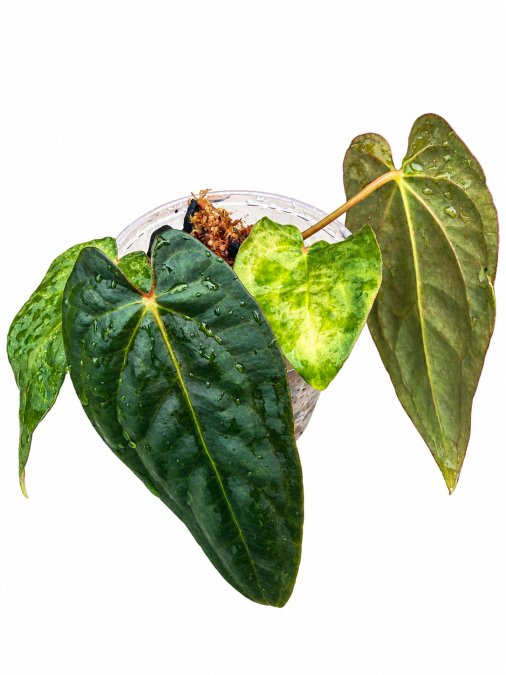
How to choose the best anthurium for your indoor collection comes down to matching three things: your home's conditions, your care commitment, and what draws you to these plants.
Foliage-focused anthuriums vs flowering types
Most people picture the classic red or pink spathe, but foliage anthuriums, grown for their extraordinary leaves rather than flowers, dominate the collector world.
Foliage anthuriums offer heart-shaped, elongated or deeply lobed leaves with textures from velvety to quilted. Think Anthurium dolichostachyum with its warm bronze emergent leaves, or Crystal Sensation with bright silver veining against velvet foliage.

Flowering anthuriums produce the iconic waxy spathe and spadix. They're often more compact and forgiving than foliage types, making them solid entry points for new collectors, and they still have beautiful foliage.
The real choice is what excites you: foliage collectors obsess over new leaf unfurling and colour development, while flowering enthusiasts appreciate the bonus blooms.
Species, hybrids and collector varieties explained
Species anthuriums occur in nature, such as Anthurium dolichostachyum and Anthurium clarinervium. They're genetically stable and breed true, with specific care needs tied to their native habitat but reliable results year after year.
Hybrids are crosses between two species or a species and another hybrid, like Anthurium Lux × Pap.
Collector varieties are named hybrids selected and propagated for standout traits. Anthurium Cherry Cola and Anthurium Dark Complex Pure Form are collector selections chosen for consistently exceptional colour, texture or size.
The hierarchy isn't "species are better than hybrids", it's about what you want: species offer predictability, hybrids offer vigour and drama, and collector varieties offer the rarest foliage in cultivation.
What Makes the Best Anthurium for Indoors
The best anthurium for your space is one that thrives in your actual conditions, not the conditions you wish you had.
Assessing your home's light conditions
Light is non-negotiable. Get this wrong and no amount of perfect humidity or watering will save the plant.
Bright indirect light is the sweet spot for most anthuriums: strong enough to read by but filtered, never hours of direct sun.
Low light won't kill most anthuriums, but growth slows dramatically: new leaves emerge smaller and paler, and variegation fades.
Direct sunlight causes permanent leaf scorch, so afternoon sun through an unfiltered west-facing window is risky, and even gentler morning sun needs monitoring.
Be honest about your light. If you have one bright corner and the rest is dim, choose plants that fit that reality rather than hoping they'll adapt.
Space, mature size and growth habit
Anthuriums vary wildly in mature size, from compact plants at 30-40 cm to sprawling specimens that need a large pot and floor space.
Check mature size before you buy.
Compact varieties like Anthurium dolichostachyum or smaller hybrids suit shelves, desks and tight spaces, perfect for collectors on limited square metres.
Larger hybrids need floor space or substantial tables, dramatic and rewarding but only if you have room.
Growth habit matters too: some grow upright, others trail or creep, so know which you're getting to provide appropriate support.
Anthurium Care Indoors: Light, Water and Humidity
You can have the rarest anthurium in the country, but poor care will make it miserable. Here's what actually moves the needle.
Bright indirect light and avoiding leaf scorch
Light is the biggest variable in your home, so it's worth repeating.
Most anthuriums come from tropical rainforests where they grow as understory plants beneath the canopy, receiving dappled, indirect light. Replicate that indoors: bright indirect light encourages vigorous growth and rich leaf colour, and without it your plant survives but doesn't thrive.
Position your anthurium 1-2 metres from a bright window, or use sheer curtains to filter direct sun, and rotate it every few weeks so all sides develop evenly. Bleached patches or washed-out foliage mean it needs to move further from the light.
Watering and root health
Overwatering kills more aroids than any other mistake.
Anthuriums want moist soil, not wet soil: moist means the substrate has moisture throughout without being waterlogged, while wet means standing water or soggy conditions that lead to root rot.
Water when the top 2-3 cm of potting mix feels dry to touch. In warm months, that might be weekly; in cooler months, every 10 days or longer.
Use room-temperature water. Cold water shocks tropical plants. Tap water is fine unless your area has very high mineral content, in which case rainwater or filtered water is gentler.
Poor drainage is your enemy.
Humidity and temperature for tropical conditions
Anthuriums are tropical plants. They love humidity. Most Australian homes are drier than the rainforest, so humidity support helps.
Aim for 50-70% humidity if possible. This isn't essential, many anthuriums adapt to lower humidity, but they'll grow faster and develop larger, more vibrant leaves in humid conditions.
Increase humidity by misting leaves with distilled water to avoid mineral spots, grouping plants together, placing pots on pebble trays, or running a humidifier, especially in winter when heating dries the air.
Temperature matters less than consistency. Anthuriums prefer warmth, ideally 18-27°C, which most Australian homes sit comfortably within.
Choosing the Right Anthurium Potting Mix
Standard potting soil will kill your anthurium.
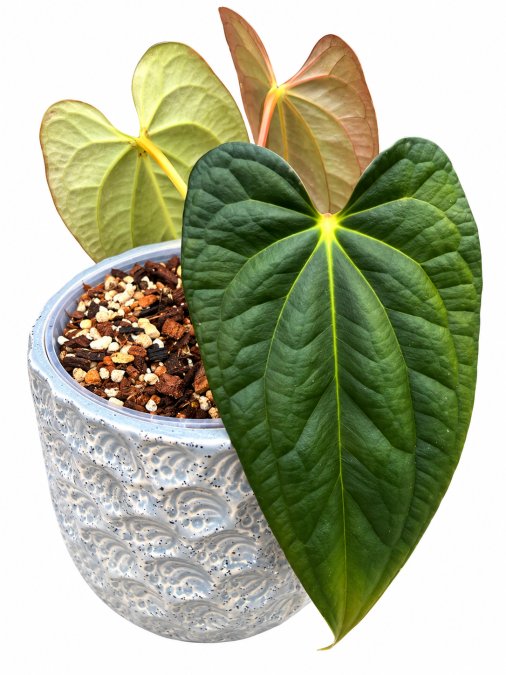
Why chunky, well-draining mixes matter
Anthuriums are epiphytes, in nature, they grow on trees, not in soil. Their roots need air. Dense, compact potting mixes suffocate them.
Anthurium Crystal Sensation | Established Rare Aroid | Exact Plant →
A proper anthurium mix is chunky and open: orchid bark, perlite, sphagnum moss and charcoal rather than fine potting soil. The chunks create air pockets that let roots breathe and water drain quickly.
When you buy an anthurium from us at Obsessed With Aroids, it arrives in a chunky aroid mix specifically formulated for these plants. Keep it when you repot, or replicate it with similar materials.
Dense soil leads to root rot, while chunky mix leads to healthy roots and vigorous growth.
Drainage, aeration and avoiding root rot
Drainage holes are essential, because without them water pools at the bottom and roots sit in soggy conditions.
Use pots with multiple drainage holes. Terracotta dries faster than plastic, which helps in humid conditions, while plastic retains moisture longer for situations that suit it.
Repot only when the plant is clearly outgrowing its pot, with roots circling the inside or growth slowed despite good care. Every 18-24 months is typical.
When you do repot, use fresh chunky mix, as old mix compacts over time and loses its aeration.
Root rot develops in waterlogged conditions.
Matching Anthurium Types to Your Experience Level
Not all anthuriums are created equal when it comes to care difficulty. Knowing your starting point matters.
Beginner-friendly varieties with forgiving care
If you're new to aroids, these plants are genuinely forgiving.
Anthurium dolichostachyum tolerates many conditions, growing steadily, adapting to moderate light and not fussing over humidity. New leaves emerge in warm bronze tones before hardening to green, visually rewarding without being demanding.
Anthurium NOID hybrids, whose exact parentage is unknown, are often underrated: established, healthy plants with multiple growth points and active new growth.
Anthurium Dorayaki × Silver Blush is a juvenile collector hybrid that punches above its weight: established and actively growing, with velvet foliage and prominent silver veining.
These varieties reward consistent care without demanding perfection. They're also widely available, so you're not hunting rare stock.
Collector-level hybrids and rare species
Once you've got experience, these are where the obsession deepens.
Anthurium Crystal Sensation delivers velvet foliage with bright silver veining that catches light beautifully.

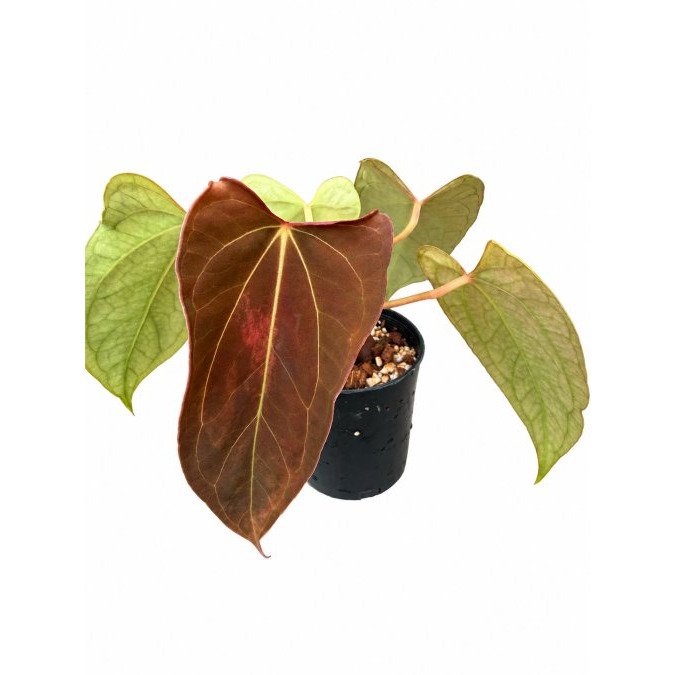
Anthurium Cherry Cola represents the darker end of the spectrum, dark velvet foliage with reddish petioles and pink-red emergent growth.
Anthurium Pap × RVDP is a larger collector hybrid at approximately 30 cm tall when you receive it, established and rooted for immediate presence.
These varieties demand more attention to light, humidity and potting mix, but reward it with genuinely rare, striking foliage. They're where the real collecting begins.
Evaluating Plant Health and Quality Before Purchase
This is where knowing your source matters.
What to look for in established plants
When you're buying an anthurium, you're investing in a living plant. Condition on arrival affects everything that follows.
Look for multiple growth points. A single-leaf plant is vulnerable, while multiple growth points mean redundancy if one leaf is damaged in transit.
Inspect the roots if possible. Healthy roots are firm, light-coloured and smell earthy, while mushy, black or sour-smelling roots mean the plant is stressed or rotting, a deal-breaker.
Check the foliage carefully. Minor cosmetic marks from transit are acceptable, but widespread yellowing, large brown patches or pest damage are red flags.
Variegation stability matters. If you're buying a variegated anthurium, ask whether the variegation is stable or prone to reverting.
Understanding exact plant listings and what you receive
This is where we differ from many sellers. When we list an anthurium as "exact plant," you receive that specific plant, the one in the photos.
You see its current size, colouring and condition before you buy, with no surprises or generic "similar plant" substitutes.
Live plants change between photography and dispatch. A new leaf might unfurl. Older foliage might yellow slightly. These are normal.
We ship carefully packed in moss, with ICA accreditation for interstate movement. Plants arrive ready to settle into your home.
Biosecurity requirements vary by state. We handle all certification and compliance, but it's worth checking your state's requirements before purchasing.
Choosing the best anthurium for your indoor collection isn't about finding the rarest plant or the biggest name. Browse our Anthurium collection to find your next plant, or reach out if you want guidance on what fits your space.
Frequently Asked Questions
What are the different types of anthuriums suitable for indoor growing?
Anthuriums fall into two main categories: foliage-focused varieties prized for ornamental leaves, and flowering types with coloured spathes. Foliage anthuriums like Crystal Sensation and Dark Complex offer stunning velvet textures and veining, while species such as dolichostachyum display elegant elongated leaves. Collector hybrids combine traits from multiple parent plants, creating unique appearances. All can thrive indoors with proper care, though some are more forgiving for beginners than others.
What potting mix is best for anthuriums?
Anthuriums need chunky, well-draining aroid mixes that prevent the root zone from staying overly wet. Look for mixes containing bark, sphagnum, perlite, or orchid bark rather than standard potting soil. Good drainage and aeration are critical, anthuriums are epiphytes in nature and prefer loose, open media. Avoid compacted mixes; your anthurium's roots will rot if moisture sits around them for too long.
How much light does an anthurium need indoors?
Most anthuriums prefer bright indirect light, think dappled sunlight filtered through a sheer curtain or positioned a few metres from an east or west-facing window. Direct afternoon sun can scorch foliage, particularly on delicate velvet varieties. Some species tolerate lower light, but growth slows noticeably. If your space lacks bright indirect light, a grow light positioned 30 cm above the plant can help foliage anthuriums thrive.
What should I look for when buying an anthurium?
Check for multiple healthy growth points, active new growth, and strong root systems. Avoid plants with yellowing older leaves or signs of pest damage. When purchasing online, review all listing photos carefully, reputable sellers provide exact plant images showing current size, colouring and condition. Look for established, rooted plants rather than unrooted cuttings if you're new to aroids. Verify the seller offers secure shipping and can certify plants for interstate movement under biosecurity requirements.