 listicle
Best Rare Aroids for Indoor Growing
Table of Contents
- Why Rare Aroids Thrive Indoors
- Rare Alocasia Australia: Varieties for Indoor Collectors
- Rare Anthurium Australia: Collector Hybrids and Species
- Variegated Alocasia: Understanding Stability and Growth
- Indoor Aroid Care: Light, Humidity and Growing Conditions
- Choosing Your First Rare Aroid
- Frequently Asked Questions
Last Updated: October 18, 2026
Why Rare Aroids Thrive Indoors
Rare aroids indoor for Australian collectors have become increasingly sought-after, representing an exciting frontier in plant collecting. These tropical foliage plants adapt remarkably well to controlled indoor conditions, letting you replicate the warm, humid, filtered light of their native rainforest habitats.
At Obsessed With Aroids, we've found that rare aroids often perform better indoors than outdoors in most of Australia. You control humidity, avoid temperature fluctuations, and protect delicate variegation from harsh sun, with no seasonal cold snaps or dry spells to worry about.
The appeal goes beyond practicality. Whether it's the velvet texture of a Black Velvet Anthurium, the white variegation on an Albo Alocasia, or the quilted foliage of a Luxurians hybrid, these plants command attention in any room.
Rare Alocasia Australia: Varieties for Indoor Collectors
Alocasia varieties dominate the rare aroid collector scene, combining sculptural leaf shapes, stunning colour shifts and the appeal of owning something genuinely difficult to source. Several have become favourites among Australian collectors for their indoor performance and visual impact.
Alocasia Ninja Tricolour: Compact Variegation
The Alocasia Ninja Tricolour stands out for its manageable size and intricate tricolour patterning, with a deep green base and lighter mint-cream variegation across velvet foliage. Unlike large Alocasias that demand serious floor space, the Ninja stays compact, ideal for shelving or plant stands.
The velvety surface catches light differently depending on the angle, so the variegation appears to shift as you move around the plant. Bright, filtered light from north or east-facing windows suits it perfectly.
The Alocasia Ninja Tricolour is rooted and established, not fresh tissue culture. We stock the Alocasia Ninja Tricolour Variegated | Established & Rooted | Exact Plant 🌿🤍💚 with multiple leaves and active growth, ready to settle into your collection. One thing to know: variegation can shift between leaves, and future levels cannot be guaranteed. That's the nature of variegated plants, part of their charm and unpredictability.
Alocasia macrorrhiza Black Stem Albo: Statement Corm-Grown Plant
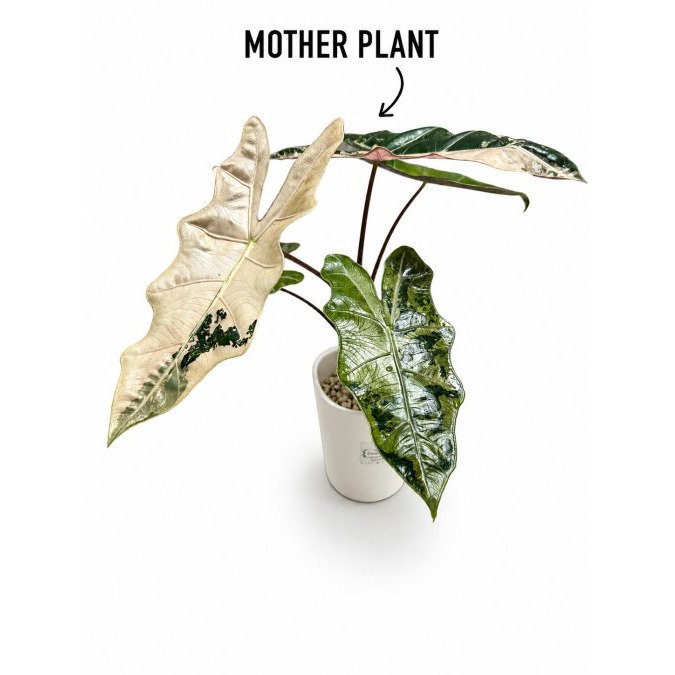
The Alocasia macrorrhiza 'Black Stem Albo Variegata' is a statement plant. Corm-grown rather than tissue culture, it features striking black stems contrasting against cream-white variegation on large, dramatic leaves. This is not a shelf plant, it's a floor specimen that commands a corner.
Corm-grown plants develop differently from tissue culture. Growing from a corm (an underground storage structure) means they establish stronger root systems and often display more stable variegation over time, translating to better longevity and more predictable growth. This is why we specialise in carefully grown, corm-grown plants, ensuring high-quality specimens.
For Australian indoor growing, the Black Stem Albo performs well in warm rooms with consistent humidity, and the large leaves appreciate regular misting or a humidifier during drier months. Indoors, you control light exposure, preserving variegation without the sun bleaching outdoor growing carries.
We offer the Alocasia macrorrhiza 'Black Stem Albo Variegata' as an established plant with excellent future growth potential. This is a premium specimen with genuine collector appeal.
Alocasia Pseudosanderiana Aurea: Aurea Potential
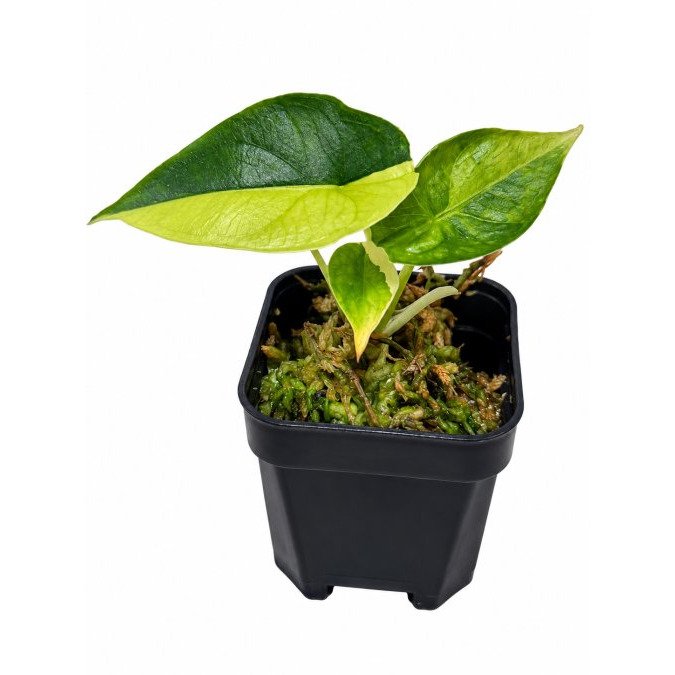
Aurea variegation, that golden or pale yellow tone on new growth, represents one of the most exciting possibilities in aroid collecting. The Alocasia Pseudosanderiana Aurea is corm-grown, showing signs of aurea colouring on its second leaf, which is still hardening.
Aurea variegation can be unstable; it may appear strongly on one leaf, then fade on the next. That unpredictability is exactly what drives collectors, watching a plant develop its character, never quite knowing what the next unfurl will reveal.
Indoors, the Pseudosanderiana Aurea benefits from bright, filtered light. Direct sun can scorch new growth, but insufficient light weakens the aurea expression, so aim for a north or east-facing window with sheer curtains, or a few metres back from an unobstructed window.
The Alocasia Pseudosanderiana Aurea we stock is a healthy, rooted corm-grown plant with active growth. Variegation patterns can change between leaves, so approach this as a living artwork rather than a guaranteed aesthetic.
Rare Anthurium Australia: Collector Hybrids and Species
Anthuriums represent a different collecting philosophy. Where Alocasias focus on leaf size and dramatic shape, Anthuriums emphasise texture, venation and subtle colour shifts, ranging from elegant species with elongated foliage to collector hybrids with velvet leaves and intricate vein patterns.
Anthurium dolichostachyum: Elegant Species
The Anthurium dolichostachyum is a species plant, not a hybrid, which appeals to collectors seeking authenticity and botanical interest. It features elongated foliage with a heart-shaped leaf base, and new leaves emerge in warm bronze tones before hardening to green.
Species Anthuriums tend to be more forgiving of variable conditions indoors than hybrids. The dolichostachyum appreciates bright, indirect light, warm temperatures and moderate-to-high humidity. It's not fussy, but it rewards consistency.
Indoors in Australian homes, this plant thrives in bathrooms or kitchens where steam and humidity naturally accumulate. Use a chunky, free-draining aroid mix, never let it sit wet. Good airflow matters; stagnant, humid conditions invite fungal issues. Maintaining this balance of moisture and air creates a lush backdrop that pairs beautifully with the timeless aesthetic of botanical home decor.
The Anthurium dolichostachyum we offer is established with visible new growth, ready to integrate into your collection.

Anthurium Lux × Pap: Textured Hybrid
The Anthurium Lux × Pap represents the pinnacle of hybrid Anthurium breeding. This cross between Luxurians and Papillilaminum produces dark, elongated foliage with strongly textured venation, and mature leaves develop a blue-green quilted appearance, the desired aesthetic rather than a defect. Newer foliage emerges in green-to-bronze tones.
What makes this hybrid special is the tactile quality. The pronounced venation is the kind of feature that photographs beautifully but feels even better in person.
Indoors, the Lux × Pap demands consistency: bright, filtered light, warm temperatures (ideally 18-26°C year-round) and humidity in the 60-80% range. It's less forgiving of neglect than species plants, but the visual reward justifies the attention.
We stock the Anthurium Lux × Pap as an established, well-rooted plant with multiple leaves and active growth. Each specimen is identified and documented.

Anthurium Crystal Sensation: Silver-Veined Beauty
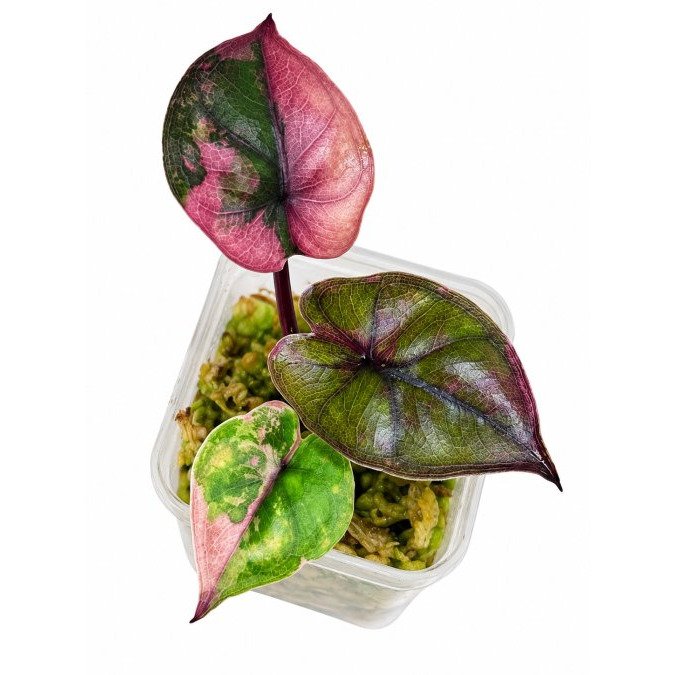
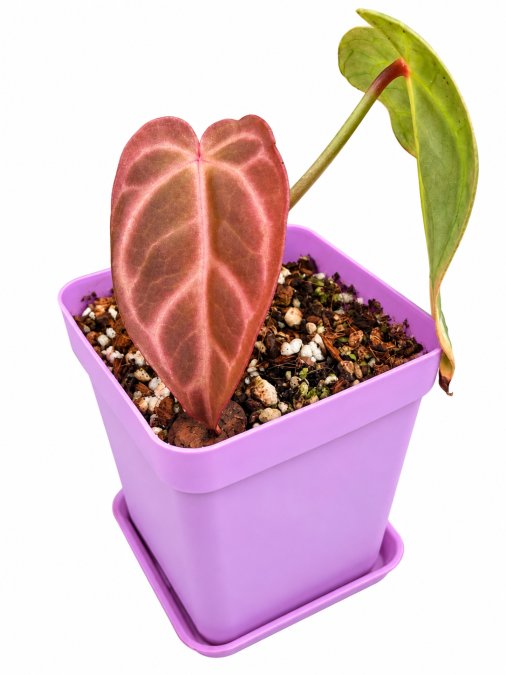
The Anthurium 'Crystal Sensation' delivers striking visual contrast, with velvet foliage paired with bright silver veining that catches light beautifully. It has multiple growth points and fresh juvenile growth, so you'll see new leaves unfurl regularly.
Anthurium Moody Clone × Red Beauty × Moodeanum Rare Aroid Collector Plant →
The silver venation is the main appeal. It's not variegation in the traditional sense, the entire leaf is green, but the veining creates an almost crystalline appearance that becomes even more pronounced when positioned to catch light from the side or behind.
Crystal Sensation performs well in moderate to bright, indirect light. It's a solid choice for collectors newer to the genus. The main requirement is humidity and good drainage.
The Anthurium Crystal Sensation we offer is established with active new growth points. Some older foliage may show minor cosmetic marks, as noted in the listing photos, this is normal for established plants.
Variegated Alocasia: Understanding Stability and Growth
Variegation drives many collectors to rare aroids, but it's also where misconceptions flourish. Understanding how it works, and what "stable" actually means, separates experienced collectors from frustrated ones.
Variegation occurs when sections of the leaf lack chlorophyll, appearing white, cream, yellow or other colours. In some plants it's genetically stable, appearing consistently on every leaf. In others it's chimeric, existing only in certain cell lines, so one leaf might be heavily variegated and the next solid green.
The Alocasia Flemingiana Aurea exemplifies this dynamic. We stock a corm-grown juvenile that currently shows no variegation, offered at a reduced price. This plant grew from a variegated mother, so future variegation is possible, but not guaranteed. Purchase it as a non-variegated plant.
This honesty matters. Collectors who understand the reality make better purchasing decisions and set realistic expectations.
For variegated aroids indoors, light management is critical. Bright, filtered light supports variegation expression. Direct sun can bleach variegated sections, while insufficient light weakens variegation development. The goal is consistent, moderate brightness without intensity.
| Variegation Type | Stability | Indoor Light Needs | Collector Appeal |
|---|---|---|---|
| Stable (genetic) | Consistent across leaves | Bright, filtered | Predictable aesthetics |
| Chimeric (sectoral) | Varies leaf to leaf | Moderate to bright | Unpredictable, exciting |
| Aurea (golden) | Often unstable | Bright, filtered | High, unique appearance |
| Albo (white) | Variable stability | Bright, filtered | Very high, striking contrast |
Indoor Aroid Care: Light, Humidity and Growing Conditions
Growing rare aroids indoor successfully hinges on three factors: light, humidity, and air movement. Get these right, and rare aroids thrive. Neglect them, and even expensive specimens decline.
Light is the first variable. Aroids evolved in rainforest understory, where they receive dappled, filtered light. Indoors, this translates to bright, indirect light.
Humidity is equally essential. Most rare aroids need 60-80% humidity, and Australian indoor environments, particularly in cooler months or drier regions, often fall below this.
Air movement prevents fungal and bacterial issues. Stagnant, humid air is an invitation for disease. A small fan on low speed, running a few hours daily, keeps air circulating without creating harsh, drying conditions.
Watering follows a simple principle: water when the top inch of soil feels dry. Aroids prefer moist but not waterlogged conditions, and chunky, free-draining aroid mixes facilitate this balance.
Temperature indoors should remain consistent, ideally between 18-26°C. Aroids dislike cold drafts and sudden temperature swings. Keep plants away from air conditioning vents and cold windows during winter.
Choosing Your First Rare Aroid
If you're new to rare aroids, starting with the right plant matters. Beginners often choose on visual appeal alone, then struggle with care requirements.
Start with established plants, not fresh tissue culture. Established plants have developed root systems and proven they can survive propagation and early growth stages.
Assess your humidity capacity. Can you maintain 60-80% humidity consistently? If not, choose plants more forgiving of moderate humidity.
Start with one or two plants, not a whole collection. Learn how each responds to your specific conditions.
Budget for the long term. Rare aroids are an investment. Factor in a good humidifier, chunky aroid mix, and specialist fertiliser.
The Alocasia Ninja Tricolour Variegated makes an excellent entry point. The Anthurium dolichostachyum is another strong beginner choice, a species plant that rewards consistency without demanding perfection.

Rare aroids for Australian indoor environments represent an exciting collecting frontier.
At Obsessed With Aroids, we specialise in corm-grown, established specimens selected specifically for collectors serious about quality. Explore our rare Alocasia and Anthurium collection to find your next addition.
Frequently Asked Questions
What are the easiest rare aroids to grow indoors?
Established Alocasia and Anthurium varieties tend to adapt well indoors if you provide consistent bright indirect light, moderate-to-high humidity and good airflow. Species like Anthurium dolichostachyum and compact Alocasia varieties are forgiving once acclimated. Start with plants already established rather than fresh propagations, as they've built resilience.
How do I know if a variegated Alocasia will keep its variegation?
Variegation stability varies by cultivar and growing conditions. Some variegated Alocasia are more stable than others; others may revert or show inconsistent patterning across new leaves. Reputable sellers will note if variegation is non-stable. Corm-grown plants from established mother plants tend to show more predictable variegation than fresh tissue culture.
Can I grow rare Anthurium species indoors in Australia?
Yes. Rare Anthurium species and hybrids grow well indoors with bright indirect light, warm temperatures and moderate-to-high humidity. They prefer chunky, free-draining aroid mixes and good airflow to prevent root rot. Species like Anthurium dolichostachyum and collector hybrids respond well to indoor conditions when humidity and light are managed properly.
What humidity level do rare aroids need indoors?
Most rare aroids prefer moderate-to-high humidity. Indoors, aim for 50-70% if possible. You can achieve this with a humidifier, pebble trays, grouping plants together or misting. Good airflow is equally important to prevent fungal issues. Monitor your plants and adjust based on their response; some adapt to slightly lower humidity once established.