 listicle
Best Variegated Alocasia for Collectors: 2026 Guide
Table of Contents
- What Makes Variegated Alocasia Special for Collectors
- Top Variegated Alocasia Varieties Worth Growing
- Alocasia Pink Dragon Albo: Creamy-White Statement Plant
- Alocasia Amazonica Pink Variegated: Rare Pink Tones
- Alocasia Pseudosanderiana Aurea: Golden Collector's Dream
- Alocasia Flemingiana Aurea: Compact Yellow Variegation
- Alocasia Ninja Tricolour: Three-Tone Velvet Foliage
- Alocasia macrorrhizos 'Black Stem' Albo: Dramatic Dark Stems
- Alocasia Stingray Pink Variegated: The Holy Grail
- Understanding Alocasia Variegation Stability and Reversion
- Alocasia Frydek Care: Compact Collector Essentials
- Choosing Corm-Grown vs Tissue Culture: What Collectors Should Know
- Where to Find Quality Variegated Alocasia for Sale in Australia
- Frequently Asked Questions
Last Updated: October 7, 2026
What Makes Variegated Alocasia Special for Collectors
Variegated Alocasia are among the most coveted specimens in the rare plant world. The best variegated alocasia for collectors combine striking visual appeal with genuine rarity, displaying unique patterns of cream, gold, pink or white across their foliage.
What sets them apart is their unpredictability: no two plants are identical, even from the same mother plant. That variation is part of the appeal, but it means understanding variegation stability before investing.
At Obsessed With Aroids, we work directly with established variegated mother plants to produce corm-grown specimens that carry genuine genetics rather than mass-produced tissue culture, so collectors get authentic, traceable plants with real provenance.
Top Variegated Alocasia Varieties Worth Growing
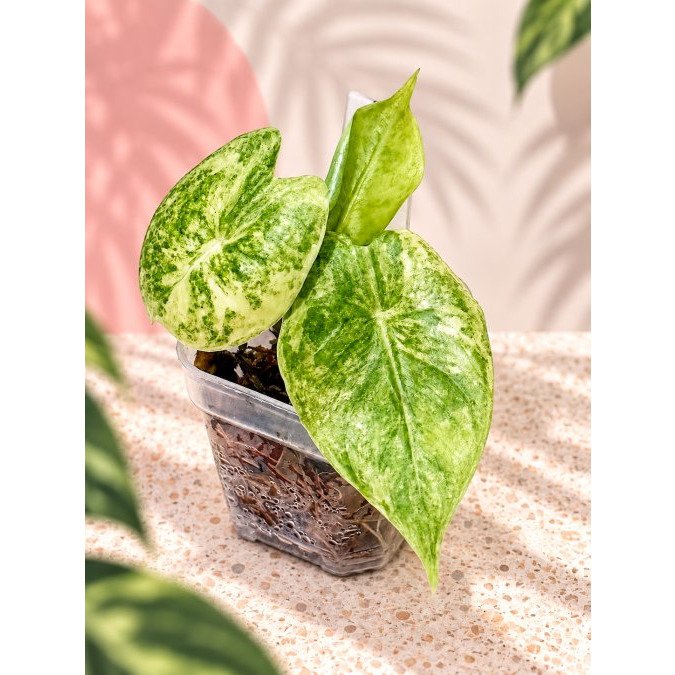
Alocasia Pink Dragon Albo: Creamy-White Statement Plant
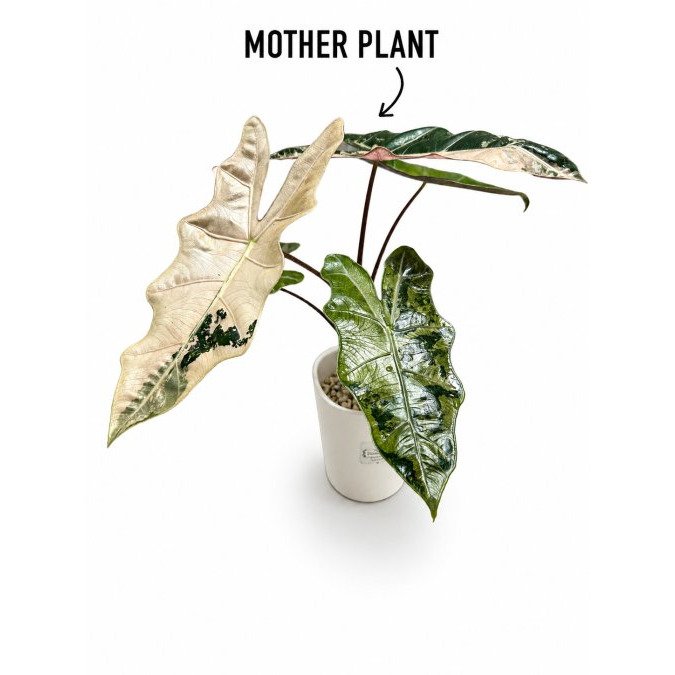
Unlike some variegated Alocasia that revert unpredictably, Pink Dragon Albo tends to hold its white markings across successive leaves in bright indirect light. It stays compact, suiting shelf displays or plant stands.
Growth is moderate, with new leaves every 2-3 weeks during the active growing season (spring and summer in Australia).
We offer the Alocasia Pink Dragon Albo as a corm-grown juvenile at $99.00, grown from an established variegated mother plant. You'll receive the exact plant pictured, with active new growth already visible.
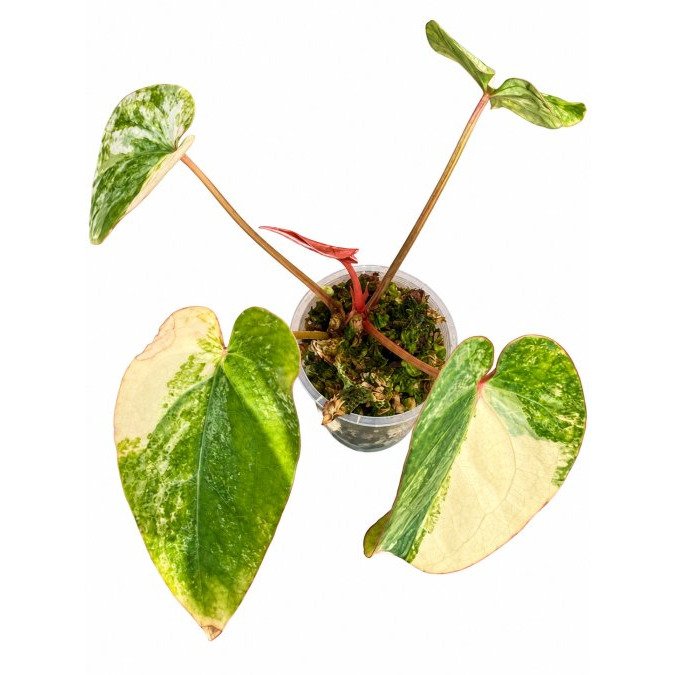
Alocasia Amazonica Pink Variegated: Rare Pink Tones
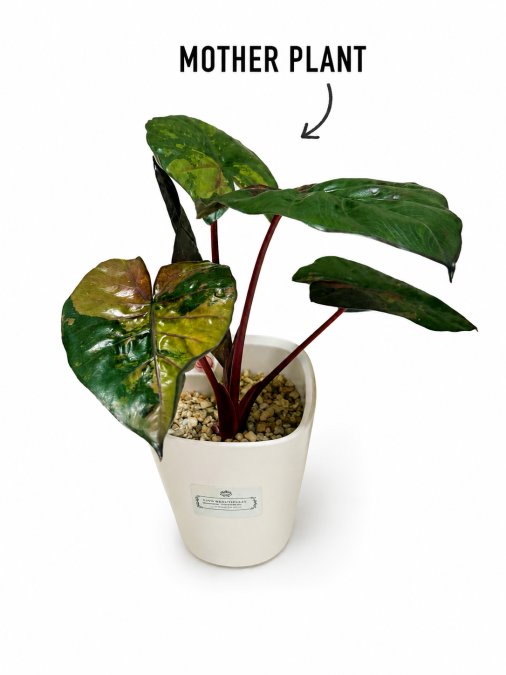
The Alocasia Amazonica Pink Variegated (not the common Polly) displays soft pink colouring through dark foliage, a trait highly sought after among serious collectors.
Pink variegation appears most vividly in new growth under consistent bright indirect light. Juvenile leaves emerge strongly pink, while established leaves deepen to green with subtle pink undertones.
It needs stable conditions: keep it between 18-24°C, away from cold draughts, as temperature fluctuations reduce variegation intensity. It's slower than Pink Dragon, with new leaves every 3-4 weeks.
The Alocasia Amazonica Pink Variegated corm-grown specimen we stock is $100.00. This is corm-grown, not tissue culture, which means the variegation genetics are stable and traceable.

Alocasia Pseudosanderiana Aurea: Golden Collector's Dream
For collectors drawn to golden variegation, the Alocasia Pseudosanderiana Aurea is hard to beat, displaying yellow-gold aurea markings from subtle veining to bold patches depending on light and leaf maturity.
It's a medium-sized Alocasia with arrow-shaped leaves and a compact habit.
It's reasonably forgiving for collectors with some experience, tolerating slight fluctuations in watering and humidity better than some rarities, with new leaves every 2-3 weeks in the growing season.
We currently have Alocasia Pseudosanderiana Aurea established plants available at $119.00 each, corm-grown, with multiple established leaves and active growth. Each plant is photographed individually, so you receive the exact specimen pictured.

Alocasia Flemingiana Aurea: Compact Yellow Variegation
If space is a consideration, Alocasia Flemingiana Aurea is an excellent choice. This compact variety displays yellow-gold aurea variegation and rarely exceeds 30-40 cm, ideal for shelf collections or plant stands.
Its leaves are smaller and more delicate than Pseudosanderiana, with variegation appearing as golden veining and patches rather than bold blocks.
It prefers consistent moisture and humidity, and is less forgiving if conditions fluctuate, so it suits collectors willing to monitor watering carefully. New growth appears every 2-3 weeks in optimal conditions.
We stock both established Flemingiana Aurea plants at $99.00 and corm-grown specimens at $29.00.
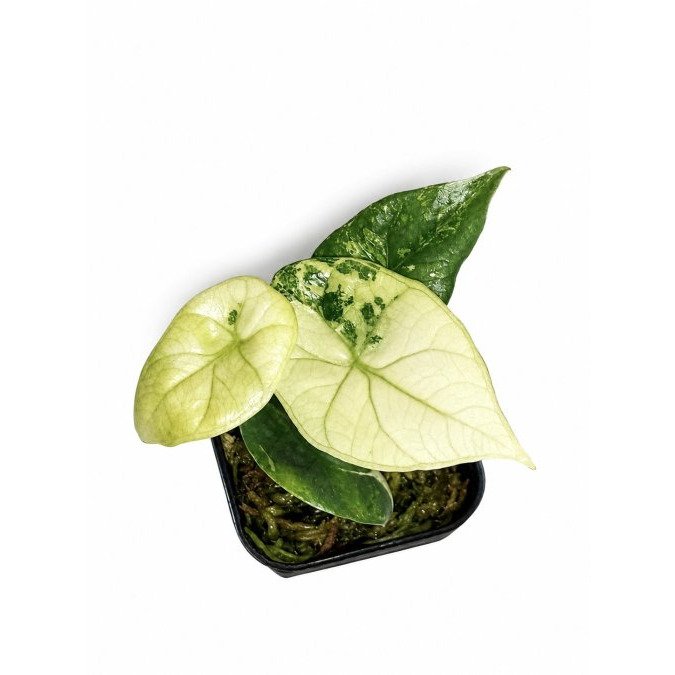
Alocasia Ninja Tricolour: Three-Tone Velvet Foliage
The Alocasia Ninja Tricolour is a collector favourite for its unusual three-tone variegation: deep green, lighter mint or cream, and white all on the same leaf, with velvety foliage that's as tactile as it is striking.
It's compact and slow-growing, with new leaves every 3-4 weeks.
It appreciates bright indirect light and consistent humidity, and is less fussy about watering than some varieties, though don't let the soil dry out completely.
The Alocasia Ninja Tricolour we offer is $69.00, an established, rooted plant with multiple leaves and active growth. It's one of our most affordable variegated options without compromising on quality.
Alocasia macrorrhizos 'Black Stem' Albo: Dramatic Dark Stems
For collectors who want drama, the Alocasia macrorrhizos 'Black Stem' Albo combines white-green albo variegation with deep burgundy or black stems, making it instantly recognisable.
It's larger than others on this list, eventually reaching 60-80 cm, with broader, more substantial leaves. Stem colouration intensifies as the plant matures.
It needs space and consistent care: bright indirect light, high humidity and regular feeding during the growing season, with new leaves every 2-3 weeks once established.
We offer Black Stem Albo as a corm at $89.00, ideal for collectors who want to grow this spectacular variety from the beginning and watch the stem colour develop.

Alocasia Stingray Pink Variegated: The Holy Grail
For serious collectors, the Alocasia Stingray Pink Variegated is the ultimate prize, combining distinctive stingray-shaped foliage with pink, cream, pale green and deep green marbled variegation. Finding one in Australia is genuinely difficult.
The Stingray form itself is unusual, with leaves developing a flattened, wing-like appearance rather than the typical arrow shape.
It's slower-growing and more demanding than most variegated Alocasia, requiring bright indirect light, high humidity and stable temperatures.
This is a once-in-a-collection opportunity. We currently have one Stingray Pink Variegated corm available at $479.00, produced from an established, beautifully variegated mother plant. Only one corm is available, making this genuinely exclusive.
| Variety | Starting Price | Variegation Type | Growth Rate | Best For |
|---|---|---|---|---|
| Pink Dragon Albo | $99.00 | Creamy-white albo | Moderate | Compact collections, consistent variegation |
| Amazonica Pink | $100.00 | Pink tones | Slow | Collectors seeking rare pink colouration |
| Pseudosanderiana Aurea | $119.00 | Yellow-gold aurea | Moderate | Golden variegation lovers, medium space |
| Flemingiana Aurea | $29.00-$99.00 | Yellow-gold aurea | Moderate | Shelf displays, budget-conscious collectors |
| Ninja Tricolour | $69.00 | Three-tone variegation | Slow | Unique patterns, stable variegation |
| Black Stem Albo | $89.00 | White-green albo | Moderate | Bold statements, larger collections |
| Stingray Pink | $479.00 | Pink, cream marbled | Slow | Serious collectors, rare specimens |
Understanding Alocasia Variegation Stability and Reversion
Variegation stability is the question every collector asks before buying: will the variegation stay, fade, or disappear as the plant grows?
Alocasia Flemingiana Aurea Variegated – Established Plant | Exact Plant 🌿💛 →
The honest answer: it depends on the variety, the growing conditions and sometimes just genetics.
Corm-grown plants inherit variegation genetics from their mother plant, making the trait more stable than tissue culture plants.
Several factors influence variegation expression:
Light is the primary factor. Variegated Alocasia need bright indirect light to maintain strong variegation; low light reduces intensity and can trigger reversion. If your plant starts losing variegation, check your light first.
Nutrition affects stability.
Temperature fluctuations can stress variegated varieties, particularly those with pink or cream variegation. Keep plants stable between 18-24°C, away from cold draughts and heat sources.
Maturity sometimes triggers reversion. Juvenile plants often display more vibrant variegation than mature ones, and variegation may naturally become less pronounced as your Alocasia ages.
Alocasia Frydek Care: Compact Collector Essentials
While the Frydek isn't variegated, many collectors grow it alongside variegated varieties, and its care helps you create the right environment for all your Alocasia.
The Alocasia Frydek is a compact, velvety-leaved variety with dark green foliage and striking white veining.
Frydek prefers bright indirect light but tolerates lower light better than most Alocasia, useful where not every plant can sit in a south-facing window.
Humidity is essential: Frydek thrives in humid conditions and can develop crispy leaf edges if the air is too dry, so misting, a pebble tray or a humidifier helps.
New leaves emerge every 2-3 weeks during the active season.
Choosing Corm-Grown vs Tissue Culture: What Collectors Should Know
Provenance matters here: the difference between corm-grown and tissue culture plants directly affects your collection's quality and stability.
Corm-grown plants are propagated from corms (underground storage structures) taken from an established mother plant, so the new plant inherits the mother's genetics directly, including variegation traits.
Tissue culture plants are propagated from small tissue samples grown in a laboratory on nutrient-rich media.
For collectors, corm-grown is the obvious choice: you're investing in traceable genetics and stable variegation.
At Obsessed With Aroids, every variegated Alocasia we offer is either corm-grown or an established plant descended from a variegated mother plant.
Where to Find Quality Variegated Alocasia for Sale in Australia
Finding quality variegated Alocasia in Australia is challenging. Most online retailers stock common varieties or tissue culture specimens, so serious collectors often rely on smaller, specialist growers.
Obsessed With Aroids specialises in exactly what collectors need: rare, variegated, corm-grown Alocasia sourced directly from established mother plants.
Our collection changes seasonally as new growth appears.
When sourcing variegated Alocasia, look for:
- Transparent propagation methods. The seller should clearly state whether plants are corm-grown or tissue culture.
- Exact plant photos. You should see the specific plant you're buying, not a generic stock image.
- Honest variegation descriptions. Reputable sellers acknowledge that variegation can vary and cannot be guaranteed to remain stable.
- Reliable shipping. Plants should arrive safely, packed carefully and dispatched during suitable weather windows.
- Direct seller knowledge. You want to buy from someone who knows their plants personally, not a dropshipper.
ICA biosecurity requirements for interstate plant movement apply to all Australian plant sales.
Finding the best variegated alocasia for collectors comes down to knowing what you're looking for and buying from a source you trust. Whether you're drawn to the creamy-white drama of Pink Dragon Albo, the rare pink tones of Amazonica Pink, or the golden elegance of Pseudosanderiana Aurea, each variety brings something unique to a collection.
The key is understanding variegation stability, choosing corm-grown plants when possible, and creating the right conditions: bright indirect light, consistent humidity and stable temperatures.
At Obsessed With Aroids, we're here to help you build a collection of variegated Alocasia you'll love for years to come. Explore our current collection of rare variegated Alocasia and discover your next collector's prize.
Frequently Asked Questions
Can variegated Alocasia lose their variegation?
Yes, variegated Alocasia can revert to solid green. Variegation depends on stable genetics and growing conditions. Insufficient light, stress, or natural genetic drift can cause new leaves to emerge with reduced or no variegation. Each new leaf develops its own pattern, so you might see high variegation one month and minimal variegation the next. Collectors should understand this variability before purchasing and choose sellers who're transparent about reversion risk.
What's the difference between corm-grown and tissue culture Alocasia?
Corm-grown plants are propagated from underground storage corms of established mother plants, developing naturally from the start. Tissue culture plants are grown in labs from plant cells, producing genetically identical copies quickly but often requiring adjustment to normal growing conditions. Corm-grown plants typically establish faster in home collections and tend to express variegation more reliably because they inherit the mother plant's genetics directly. Many collectors prefer corm-grown for rarer varieties.
What should collectors look for when buying a variegated Alocasia?
Check the seller's photos carefully for exact plant size, leaf count, and current variegation pattern. Ask whether the plant is corm-grown or tissue culture. Verify the seller ships safely within Australia and has biosecurity accreditation if crossing state lines. Look for active growth (new unfurling leaves), established roots, and healthy stems. Buy from collectors who provide honest listings about variegation variability and show the exact plant you'll receive, not just a generic photo.
Which variegated Alocasia is easiest for newer collectors?
Alocasia Ninja Tricolour is a solid choice for collectors gaining experience. It has compact velvet foliage, tolerates a range of light conditions better than some rarer varieties, and displays beautiful tricolour variegation without being as fussy as highly variegated types. Alocasia Flemingiana Aurea is also forgiving and slower-growing, giving you time to learn its preferences. Avoid the rarest varieties like Alocasia Stingray Pink until you've successfully grown a few established Alocasia.