 Ultimate guide
Why Are Variegated Alocasia So Expensive?
Quick Summary
Variegated Alocasia are expensive because the variegation is rare, and it is unstable, so a plant can revert to green. Corm propagation is slow, and growers must raise many plants to get a few worth selling. Price also reflects plant size, collector demand and handling costs.
- Variegation is rare in nature and not always stable, so plants can revert to green.
- Corm-grown plants take months to reach an established, saleable size.
- Larger, established plants with several healthy leaves cost more than small or recently divided ones.
- Check whether a listing is corm-grown or tissue culture, and how many leaves the plant carries.
- Expect some green to appear over time, since variegation on future leaves cannot be guaranteed.
Table of Contents
- What Makes a Variegated Alocasia Rare in the First Place
- How Variegation Develops and Why It Is Unstable
- Corm Propagation: Why Growing Each Plant Takes Time
- The Main Factors That Drive the Price
- Collector Demand and Limited Supply in Australia
- Caring for Your Variegated Alocasia Frydek After Purchase
- Checking a Variegated Alocasia Before You Buy
- Frequently Asked Questions
Why Are Variegated Alocasia So Expensive?
Last Updated: October 28, 2026
What Makes a Variegated Alocasia Rare in the First Place
If you have spent any time looking at rare aroid listings, you have probably asked yourself why a single variegated Alocasia can cost what a whole shelf of ordinary houseplants would. This question deserves a proper answer rather than a shrug.
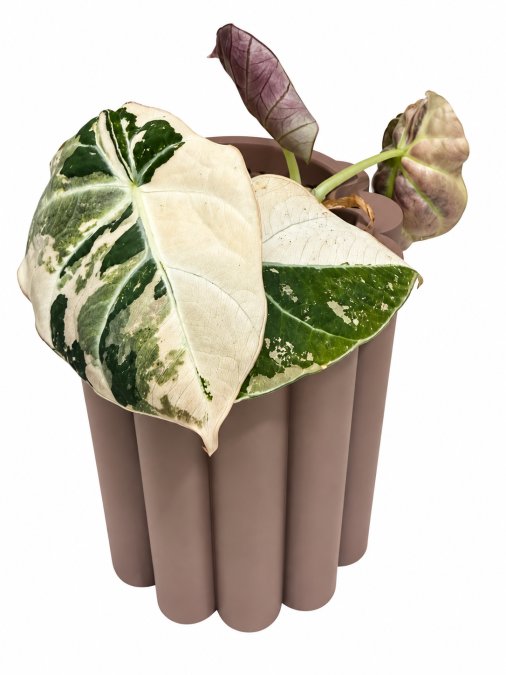
The short version is that variegation is rare in nature and rarer still in a plant that stays stable. Most Alocasia leaves are plain green because green is the default state. Variegation happens when a plant loses some of its chlorophyll in patches, leaving cream, white, yellow or pink areas behind. Those patches are the reason you want the plant, and they are also the reason it is difficult to produce.
Put simply, a variegated Alocasia is a plant that does something unusual, and it has to keep doing it, leaf after leaf, for the price to be justified.
How Variegation Develops and Why It Is Unstable
Variegation is usually linked to a genetic change in the plant's cells, which affects how chlorophyll is produced in different parts of a leaf. Some variegated plants are chimeras, where the coloured tissue sits in distinct layers or sectors, and others show more mixed patterns across the blade.
The catch is that this change is not always reliable. A leaf that comes out beautifully marbled can be followed by one that is almost entirely green. Growers call this reversion, and it is one of the main reasons variegated plants cost more than their green relatives. A plant that reverts is worth less to a collector, so a grower has to work harder to produce material that stays patterned.
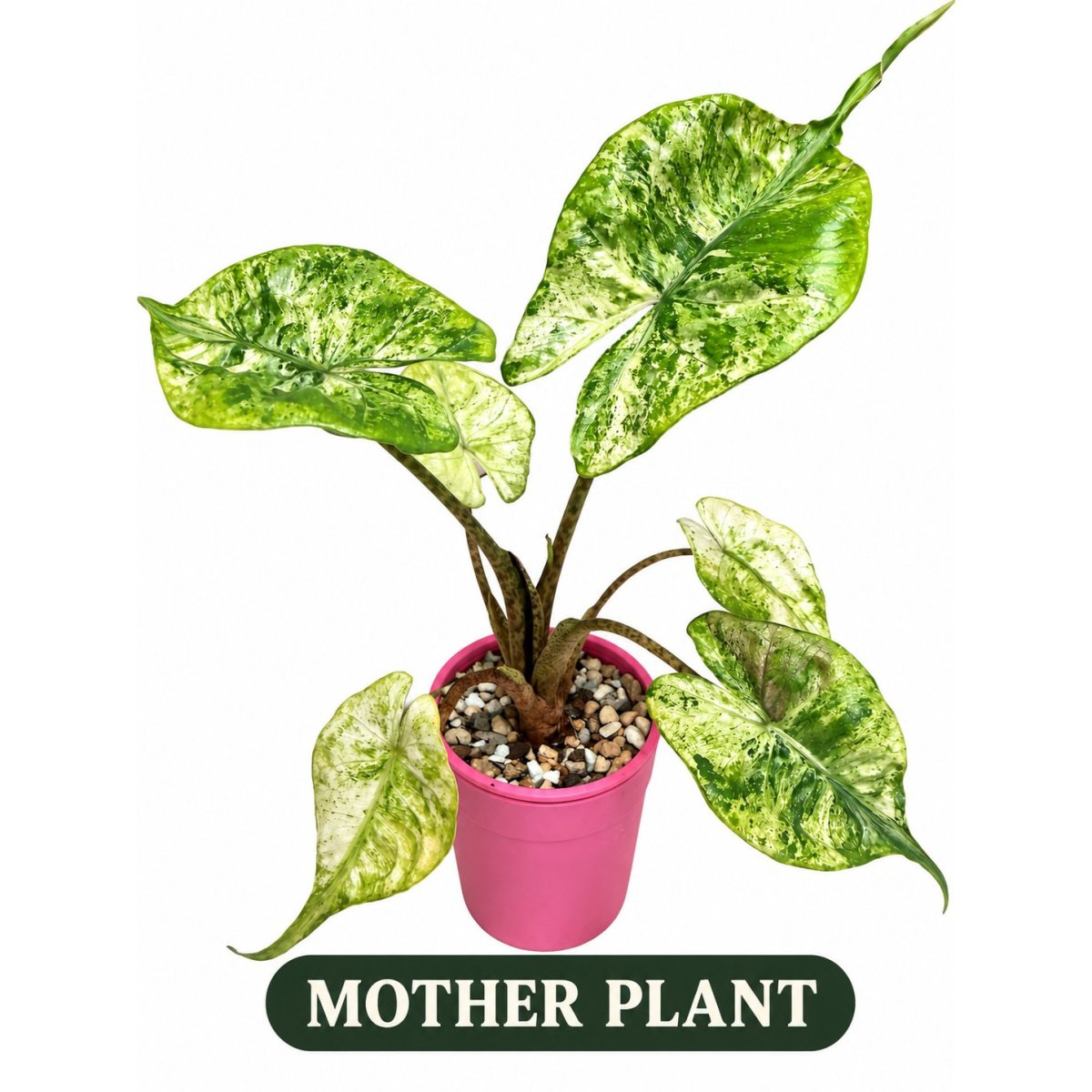
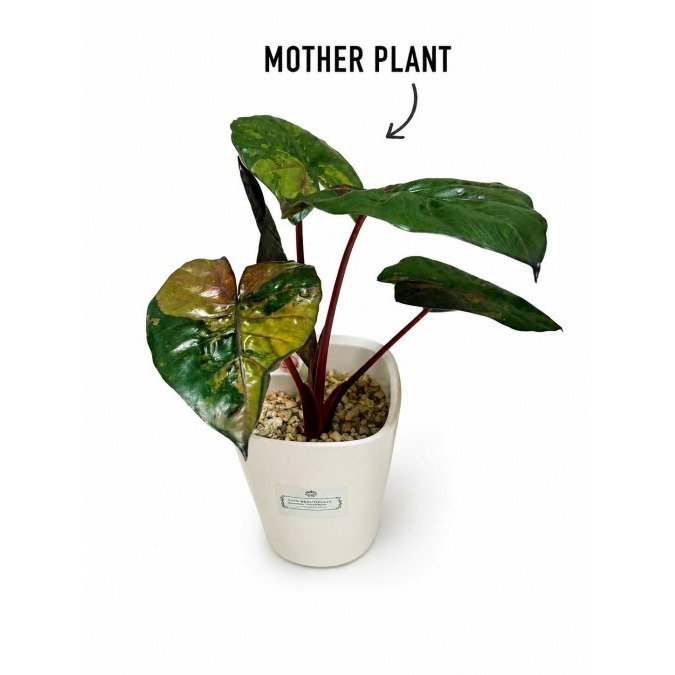
This instability is also why a photo of a mother plant is not a guarantee of what the next leaf will look like. See how the same instability shows up in a related aroid. Variegation can change between leaves, and that is simply how these plants behave.
Corm Propagation: Why Growing Each Plant Takes Time
Corm propagation is slow, and the slowness is not just about waiting. It is about how many plants a grower has to raise to end up with a handful worth selling.
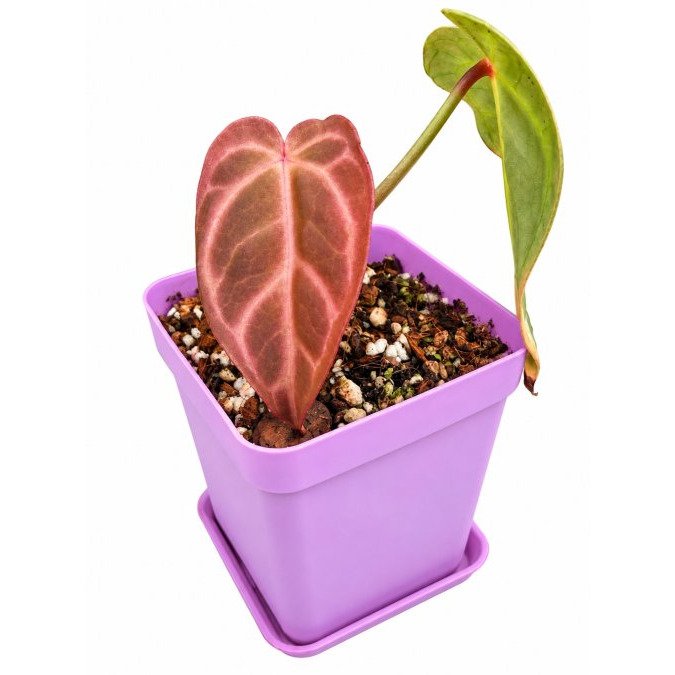
A corm-grown Alocasia starts as an offset or corm that has to establish roots, push out leaves and build enough energy to keep growing before it is ready to sell as an established plant. Learn how to tell a corm-grown plant from a tissue culture one on a real specimen. Each step depends on the plant's own pace, not on how many units a grower wants to produce. In a warm Australian grow space you might see a corm break dormancy and put up its first leaf within a few weeks, but a plant with several healthy leaves and a settled root system is a months-long project, not a weeks-long one.
You can see the difference in how plants are described. A young, established Alocasia with several healthy leaves and active growth has taken months of careful attention, and a plant that carries variegation has to be selected through that whole process. If a corm produces green leaves, it may still be a perfectly good plant, but it does not become the specimen a collector is hoping for.
This is one reason we are so particular about describing what we sell. For example, our Alocasia Longiloba ‘Thai Constellation’ Variegated is listed as a corm-grown, established young plant with multiple leaves, which is a different thing from an unrooted corm.

Corm-grown versus tissue culture
Tissue culture plants are produced in a lab from small pieces of plant tissue, and they can be multiplied quickly and uniformly. That speed is exactly why tissue culture can, over time, put downward pressure on the price of a variety, more uniform plants reach the market faster. Corm-grown plants follow a slower, more traditional route, and they often show a different level of root development and vigour. Neither method is automatically a bad choice, but they are not the same product, and the price usually reflects that difference.
We always say which method applies to each plant, because collectors who care about provenance want to know exactly what they are buying. Corm-grown and tissue culture are not interchangeable terms, and we do not describe corm-grown plants as tissue culture.
The Main Factors That Drive the Price
There is no single reason a variegated Alocasia costs what it does. Several factors stack on top of each other:
- Rarity of the variegation itself. Plants that carry stable, attractive patterns are scarce.
- Propagation time. Corm-grown plants take months to reach a saleable, established size.
- Stability risk. Growers invest in plants that may still revert, and that risk is built into the price.
- Plant size and condition. A larger, established plant with several healthy leaves costs more than a small or recently divided one.
- Collector demand. When many buyers want the same variety, the price responds to that interest.
- Handling and shipping. Live plants need careful packing and, for interstate movement, the correct biosecurity preparation.
Not every listing will carry all of these costs, but when you see a higher price, one or more of them is usually behind it.
Several factors stack on top of each other to set the price of a variegated Alocasia.
Alocasia Longiloba ‘Thai Constellation’ Variegated – Corm Grown | NOT TC →
| Factor | What it means | Why it matters |
|---|---|---|
| Rarity of variegation | Stable, attractive patterns are scarce | Fewer plants meet the standard |
| Propagation time | Corm-grown plants take months to reach saleable size | Growers wait for established stock |
| Stability risk | Plants may still revert to green | Growers price in this risk |
| Plant size and condition | Larger, established plants with healthy leaves | Costs more than small or recent divisions |
| Collector demand | Many buyers want the same variety | Price responds to interest |
| Handling and shipping | Live plants need careful packing and biosecurity prep | Adds to the total cost |
Collector Demand and Limited Supply in Australia
Supply is also shaped by the realities of growing here. Plants need the right conditions to develop their patterns, and propagation cannot be rushed to meet a sudden spike in interest. A grower who wants to offer reliable stock has to plan well ahead, and that planning is reflected in what the plant costs.
Caring for Your Variegated Alocasia Frydek After Purchase
Once you own a variegated plant, your care choices affect how well it keeps its colour. Bright, indirect light generally suits variegated foliage better than deep shade, but harsh direct sun can scorch the lighter patches. Set up a grow environment that keeps colour stable with our cabinet guide. Consistent watering, good drainage and a stable temperature all help the plant produce healthy new leaves.
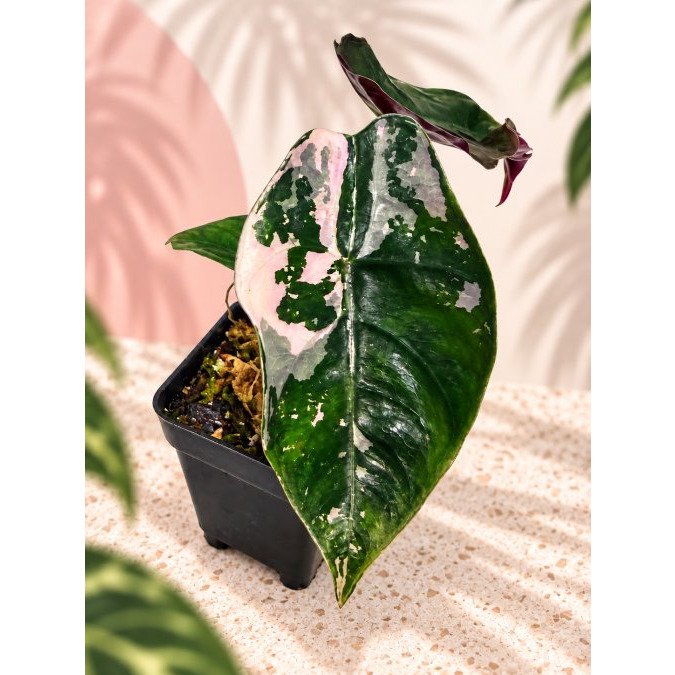
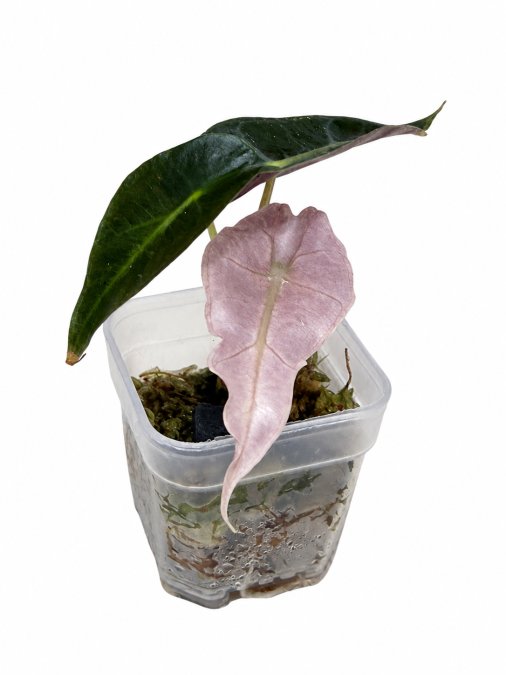
Our Alocasia Pink Dragon Aurea Variegated has individual variegation patterns on each leaf. If you are setting up a dedicated grow space for a collection, our Alocasia Grow Cabinet Setup for Collectors guide covers the environment in more detail.
For a more complete look at preventing colour loss, read our guide on preventing variegation reversion in Alocasia.
Checking a Variegated Alocasia Before You Buy
Before you commit to a variegated plant, it pays to run through a short checklist rather than going on the photo alone.
1. Confirm what you are actually buying. Check whether the plant is described as corm-grown or tissue culture, whether it is established or an unrooted corm, and how many leaves it currently carries. A listing that is clear on all three is a good sign; one that is vague on any of them is worth a question.
2. Look at the roots and the base. For an established plant, ask for a photo of the root system or the base of the stem if it is not shown. Healthy roots are firm and pale; mushy or black roots suggest rot, which is far harder to recover from on a variegated plant because it has less chlorophyll to spare for regrowth.
3. Check for active growth. A plant pushing a new leaf or with a visible growth point is a plant that has settled and is doing well. A plant that has been sitting static for months may be sulking, and a sulking variegated Alocasia is a risky buy.
4. Ask for evidence of stable variegation. No one can guarantee the variegation on future leaves, so a good listing will say so plainly. But you can ask to see the last two or three leaves the plant has produced. If the pattern has been consistent across recent leaves, that is a better indicator than a single perfect photo of the best leaf the plant ever made.
5. Understand the stability risk. Attractive variegation can be unstable, can reduce the plant's photosynthesis, and can disappear on later leaves. That is not a reason to avoid variegated plants, it is a reason to buy with your eyes open and to expect some green to appear over time.
6. Check the seller's transparency. Our Alocasia Pseudosanderiana Aurea Variegated - Corm Grown is listed as an established, rooted plant with active growth, and we note that each new leaf may develop its own colouring.
If you are unsure about any of the above, ask before you buy.
Frequently Asked Questions
Is Alocasia hard to keep alive?
Most Alocasia are manageable once you understand their needs. They prefer bright indirect light, consistent moisture without waterlogging, and humidity. The most common losses come from overwatering and sudden temperature drops. Variegated forms can be a little more demanding because pale tissue has less chlorophyll to photosynthesise with, so they usually need a bit more light than their green relatives. Start with a healthy, established plant and keep its conditions steady while it adjusts.
Can variegated Alocasia lose their variegation?
Yes. Variegation can change between leaves, and the colour, intensity and pattern of future leaves cannot be guaranteed. When you buy, review the plant's current form and the photos in the listing.
Why are variegated Alocasia more expensive than green Alocasia?
Variegated forms carry a genetic trait that is less common and not always stable, so fewer plants reach a saleable size with the pattern intact. Growing them from corms takes months to years, and only some of the resulting plants show the variegation a collector wants. Combine that slow, selective production with strong collector demand and the price rises. Green Alocasia are usually easier to propagate in volume, which keeps their prices lower.
What should I check before buying a variegated Alocasia?
Look at the current photos and check whether the listing describes the exact plant you will receive. Be realistic about future variegation, since new leaves may differ.